A stained patch of artificial grass can make an otherwise clean backyard look neglected fast. For Arizona pet owners, the bigger problem is often what you cannot see: dried urine residue, bacteria, sticky spills, and embedded grime sitting below the turf blades. Knowing how to treat turf stains starts with identifying what caused the discoloration and treating more than the surface.
A quick hose-down can rinse away loose dirt. It will not remove buildup trapped in the backing, infill, and drainage layers. That is why some stains return, odors get stronger in the heat, and turf stays matted even after a weekend cleaning.
Start by Identifying the Turf Stain
Not all artificial turf stains need the same treatment. A fresh food spill is usually simple. Pet urine, oily residue, rust, paint, and dark high-traffic areas can require more targeted work.
Pet-related stains are the most common issue in residential yards. Urine can dry clear, but the salts and bacteria remain behind. Over time, those deposits create yellowed or dark-looking areas, stiff fibers, and the odor homeowners notice most when the sun hits the yard.
Food, drinks, mud, and organic debris may leave visible discoloration. Grease from a grill or patio furniture can attract dirt and make one area look permanently dingy. Rust stains from metal furniture, tools, or irrigation equipment need extra care because harsh chemicals can damage turf fibers or affect the surrounding material.
Before applying anything, remove solid debris and check the turf for loose seams, damaged backing, or drainage problems. If water pools in the stained area, cleaning alone may not solve the issue. The turf needs to drain properly for stain treatment and deodorizing products to work.
How to Treat Turf Stains Without Damaging It
The right approach is firm enough to remove the mess but safe for synthetic fibers, infill, and the base underneath. Avoid treating artificial grass like concrete. Bleach, harsh solvents, and overly aggressive pressure can fade fibers, weaken backing, and push contaminated water deeper into the turf.
Treat fresh spills right away
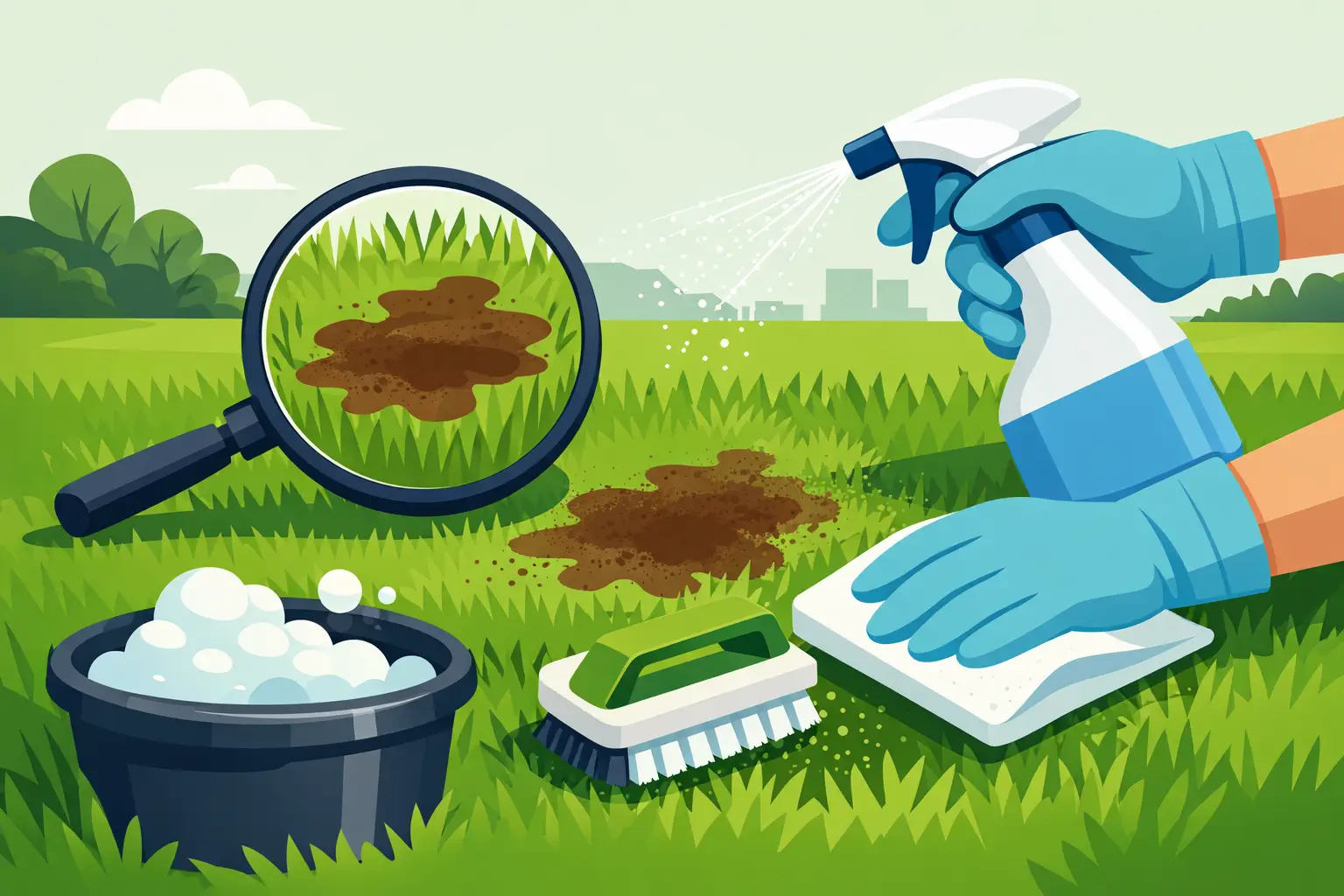
For a fresh spill, blot up as much moisture as possible with paper towels or a clean cloth. Do not grind the spill into the blades. Rinse the spot with cool water, then use a small amount of mild, turf-safe cleaner if residue remains.
Work the cleaner gently through the affected fibers with a soft-bristle brush. Rinse thoroughly and allow the area to dry. Brushing against the grain afterward helps lift the blades back into place.
This method works well for many everyday messes, including juice, soda, mud, light food residue, and small pet accidents caught quickly. The longer a spill sits in Arizona heat, the more likely it is to dry, harden, and leave behind odor-causing residue.
Remove pet urine residue, not just the smell
Pet urine needs more than fragrance. The goal is to break down the urine deposits and bacteria causing the odor. A turf-safe enzyme treatment can help with a fresh, isolated accident, especially when it is applied directly to the affected area and given enough dwell time to work.
Then rinse the area thoroughly. Do not flood it so heavily that dirty water spreads across the yard or sits in a low spot. If your dog uses the same area every day, a light weekly rinse and regular brushing can reduce buildup between deeper cleanings.
But there is a limit to DIY treatment. When urine has soaked into infill or built up over months, surface sprays may make the yard smell better for a day or two without fixing the source. That is when urine extraction, deep rinsing, sanitization, and deodorizing make a real difference.
Handle oily, sticky, or greasy stains carefully
Grease and oil need a different approach because water alone will not lift them. First, absorb as much of the fresh oil as possible with a dry cloth or absorbent material. Then use a turf-safe degreasing cleaner in a small test area before treating the full stain.
Apply only what you need, gently agitate the turf fibers, and rinse well. Do not use gasoline, paint thinner, or powerful household solvents. They may remove the stain, but they can also damage the turf and create a much bigger cleanup problem.
For old, dark grease spots, professional treatment is often the safer option. The stain may have collected dust, pet hair, and debris that need to be lifted out with power brushing and deep cleaning instead of simply covered with more cleaner.
Treat rust, paint, and unknown stains with caution
Rust stains can be stubborn, especially near patio furniture or outdoor fixtures. Use a product specifically approved for artificial turf and test it in an inconspicuous spot first. Strong acidic products can affect turf color, backing, or nearby concrete if used incorrectly.
Paint is another case where timing matters. Fresh water-based paint may come up with gentle cleaning and rinsing. Dried paint or oil-based paint should not be scraped aggressively, as this can pull out fibers or tear the backing. If the stain is large, old, or close to a seam, let a turf specialist evaluate it before trying multiple chemicals.
Unknown stains deserve the same caution. Mixing cleaners can create damaging fumes or leave a residue that attracts more dirt. One safe product, one small test area, and a controlled rinse are better than turning one stain into a faded patch.
Why Stains Often Come Back
If a stain keeps reappearing, the problem is usually below the blades. Artificial turf holds more than many homeowners realize: pet hair, dust, pollen, loose infill, dried urine crystals, bacteria, and fine debris washed down by rain or irrigation.
High-traffic paths can also look stained when they are actually flattened and packed with grime. The blades stop standing upright, shadows become uneven, and the turf develops a dull, worn appearance. A basic rinse cannot lift matted fibers or remove compacted debris.
Professional restoration addresses the full turf system. Power brushing and power sweeping lift flattened blades and pull out embedded debris. Deep rinsing clears the turf surface more effectively. Urine extraction targets the source of pet odor, while sanitizer and deodorizer treatments help eliminate the bacteria and lingering smell that make the yard feel unclean.
That combination is especially valuable for homes with multiple dogs, dog runs, shaded turf, or yards where the same pet relief area gets daily use. No more masking odors with perfume. No more wondering why the backyard still smells after you rinse it.
When to Call for Professional Turf Stain Treatment
A small, fresh spill is usually manageable at home. Call in a turf cleaning professional when stains are widespread, odors return quickly, the turf feels sticky or matted, or you are dealing with months of pet use.
You should also consider professional help if the yard smells worse after rain, heat, or watering. Those conditions can reactivate residue sitting deep in the turf. A surface cleaner may temporarily change the smell, but it cannot always reach contamination trapped in the infill and base.
At Elite Turf Cleaning, the goal is not to make artificial grass look acceptable for a few days. It is to bring your turf back to life with deep cleaning, pet hair and debris removal, urine treatment, sanitization, deodorizing, and a final finish that leaves the yard looking fresh and feeling safer for kids and pets.
Keep Turf Looking Clean Between Treatments
Regular upkeep makes stain removal easier and extends the life of your turf. Pick up pet waste promptly, rinse pet areas routinely, and brush high-traffic spots before they become permanently flat. Keep leaves, dirt, and pet hair from collecting along edges and under patio furniture.
Watch for changes in odor and appearance. A single dark patch, a lingering urine smell, or turf that suddenly feels packed down is your early warning sign. Treating the issue early is easier than waiting until the entire yard looks gross.
Your artificial grass was installed to give you a clean, low-maintenance outdoor space. When stains, odors, and buildup take over, do not settle for a quick cover-up. Give the turf the deeper treatment it needs so your backyard is ready for bare feet, pets, playtime, and company again.