Your artificial grass was supposed to look green, full, and ready for anything. Now the blades are pressed flat, the high-traffic spots look worn out, and your backyard may even have that lingering pet smell that never seems to leave. The good news is that learning how to revive matted artificial grass can restore a major part of its appearance. The better news is that you often do not need to replace it.
Matted turf is usually not a turf failure. It is a buildup problem. Foot traffic, patio furniture, pet hair, dust, compacted infill, and urine residue all work their way down into the fibers over time. A quick spray with the hose may rinse the surface, but it will not lift flattened blades or remove what is trapped underneath.
Why Artificial Grass Gets Matted
Artificial grass has a memory. When the same section is walked, played on, or used by pets every day, the fibers bend in one direction and stay there. This is especially common along paths from the back door to the gate, around grills and seating areas, and in the spots dogs claim as their favorite bathroom.
Arizona yards deal with another challenge: fine dust. Wind-blown dirt settles between turf blades and mixes with pet hair, leaves, pollen, and organic debris. That material compacts the infill, weighing the turf down and making it harder for the fibers to stand upright.
If your turf also smells bad, flattening is only part of the issue. Urine can pass through the blades and settle in the backing, infill, and base below. Heat brings those odors back to the surface. That is why a yard can look slightly tired one day and smell downright gross the next.
How to Revive Matted Artificial Grass at Home
For light matting without heavy odor or staining, regular maintenance can make a visible difference. The key is working against the direction the grass is laying. You are not just grooming the top. You are lifting the fibers while loosening the debris that is holding them down.
Start by Removing Surface Debris
Clear away leaves, twigs, pet waste, toys, and furniture. If a chair, planter, or grill has been sitting in the same place for months, move it before you brush. Furniture legs create deep, concentrated flat spots that need room to recover.
Use a leaf blower on a low setting or a plastic rake to remove loose debris. Avoid metal rakes. Metal tines can pull at turf fibers, damage seams, and create more problems than they solve.
Brush Against the Grain
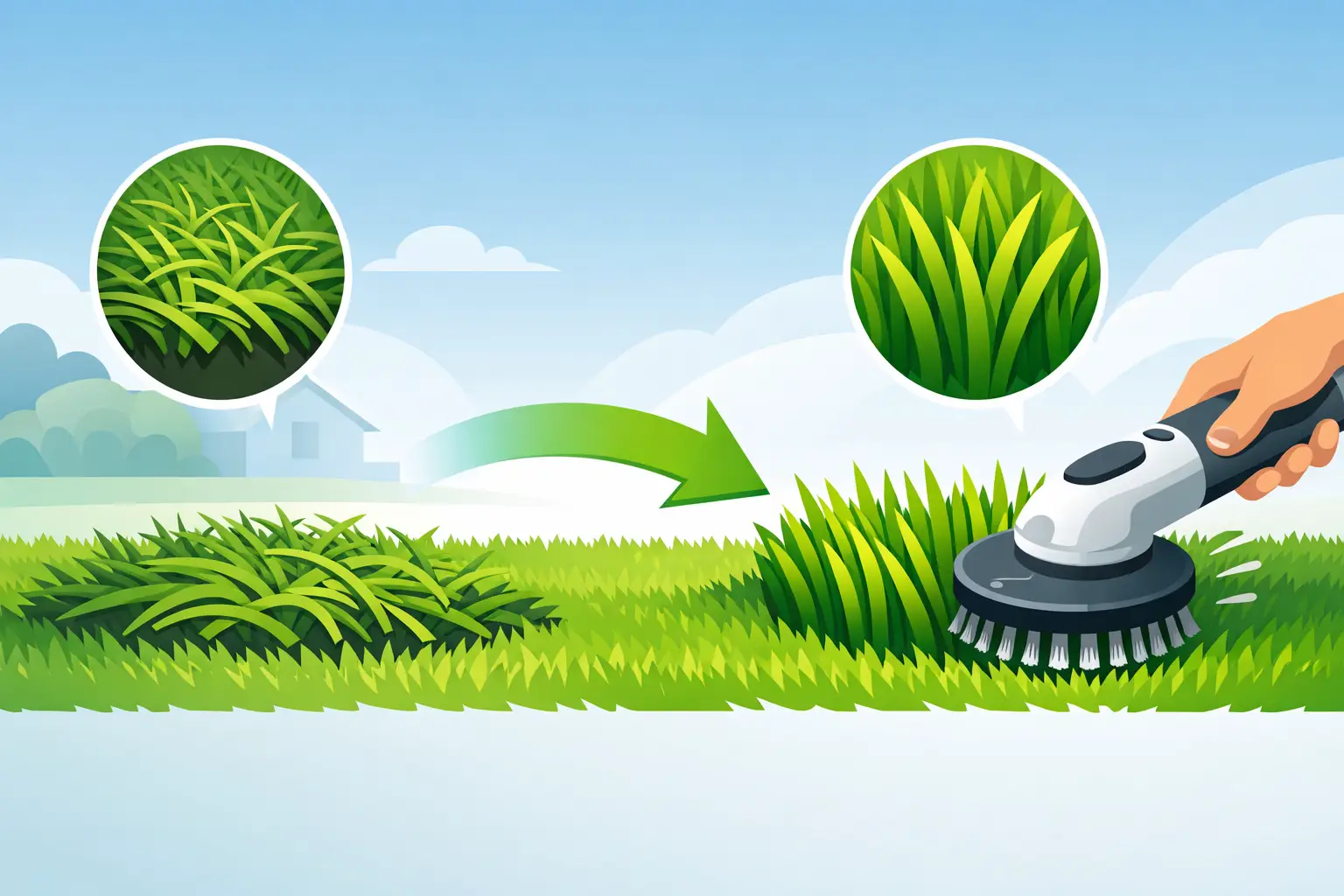
A stiff synthetic turf brush or a power broom is the main tool for reviving flattened grass. Work in small sections and brush against the direction of the blades. This helps pull fibers upright and redistributes loose infill across the surface.
Do not attack the turf with excessive force. The goal is a steady, controlled lift, not aggressive scraping. If the turf is older or has very thin fibers, a hand brush may be safer than a powerful machine. For a large yard, though, a power brush provides much more even results and saves serious time.
Pay extra attention to traffic lanes, dog runs, and spots beneath outdoor tables. Those are the areas where the turf has been compressed the longest. One pass may improve the look, but deeply matted turf often needs several passes from different directions.
Rinse Away Dust and Loose Grime
After brushing, rinse the turf with a garden hose. Use a gentle, broad spray rather than a sharp pressure setting. You want to wash loosened dust and debris through the turf, not blast the infill out of place.
Rinsing is useful for routine upkeep, especially after dusty weather or a busy weekend in the yard. It is not a complete odor treatment. If urine residue, bacteria, or organic buildup is trapped below the surface, plain water can dilute the problem without actually eliminating it.
Check the Infill Before Adding More
Infill supports the turf blades and helps them stand upright. When it becomes compacted or uneven, the grass can look flat even after a thorough brushing. You may notice bare-looking areas, low spots, or blades that immediately fall back down after they are groomed.
Adding infill can help, but only when it is the right type and amount for your specific turf. Too much infill can make the lawn feel stiff, reduce drainage, and create a gritty surface. If your grass has significant odor, adding more infill over contaminated material can trap the source instead of solving it.
When Brushing Is Not Enough
A brush and hose are great for basic maintenance. They are not a magic fix for years of compacted debris, dense pet hair, deep urine buildup, or bacteria living below the blades. If your turf looks better for a day and then flattens again, that is a clear sign the problem is deeper than the surface.
Watch for these warning signs:
- The turf has a strong urine smell after heat, rain, or watering.
- Pet hair and dirt are packed tightly near the backing.
- Flattened areas stay down even after repeated brushing.
- Water drains slowly or pools in certain sections.
- The turf feels dirty, sticky, or gritty under bare feet.
These are the jobs where professional restoration makes sense. A proper service goes beyond surface grooming with power brushing and power sweeping to pull out embedded debris and lift compressed fibers. Deep rinsing then flushes away loosened grime, while targeted urine extraction and odor treatment address the material that regular hosing leaves behind.
For pet households, sanitizing matters just as much as appearance. Dogs do not stop using the same areas because the turf has been sprayed with water. Without treatment designed to neutralize urine odors and bacteria, that smell can keep returning, especially during an Arizona summer.
What Professional Turf Restoration Changes
Professional cleaning is not about making artificial grass look temporarily wet and green. It is about restoring the turf system from the blades down. The best results come from removing the embedded material that is flattening the grass, treating the areas where urine has collected, and finishing with a sanitizer and deodorizer that leaves the yard fresh for people and pets.
At Elite Turf Cleaning, the goal is to bring your turf back to life, not cover up the mess. Power brushing helps restore the upright look of the fibers. Debris and pet hair removal clears the material that traps odor. Deep rinsing, urine extraction, and targeted treatments tackle the source of stains, bacteria, and persistent smells.
There is a trade-off to consider. Light seasonal matting can often be maintained with a brush, rinse, and consistent care. Severe matting paired with odor is usually worth handing to a turf-specific cleaning team. Replacing artificial grass is expensive. Restoring it before the buildup becomes permanent is often the smarter move.
Keep Your Turf From Matting Again
Once the turf is standing tall and smelling clean, a little maintenance goes a long way. Brush high-traffic areas every few weeks, not just once the whole yard looks flat. Pick up pet waste promptly, rinse pet areas regularly, and move patio furniture from time to time so one patch does not take all the pressure.
If you have multiple dogs or a heavily used backyard, plan on deeper cleaning more often. The right schedule depends on the number of pets, how often the yard is used, the amount of shade, and how much dust blows into the space. A quiet decorative front yard needs far less attention than a backyard used daily by kids and dogs.
A matted yard does not have to stay that way. Start with careful brushing and rinsing, but do not ignore odors, compacted debris, or turf that refuses to stand back up. When the problem is below the surface, the fastest path to a cleaner, fuller backyard is a true turf restoration that leaves no more odors and no more mess.