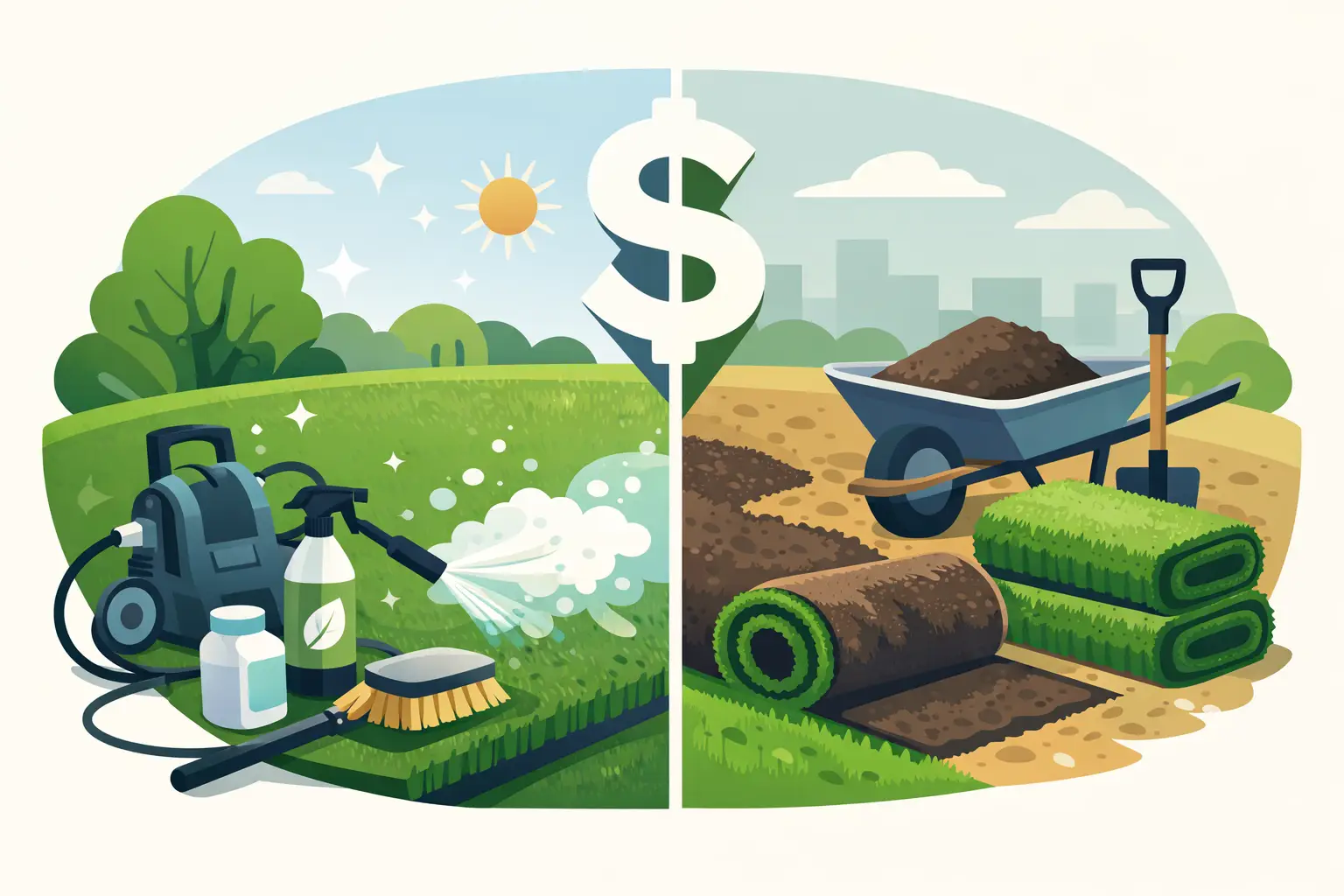
Your artificial grass looked clean when it was installed. Now it smells like pet urine after a hot Arizona afternoon, feels flat underfoot, and has lost that fresh, green look. When homeowners weigh artificial turf cleaning vs replacement, the real question is simple: is the turf dirty and overdue for restoration, or is it truly worn out?
Replacement is expensive, disruptive, and often unnecessary. A professional deep cleaning can remove embedded debris, pet hair, bacteria, odor-causing urine, and compacted grime that a garden hose cannot touch. But cleaning is not a magic fix for torn backing, failed drainage, or turf that has reached the end of its usable life. Knowing the difference can save you from replacing a lawn that still has plenty of life left.
Artificial Turf Cleaning vs Replacement: Start With the Real Problem
Artificial turf does not need mowing, but it does need maintenance. Dust, leaves, hair, food spills, pollen, and pet waste settle below the visible fibers. In Arizona, heat bakes urine deposits into the infill and backing. The result is a yard that can look acceptable from the patio while smelling terrible the second you step outside.
Many homeowners assume the odor means the turf itself has failed. Usually, it means contaminants have built up beneath the surface. Regular rinsing may wash away loose debris, but it rarely reaches the compacted material where bacteria and odor are living.
Before approving replacement, take an honest look at the symptoms. If the turf fibers are intact and the base still drains properly, restoration is usually the smarter first move. If the turf is physically damaged or the installation is failing, replacement may be the better investment.
When Deep Cleaning Is the Right Call
Professional turf cleaning is designed for grass that is structurally sound but dirty, matted, smelly, or unsanitary. This is especially common in backyards used every day by dogs, kids, and active families.
A proper restoration goes far beyond spraying fragrance over the surface. Power brushing lifts flattened fibers and loosens trapped debris. Power sweeping removes hair, leaves, and embedded grime. Deep rinsing flushes contaminants from the turf, while targeted urine extraction and odor treatment address the source of pet smells. Sanitizer and deodorizer treatments then help eliminate lingering bacteria and leave the area fresh again.
Cleaning is often the right choice when your turf has these issues:
- Persistent pet urine odor, especially after heat or rain
- Matted, flattened blades in pathways, play areas, or dog runs
- Heavy pet hair, dust, leaves, and debris trapped in the fibers
- Stains, bacteria buildup, or a yard that simply looks dull and grimy
- Turf that feels hard or compacted but still has intact seams and backing
These are maintenance problems, not automatic replacement problems. They can make a yard feel gross, but they do not always mean the turf is finished.
Pet odor is usually a cleaning problem first
Dog urine is one of the biggest reasons Arizona homeowners consider new artificial grass. Unfortunately, replacing the turf without addressing the base can leave you with the same odor problem all over again. Urine can move through the turf and collect in the infill, drainage layer, or areas where water does not flow freely.
Deep cleaning can dramatically improve odor when the turf drainage system is functioning and contamination has not caused major structural damage. The process must target urine deposits, not just mask them with a scent. If the odor returns quickly after basic DIY products, that is a clear sign the contamination is below the surface.
Flat turf does not always mean old turf
High-traffic areas flatten. So do pet areas where dogs run the same route every day. That matted look can make artificial grass appear years older than it is.
Power brushing helps stand the fibers back up while removing debris that weighs them down. It will not make severely worn fibers brand new, but it can restore a cleaner, fuller appearance when the blades are still in decent condition.
When Replacement Is Worth the Cost
There is a point where cleaning is no longer the best answer. If the turf has physical damage or the installation beneath it is failing, putting money into restoration may only delay a necessary replacement.
Replacement is usually the right move when you see torn turf, loose seams, exposed edges, crumbling backing, or large areas where fibers have broken off. These are not surface-level cleaning issues. They affect appearance, safety, and the turf’s ability to stay in place.
Drainage is another major deciding factor. If water pools after rinsing, rain, or pet-area cleaning, there may be a problem with the base, slope, or drainage system below the turf. Standing water allows odors and bacteria to build up faster. It can also create a muddy, unstable surface beneath synthetic grass.
You should also consider replacement if the turf has become brittle from years of sun exposure, feels rough and worn across the entire yard, or has reached the end of its expected service life. Cleaning can remove grime. It cannot rebuild broken fibers or repair a failing foundation.
Signs the turf may be beyond restoration
Look closely at the condition of the material, not just the smell. Replacement deserves serious consideration if seams are separating, the backing is cracking, edges are lifting, or bare spots are appearing throughout the lawn. The same applies if odors remain severe after proper urine extraction and the drainage base is confirmed to be contaminated or damaged.
A reputable turf specialist should be direct about this. The goal is not to sell a cleaning service for turf that clearly needs to be replaced. The goal is to give you the most practical fix for your yard.
Compare the Disruption, Not Just the Price
The upfront cost of replacement gets attention because it is significant. But the disruption matters too. Replacing artificial grass can involve removing existing turf, disposing of materials, inspecting or rebuilding the base, addressing drainage, installing new turf, securing seams, and adding infill. Your yard may be out of commission while the work is completed.
Deep cleaning is a maintenance service. It is far less disruptive and can make a dramatic difference in a single visit when the turf itself is still in good shape. For homeowners trying to eliminate dog odor before guests arrive, freshen a play area, or bring back the look of a tired backyard, that difference matters.
That said, the cheapest choice is not always the best choice. Repeated spot treatments and surface sprays can become frustrating if the turf needs a real restoration. Likewise, paying for cleaning on severely damaged turf can be money better put toward replacement. Start with a condition assessment, then choose the service that solves the actual problem.
How to Help Restored Turf Stay Fresh Longer
Once turf has been professionally cleaned, a few simple habits can protect the result. Remove solid pet waste promptly, rinse pet areas regularly, clear leaves before they break down, and brush high-traffic sections before they become heavily matted. Do not rely on perfumed sprays as your main odor solution. They may cover the smell briefly, but they do not remove urine buildup.
For homes with multiple dogs, frequent backyard use, or long stretches of Arizona heat, scheduled professional maintenance is often more cost-effective than waiting until the yard becomes unbearable. Elite Turf Cleaning focuses on deep restoration, urine extraction, sanitization, and odor elimination because surface-level cleaning is not enough for the toughest pet yards.
Your turf should be a clean place for your family and pets to enjoy, not an area you avoid because it smells bad. If the fibers, seams, and drainage are still sound, give professional restoration a chance before tearing everything out. A clean, sanitized yard may be much closer than you think.