Your artificial grass should not smell like a kennel, feel matted underfoot, or look dusty and worn out by the weekend. This artificial turf maintenance guide gives Arizona homeowners a clear plan for keeping turf fresh, upright, and ready for kids, pets, and backyard time.
Artificial grass is low maintenance, not no maintenance. Arizona dust settles deep into the fibers. Monsoon debris piles up. Pet urine can soak through the infill and create odor that a quick rinse never reaches. The good news: most turf problems are manageable when you handle them early and know when surface cleaning is no longer enough.
Start With the Weekly Basics
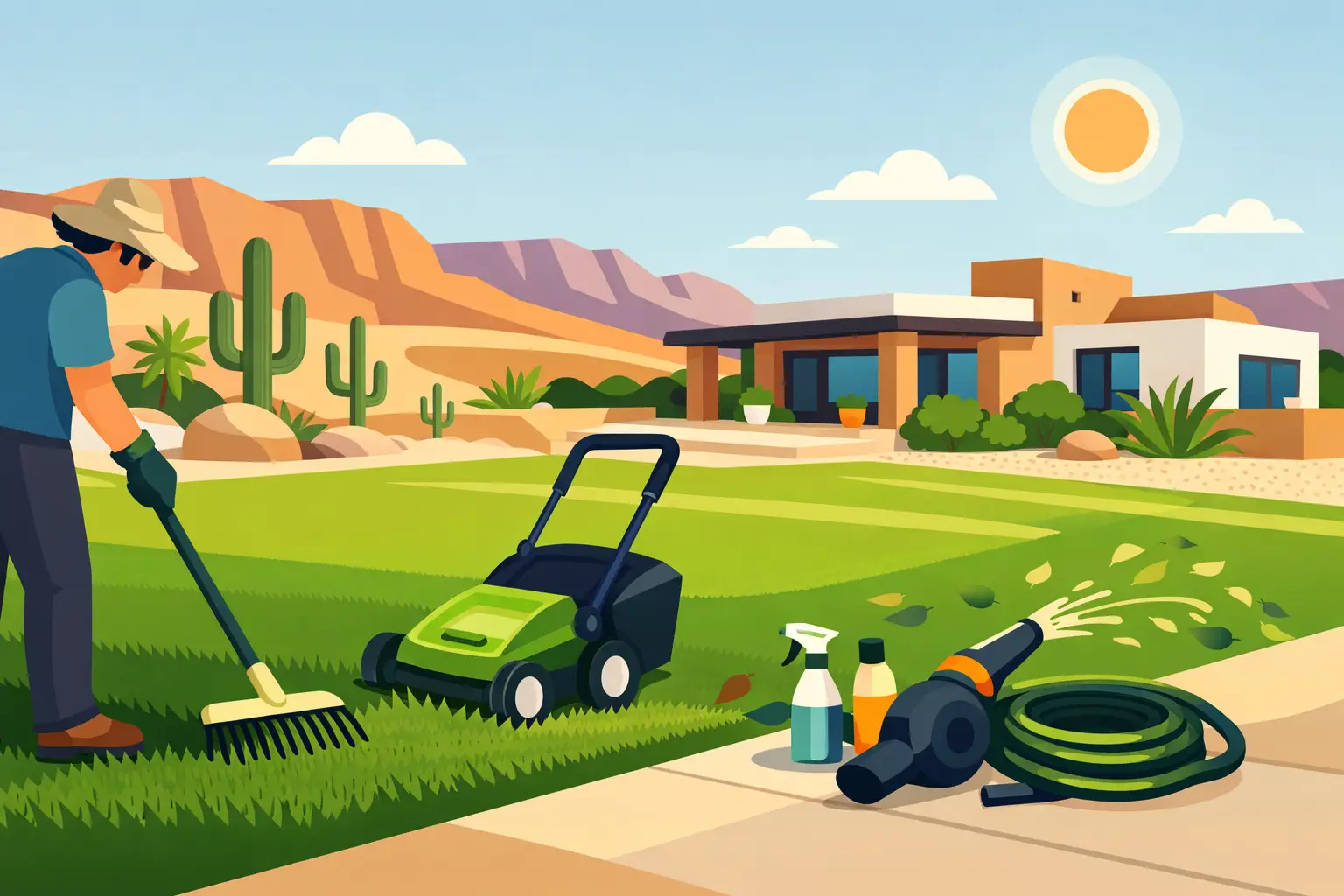
A few minutes of consistent care prevents the buildup that makes synthetic grass look tired fast. Once or twice a week, remove leaves, twigs, pet hair, and windblown debris with a leaf blower, plastic rake, or soft-bristle broom. Avoid metal rakes and sharp tools that can pull fibers loose or damage seams.
Pay extra attention to corners, fence lines, patio edges, and the spots beneath trees. Those areas trap debris, which holds moisture and turns into grime. In Arizona, dry dust can also settle between blades and dull the color of your turf long before it looks obviously dirty from a distance.
If you have dogs, pick up solid waste promptly. It is the simplest step in the entire process, but skipping it allows bacteria and odor-causing residue to spread through the turf. A clean surface is the starting point, not the finish line.
Brush the Fibers Before They Flatten
Foot traffic, patio furniture, kids playing, and dogs running the same path every day all press turf fibers down. Once fibers stay flattened, the lawn can look patchy even when it is technically clean. It also becomes easier for dirt and pet hair to hide at the base of the grass.
Use a stiff synthetic-bristle broom or turf rake to brush against the grain of the fibers. This lifts the blades and helps redistribute loose debris. For a lightly used decorative front yard, monthly brushing may be enough. For a busy backyard with pets, brushing every one to two weeks is a better target.
Be realistic about what hand brushing can do. It is helpful for routine upkeep, but it cannot fully correct heavily compacted infill, deep pet hair, or turf that has been crushed down for months. Power brushing and power sweeping reach deeper and create a much more noticeable reset when the yard needs restoration.
Watch for High-Traffic Trouble Spots
The area outside the back door, around a dog run, and beside outdoor furniture usually needs more attention than the rest of the yard. Brush these spots separately instead of waiting for the whole lawn to look flat. Moving furniture occasionally also prevents permanent-looking pressure marks.
Rinse Dust and Light Spills the Right Way
A gentle rinse helps remove surface dust, pollen, and light residue. In Arizona’s dry climate, that alone can make turf look cleaner and feel cooler. Use a standard garden hose with moderate water pressure. You are rinsing the fibers, not blasting them apart.
For spills, act quickly. Blot up liquids, remove sticky material carefully, and rinse the affected area. A mild cleaner made for artificial turf can help with food or drink messes, but avoid harsh chemicals, solvents, bleach, or products that can discolor fibers or affect the backing.
Rinsing is useful, but it has limits. If your turf smells fine after a rinse, that is a good sign. If the odor comes back as soon as the sun heats the yard, the problem is likely below the surface. Urine can move through the fibers, infill, and backing, leaving behind crystals and bacteria that water does not fully remove.
Pet Odor Needs More Than a Hose
Pet owners are usually the first to notice when their turf has crossed the line from lived-in to gross. The smell may be strongest in one favorite potty area, after watering, during humid weather, or on hot afternoons. That does not mean the whole lawn needs replacement. It means the contamination needs to be treated at its source.
For light, occasional use, rinse pet areas regularly and allow good drainage. If several dogs use the same turf every day, routine hosing is rarely enough. Urine residue builds up over time, especially where drainage is slow or infill is compacted. Spraying a fragrance on top may mask the smell briefly, but it does not remove the urine, bacteria, or embedded grime creating it.
A true odor treatment should include urine extraction, deep rinsing, targeted stain and odor treatment, and a turf-safe sanitizer and deodorizer. The goal is not to make the yard smell better for an afternoon. The goal is to remove what is causing the smell.
When DIY Cleaning Stops Working
There is a difference between maintenance and restoration. Home care handles loose debris, routine brushing, and small messes. Professional turf cleaning is the better move when the problem is deep, persistent, or affecting how your family uses the yard.
Look for these signs that your turf needs more than another rinse:
- A urine odor returns after hosing or gets worse in the heat.
- Turf fibers are flattened, dirty, and difficult to lift by hand.
- Pet hair, dust, or debris is packed down near the backing.
- Your kids or pets spend time on a surface that feels grimy or unsanitary.
- The lawn looks darker, duller, or more worn than it did when installed.
Deep cleaning restores the parts of the turf that normal yard tools do not reach. Power sweeping lifts fibers and loosens embedded debris. Thorough rinsing flushes out buildup. Targeted urine extraction addresses odor at the source. Sanitizer treatment helps eliminate bacteria, while deodorizer leaves the area fresh instead of perfumed over a problem.
Follow a Seasonal Artificial Turf Maintenance Guide
Arizona weather changes what your turf collects. A simple seasonal routine helps you stay ahead of the mess.
In spring, clear pollen, seed pods, and landscape debris. This is also a good time to brush winter-flattened areas and check seams or edges before backyard activity picks up.
During summer, pet odor becomes the main concern. Heat can intensify old urine buildup, so rinse high-use pet areas more often and act fast if odors start returning. Check shaded areas too, since they may dry more slowly after rinsing.
Monsoon season brings leaves, mud, branches, and fine debris. Remove it quickly so it does not settle into the infill. After a storm, inspect drainage areas and brush the turf once it is dry enough to work on.
In fall and winter, use the slower season to schedule a deeper cleaning if the turf took a beating all year. A professional restoration before holiday gatherings or spring patio season can make an older installation look dramatically better without the cost of replacement.
Protect Your Investment Without Overdoing It
Artificial turf is durable, but it still needs smart care. Keep grills, fire pits, and hot tools away from the fibers. Do not park vehicles on it unless the turf system was specifically designed for that use. Clean up oil, paint, and harsh chemical spills quickly, and avoid using weed killers or strong cleaners without confirming they are safe for synthetic grass.
Do not treat every issue like an emergency, either. A little dust after a windy day is normal. A few flattened blades near the gate are normal. The real warning signs are recurring odor, matted fibers across large areas, heavy debris buildup, and a yard your family no longer wants to use.
When that happens, Elite Turf Cleaning can bring your turf back to life with deep cleaning, power brushing, urine extraction, sanitizing, and odor elimination designed for the way Arizona families and pets actually use their yards. Fresh turf is not just about curb appeal. It gives your family a cleaner place to play, relax, and let the dogs out without holding their breath.