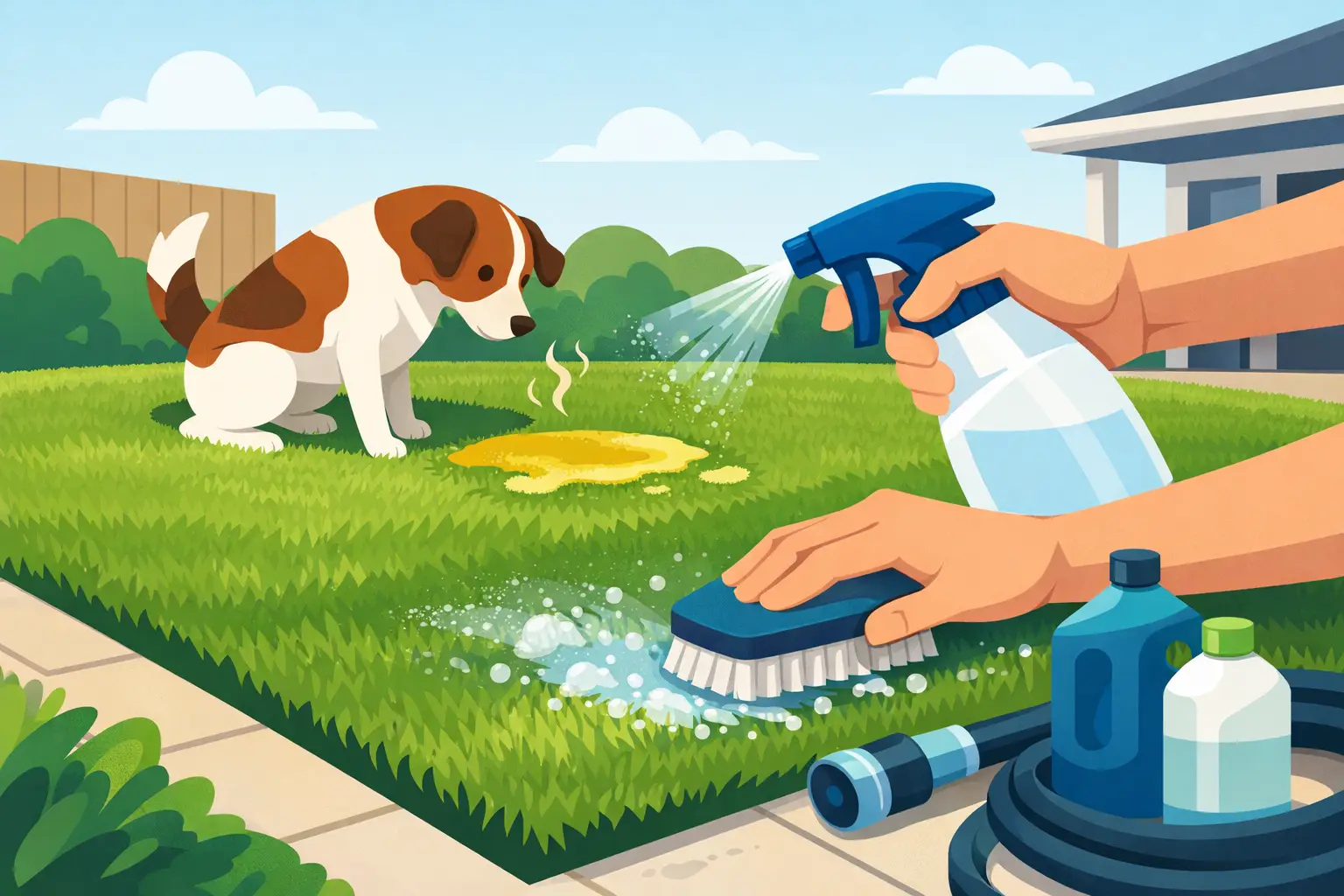
That sour smell usually shows up before you see the problem. One warm afternoon, the backyard starts smelling like a kennel, the kids avoid the play area, and hosing it down barely makes a dent. If you’re searching for how to remove dog urine from turf, the real fix is not just masking odor. You need to flush out urine, treat the bacteria it leaves behind, and restore the turf so it smells clean again.
Why dog urine gets trapped in artificial turf
Artificial grass is built to drain, but that does not mean it stays clean on its own. Dog urine moves through the blades and into the infill, backing, and base below. Over time, repeated bathroom spots create buildup that plain water cannot fully remove.
That is why turf can still smell bad even after a rinse. The liquid may drain, but urine salts, bacteria, and odor-causing residue stay behind. In Arizona heat, that smell gets stronger fast. What starts as a mild odor can turn into a yard-wide problem.
The other issue is concentration. If your dog uses the same section every day, one area of turf takes the hit over and over. Those repeat spots usually need more than casual cleanup.
How to remove dog urine from turf at home
If the problem is fresh or still mild, a DIY cleanup can help. The goal is simple: dilute the urine, remove as much residue as possible, and apply a turf-safe treatment that targets odor instead of covering it up.
Start with a heavy rinse
Use a hose and thoroughly soak the affected area. A quick spray is not enough. You want enough water to move through the turf and push urine deeper into the drainage system instead of letting it sit near the surface.
Focus on the exact spots your dog uses most. If you are not sure where the problem is, trust your nose. The strongest-smelling zones are usually where buildup is concentrated.
Use a turf-safe enzyme or pet odor treatment
After rinsing, apply a cleaner made for pet urine on artificial grass. This matters. Some household cleaners are too harsh for turf or leave behind residue that creates its own odor problem later.
Enzyme-based treatments can help break down organic matter, but results depend on how long the urine has been sitting and how deep the contamination goes. For light odor, they often improve the smell. For older, baked-in urine, they may only reduce it.
Follow the product directions and give it time to work. If you rinse it away too quickly, you cut its effectiveness.
Brush the turf to open it up
If the blades are matted down, the cleaner may not reach evenly. A stiff turf broom or power brush helps lift flattened grass and open the surface so rinsing and treatment can penetrate better.
This step also helps with appearance. Pet-heavy yards often look worn before homeowners realize how much grime is trapped below.
Rinse again and let it dry
Once the treatment has had time to do its job, rinse the area again. Then let the turf dry completely. A yard that still smells bad after drying usually has deeper contamination in the infill or base.
That is the point where many homeowners realize the issue is bigger than surface cleaning.
What not to do when cleaning pet urine from turf
A lot of odor problems get worse because the wrong products are used first. Bleach, heavily perfumed cleaners, and soap-heavy solutions can create more trouble than they solve.
Bleach may disinfect some surfaces, but it is a poor choice for pet turf. It can be harsh on materials, irritating for pets, and ineffective against the full odor problem. Strong fragrance sprays are not much better. They may smell clean for an hour, but once the scent fades, the urine odor is still there.
Too much soap is another mistake. Soapy residue can cling to turf fibers and attract dirt, leaving the area sticky and dull. On a hot day, that can make the yard feel even less fresh.
If you are dealing with repeat dog use, skip the shortcuts. Turf needs cleaning that is deep enough to remove contamination, not just cover it up.
When DIY stops working
There is a clear line between a manageable pet spot and a turf system that needs restoration. If odor keeps coming back after rinsing and treating, the urine has likely built up below the surface.
This is especially common in homes with multiple dogs, older turf, poor drainage, or designated pet areas. The infill absorbs repeated use, pet hair traps moisture and bacteria, and compacted turf stops performing the way it should. At that stage, the smell is not sitting on top of the grass. It is embedded in the system.
That is why homeowners can spend weeks trying sprays, vinegar mixes, and hose-down routines with almost no lasting change. The turf may look a little better for a day, but once the sun hits it, the odor comes right back.
Professional turf urine removal vs surface cleaning
This is where professional service makes the biggest difference. Real turf restoration goes far beyond spraying deodorizer on the top layer.
A proper treatment typically starts with debris and pet hair removal, because built-up organic material holds odor and blocks deep cleaning. From there, the turf is power brushed or power swept to lift matted blades and loosen trapped grime. Then comes deep rinsing, urine extraction, targeted pet odor and stain treatment, and sanitizer application.
The difference is depth. Professional equipment and turf-specific methods are designed to reach what regular rinsing leaves behind. That includes urine residue in the infill, bacteria growth, and the stubborn smell that settles into pet zones.
For homeowners who want the yard to feel usable again, this is usually the turning point. No more masking sprays. No more guessing. Just cleaner, fresher turf that actually smells right.
How to keep dog urine odor from coming back
Once the turf is clean, maintenance matters. Even the best artificial grass can develop odor again if pet use is heavy and upkeep is inconsistent.
The first habit is simple: rinse pet areas regularly. In hot, dry climates like Arizona, urine dries fast and concentrates quickly. A consistent rinse schedule helps reduce buildup before it turns into a deeper problem.
It also helps to rotate where your dog goes, if possible. One dedicated spot gets overloaded much faster than a yard with more spread-out use. If your dog always returns to the same corner, that area will need more attention.
Brushing matters too. Turf that stays flattened traps debris more easily and can limit airflow through the surface. Keeping the blades lifted improves both appearance and cleaning performance.
And if you have a busy pet household, periodic professional service is not overkill. It is preventive care. Deep cleaning before the odor gets severe is easier, faster, and usually more effective than waiting until the whole yard smells bad.
How to tell if your turf needs restoration
Some signs are obvious. Strong urine smell, sticky spots, discoloration, and flattened areas are all red flags. Others are easier to miss.
If your yard smells fine in the morning but gets worse in afternoon heat, that usually points to deeper odor trapped below the surface. If the turf looks dusty, worn, or greasy even after rinsing, buildup is likely sitting in the infill. And if children or pets avoid certain areas, there is usually a reason.
A healthy artificial lawn should look clean, drain properly, and smell neutral. If it does not, the problem is not just cosmetic. It is hygiene, usability, and comfort.
For many homeowners, that is the moment to bring in a specialist. A turf-specific company like Elite Turf Cleaning is built for exactly this kind of problem – deep pet odor, bacteria buildup, flattened turf, and yards that need more than a quick wash.
The real answer to how to remove dog urine from turf
If the urine is fresh and the buildup is light, a thorough rinse and turf-safe pet treatment may help. If the smell keeps coming back, you are not dealing with a surface issue anymore. You are dealing with urine trapped deep in the turf system.
That is why the best answer depends on how bad the problem is. Mild odor can sometimes be managed at home. Heavy odor, repeat pet use, and long-term buildup usually need deep cleaning, sanitizing, and extraction to fully reset the yard.
Your turf should not smell worse every time the sun comes out. When the backyard starts feeling gross, the fix is not more fragrance. It is getting the contamination out so the grass feels fresh, clean, and usable again.