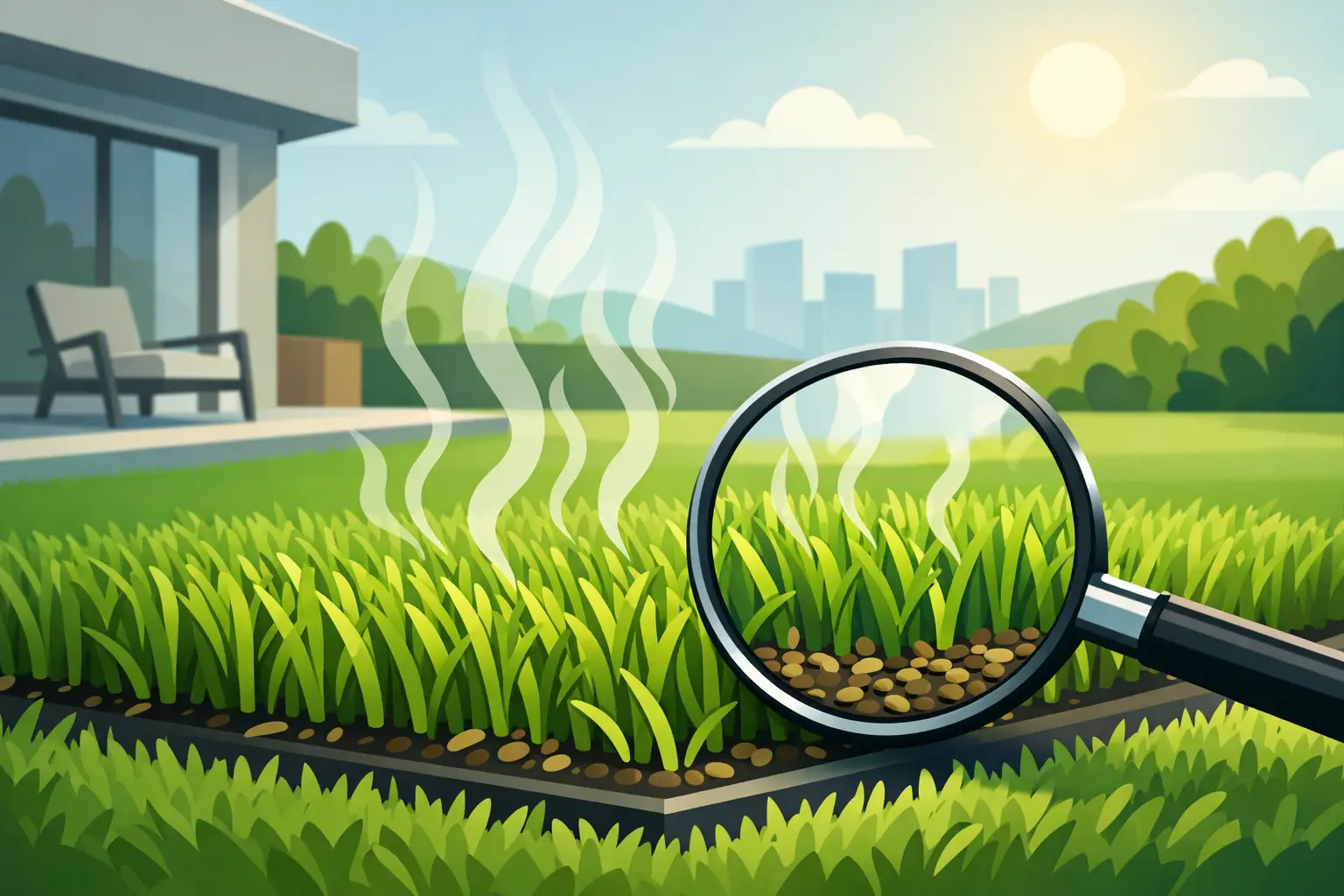
That sour, stubborn smell usually shows up before you see the real problem. If you’re asking, why does artificial grass smell, the short answer is this: something has built up deep in the turf system, and a quick spray from the hose is no longer enough.
Artificial grass is designed to drain, but it is not magic. When pet urine, bacteria, organic debris, dust, and moisture collect over time, the turf can start holding odor instead of shedding it. In Arizona, heat makes that worse. What seemed minor last month can suddenly smell strong the moment the sun hits the yard.
Why does artificial grass smell in the first place?
Most artificial turf odor comes from buildup, not the grass fibers themselves. Synthetic grass does not naturally produce a smell. The odor usually comes from what gets trapped in it, under it, or around the infill and backing.
For most homeowners, the biggest cause is pet urine. When dogs use the same section of turf over and over, urine can soak past the blades and into the infill, backing, and base layer below. Some of it drains out. Some of it does not. Over time, that repeated saturation creates a strong ammonia-like smell, especially during hot weather.
Bacteria are another major reason turf starts smelling bad. Once urine and moisture settle into the system, bacteria begin feeding on the organic material left behind. That is when the smell shifts from just unpleasant to truly nasty. It is not only a pet issue either. Food spills, leaves, pet hair, dirt, and general backyard grime can all break down and create odor.
Then there is poor airflow and compacted debris. If the turf is matted down, filled with hair, or packed with fine dust, drainage slows down. That gives odor-causing material more time to sit, soak, and spread. A yard that looks mostly clean on top can still smell terrible because the problem is buried below the surface.
Heat makes turf odor worse
Arizona homeowners know this part firsthand. A warm day can turn a mild smell into a full-blown backyard problem in a matter of hours. Heat intensifies odor. It also speeds up the breakdown of urine and organic waste, which makes the smell stronger and more noticeable.
That is why many people say their turf smells worst in the afternoon or after a stretch of hot, dry weather. The odor was already there. The heat simply exposed it. If you have pets and your yard gets direct sun, the problem tends to build faster than most people expect.
This is also why occasional rinsing can feel like it works, then fail almost immediately. Water may knock down the surface smell for a short time, but once the area dries and heats back up, the odor returns because the source was never removed.
Why rinsing alone usually does not fix it
A hose helps with loose dust and surface mess. It does very little for embedded urine salts, bacteria, compacted pet hair, and grime packed deep into the turf. If your yard smells bad every week even though you rinse it regularly, that is a sign the issue has moved beyond simple maintenance.
Urine is especially tough because it leaves residue behind. Even after the liquid drains, concentrated waste can cling to infill and settle into the lower layers. Add bacteria and trapped organic material, and you get a problem that keeps reactivating. That is why some turf smells stronger after light watering. Moisture can stir up what is already buried below.
Homemade sprays and store-bought deodorizers can help temporarily, but many only cover the smell. Some break down part of the odor at the surface, but they still do not solve deep contamination. If the backing, infill, or base layer is holding the source, surface treatment alone will not restore the turf.
The most common causes of artificial grass odor
Not every smelly lawn has the exact same issue, but most problem yards are dealing with one or more of the same culprits.
Pet urine buildup
This is the big one. Repeated pet use in the same areas creates concentrated odor zones. If your dog has a favorite corner, that section is likely holding much more urine than the rest of the yard.
Bacteria and organic waste
Urine, pet dander, droppings residue, food, and plant debris create a feeding ground for bacteria. Once bacteria grow in the turf system, odor tends to spread and linger.
Trapped debris and pet hair
Loose hair, dust, leaves, and dirt can settle down into the turf. Over time, this material compacts, blocks drainage, and holds odor.
Poor drainage or saturation
If the turf base is not draining well, smells get worse fast. Standing moisture or slow drainage gives odor-causing material more time to soak in.
Flattened, neglected turf
When the turf is matted and compressed, airflow drops and debris gets trapped more easily. That creates the perfect setup for lingering odor and bacteria growth.
How to tell if the smell is a surface issue or a deep turf problem
If the odor disappears after a rinse and stays gone, you may only be dealing with light surface buildup. But if it comes back quickly, gets stronger in the heat, or seems concentrated in pet areas, the problem is probably deeper.
Another clear sign is when the yard smells clean from a distance but bad when you walk across it. That often means contamination is sitting lower in the turf layers. A strong ammonia smell is another giveaway. That usually points to old urine buildup, not just general dirt.
You may also notice the turf looks tired at the same time it smells bad. Flattened fibers, dark patches, visible debris, or stiff areas underfoot often show that the lawn needs more than casual upkeep. Smell and appearance usually decline together.
What actually removes the smell
Real odor removal starts with removing what is trapped in the turf, not just spraying over it. That means lifting matted fibers, pulling out debris and pet hair, rinsing deeply, treating urine-affected areas, and applying sanitation products that target bacteria instead of masking odor.
Power brushing and power sweeping are a big part of that process because they open the turf back up. Once the fibers are lifted, it is easier to reach embedded waste and improve drainage. Deep rinsing helps flush contamination out instead of pushing it around at the surface.
For pet-heavy lawns, urine extraction and targeted odor treatment are often the difference between a temporary improvement and a real reset. If the smell has been there for a while, the affected zones usually need more than one basic cleaning step. They need restoration.
That is where specialized turf service matters. A company like Elite Turf Cleaning is not just making the yard look better for a day. The goal is to bring the turf back to life by removing the source of odor, reducing bacteria, and restoring freshness that lasts.
Can artificial grass smell even if you clean it regularly?
Yes, and that frustrates a lot of homeowners. Regular cleaning helps, but it depends on what kind of cleaning you are doing. If maintenance means hosing it off and picking up visible waste, that is a good start. It is not always enough for a yard used daily by pets.
Think of it this way. Surface cleaning handles what you can see. Odor problems usually come from what you cannot. Once urine salts, bacteria, and debris settle into the lower layers, routine care slows the problem down but may not stop it.
This is especially true for multi-dog households, small pet runs, shaded areas that stay damp longer, and lawns that have gone months without deep cleaning. Heavy use changes the maintenance needs. There is no way around that.
How to keep turf from smelling again
After deep cleaning, the goal is to keep buildup from returning to the same level. That means cleaning solid waste quickly, rinsing pet areas consistently, and not letting debris pile up for months at a time. Brushing the turf also helps keep the fibers upright and allows better airflow.
Still, there is a limit to what routine upkeep can do. If your turf gets daily pet use, periodic professional cleaning is the smart move. It keeps odor from settling deep into the system and helps protect the investment you made in the lawn.
A fresh yard should not smell like a kennel, and it should not feel grimy underfoot. If your turf is giving off odor every time the sun comes out, that is not just annoying. It is a sign the buildup has gone deeper than surface level.
Artificial grass smells when urine, bacteria, debris, and moisture get trapped in the turf system and stay there long enough to turn into a real odor problem. The good news is that smelly turf does not always need replacement. Often, it needs the right level of cleaning to get back to clean, safe, and usable. No more odors. No more mess. Just turf that feels right again.