If your backyard smells worse after the hose comes out, your turf is telling you something. An artificial turf restoration service is not the same as a quick rinse or a leaf blow. It is the difference between turf that looks used and turf that feels fresh, stands up properly, and no longer traps pet urine, grime, and bacteria under the surface.
That matters in Arizona, where heat bakes odors in and daily use adds up fast. A yard can go from low-maintenance to flat, dingy, and unpleasant before most homeowners realize regular upkeep is no longer enough. Once that happens, the goal is not to clean around the problem. The goal is to restore the turf itself.
What an artificial turf restoration service actually fixes
Most artificial grass problems do not start on top. They build below the visible surface, deep in the infill and backing where debris, hair, dust, urine, and organic matter collect over time. That is why a basic spray-down may make the yard look a little better for a day while the smell and flattening keep coming back.
A proper artificial turf restoration service targets the issues that make synthetic grass feel worn out. That includes matted blades, compacted infill, pet waste residue, embedded debris, bacterial buildup, and lingering odors that seem to get stronger in the sun. If you have ever cleaned your turf and still noticed a sour smell later that afternoon, there is a good chance the contamination is deeper than surface level.
This is especially common in pet areas. Dogs tend to use the same spots again and again, and over time urine can soak through and settle where routine rinsing cannot fully remove it. The result is familiar to a lot of homeowners – a yard that looks okay from a distance but smells bad up close.
Why regular turf cleaning stops working
Homeowners are usually not ignoring the problem. They are rinsing, spot treating, or using store-bought deodorizers, but the results fade fast. That is because many turf problems are mechanical as much as they are sanitary.
When blades get flattened, the turf holds onto debris more easily. When infill gets packed down, drainage can suffer. When pet hair and dust settle into the fibers, airflow drops and odors linger longer. Add Arizona heat, and everything intensifies.
This is where restoration becomes different from maintenance. Maintenance helps slow down wear. Restoration corrects the wear that has already happened.
The process behind a real artificial turf restoration service
A quality service should do more than make the yard smell minty for an hour. It should address structure, cleanliness, and sanitation in one visit or treatment plan.
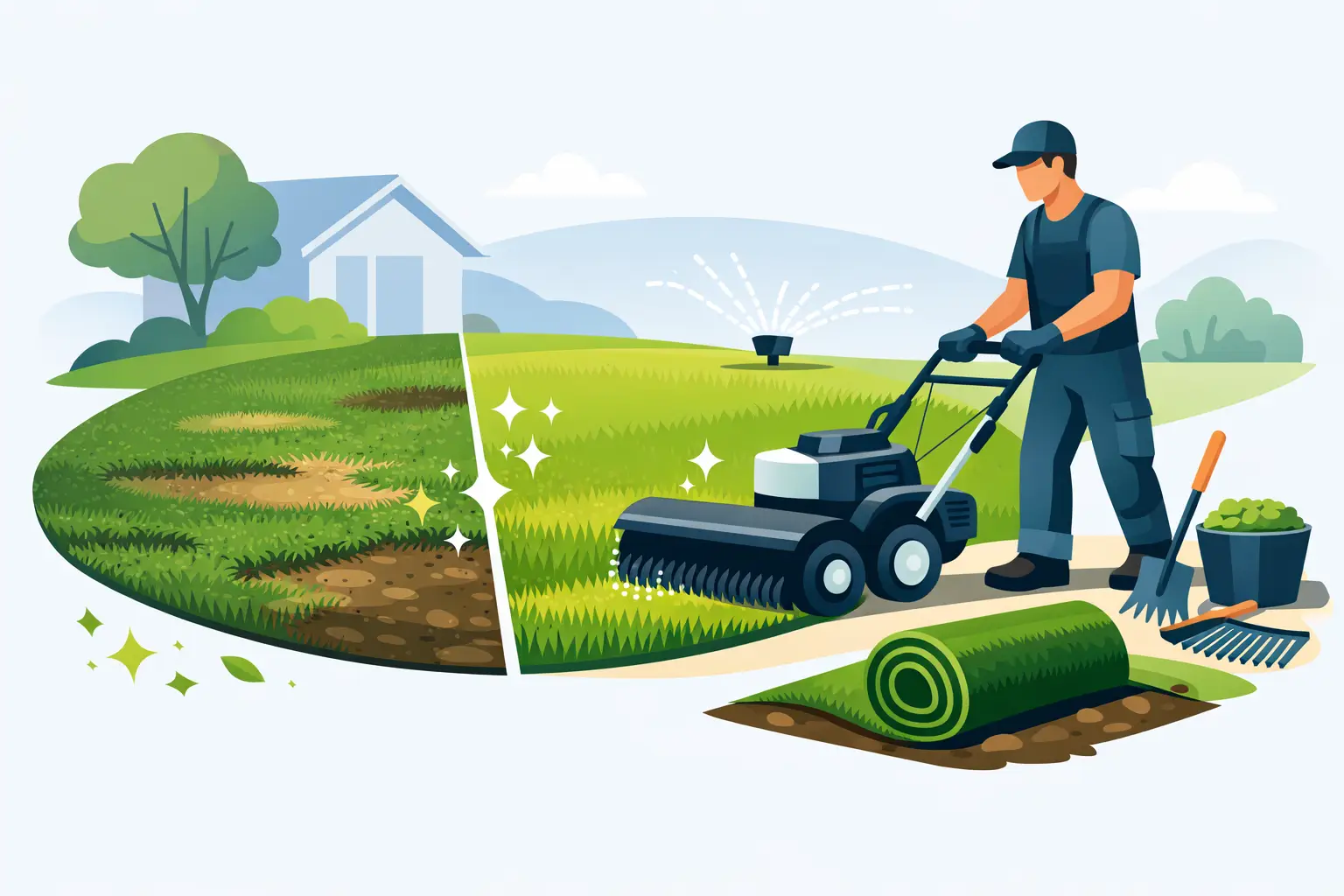
The first step is usually power brushing or power sweeping to lift matted grass blades and loosen compacted areas. This brings the turf upright again and helps release debris trapped deep in the fibers. If your lawn has worn traffic lanes, flattened pet zones, or areas that always look tired, this step matters more than most homeowners realize.
Next comes debris and pet hair removal. Not just leaves on top, but embedded material that sits down in the turf and contributes to odor and poor drainage. Hair buildup is a major issue in pet households because it mixes with dust and moisture and creates a layer of grime that a garden hose will not move.
From there, deep rinsing helps flush out contaminants that have settled below the surface. On problem lawns, odor and stain treatment may be needed in targeted areas where pets repeatedly urinate. In stronger cases, urine extraction is the difference-maker. Instead of masking the smell, it removes the source.
The final stage is sanitizing and deodorizing. This should reduce bacteria, neutralize odor, and leave the space safer for pets and kids. Eco-friendly products matter here, but so does using enough cleaning power to actually solve the problem. Gentle and ineffective is still ineffective.
Signs your turf needs restoration, not a touch-up
Some lawns make the decision obvious. Others creep into bad shape gradually. If the turf smells strong after your dog uses it, stays flat even after brushing, looks dull in heavy-use areas, or seems dirty again right after cleaning, you are probably past basic upkeep.
Another sign is when guests notice the smell before you do. Homeowners often become nose-blind to their own yard. The same goes for appearance. Because you see it every day, it is easy to miss how much the turf has changed until it no longer feels clean enough for kids to play on or for company to enjoy.
There is also the cost angle. Artificial grass is a major investment. Letting buildup sit too long can shorten its usable life, especially if drainage is affected or the fibers stay crushed down. Restoration is often the smarter move before problems become severe enough to make replacement feel tempting.
Why pet owners benefit most from professional restoration
Pet owners usually get the biggest payoff from hiring a specialist because pet-related turf problems are the hardest to solve with DIY methods. A hose can dilute urine. It does not extract what has already soaked in. A scented spray can cover odor briefly. It does not remove bacteria or break the cycle in high-use areas.
That is why families with dogs often reach a point where they are cleaning more and enjoying the yard less. The space becomes something to manage instead of something to use. A professional restoration service changes that by resetting the turf.
When the process is done right, the yard looks fuller, smells fresher, and feels more usable again. That matters for homes where the backyard is part pet area, part play space, and part entertaining zone. Nobody wants to explain away a urine smell at a weekend barbecue.
What to expect from the results
The biggest visual change is usually the lift. Turf that looked crushed and tired can regain shape and texture after power brushing and deep cleaning. Color often looks better too, not because the turf is dyed or coated, but because built-up dirt and residue are removed.
The biggest functional change is odor control. In many cases, the smell is not gone because it has been covered. It is gone because the source was treated properly. That distinction matters, especially in hot weather when weak treatments fail fast.
There are limits, of course. If turf has severe long-term neglect, damaged backing, drainage issues, or years of contamination, one visit may not reverse everything perfectly. Honest providers should say that. But even in tougher cases, a true restoration can make a dramatic difference and often delay the need for costly replacement.
Choosing the right artificial turf restoration service
Not every company that cleans outdoor surfaces knows synthetic grass. That matters. Turf has its own structure, drainage behavior, infill needs, and odor challenges. You want a provider that understands how to lift the fibers, treat pet contamination, and clean deeply without damaging the material.
Look for a service that speaks clearly about restoration, not just freshening up. If the process includes power brushing, deep debris removal, odor treatment, sanitizing, and urine-focused care, you are in the right category. If the pitch sounds like a basic rinse with fragrance added, keep looking.
Before-and-after results are also worth paying attention to. So is how directly the company talks about smells, bacteria, and heavy pet use. The best providers are not vague. They know exactly what homeowners are dealing with because they solve it every day.
That is the difference companies like Elite Turf Cleaning are built around. Not generic exterior washing. Turf-specific restoration that brings worn, smelly synthetic grass back to life.
Restoration is about getting your yard back
A clean-looking yard that still smells bad is not clean. Turf that is green but flat, gritty, and full of hidden buildup is not really low-maintenance anymore either. Once artificial grass stops feeling fresh, the whole outdoor space becomes less useful.
A real artificial turf restoration service gives you something more valuable than a temporary improvement. It gives you back a yard you want to walk on, let the dog use, and enjoy with confidence. If your turf is starting to look gross, smell off, or feel worn out, waiting rarely makes it easier. Fresh, safe, like-new turf starts when the problem gets treated at the source.