If your backyard smells fine right after you hose it down but starts stinking again by the next afternoon, the problem is deeper than the surface. An artificial turf sanitation service is built for exactly that kind of turf – grass that looks tired, traps pet urine, holds bacteria, and never really feels clean no matter how often you rinse it.
For Arizona homeowners, this is a common problem. Artificial grass takes a beating from heat, dust, pet traffic, and everyday use. Over time, debris settles into the fibers, the infill gets packed down, and urine works its way below the visible surface. That is when your yard starts to look flat, smell sour, and feel like a place you would rather avoid than enjoy.
What an artificial turf sanitation service actually fixes
A lot of people assume turf only needs a quick spray and maybe a little deodorizer. That might help for a day or two, but it does not solve the real issue when contamination is trapped inside the turf system.
Artificial grass can hold onto pet hair, dust, leaves, food crumbs, and organic waste. Add repeated pet use, and now you also have urine salts, bacteria, and odor compounds sitting in the turf and infill. That buildup does not just disappear because water ran over it. In many cases, a hose can actually push waste deeper instead of removing it.
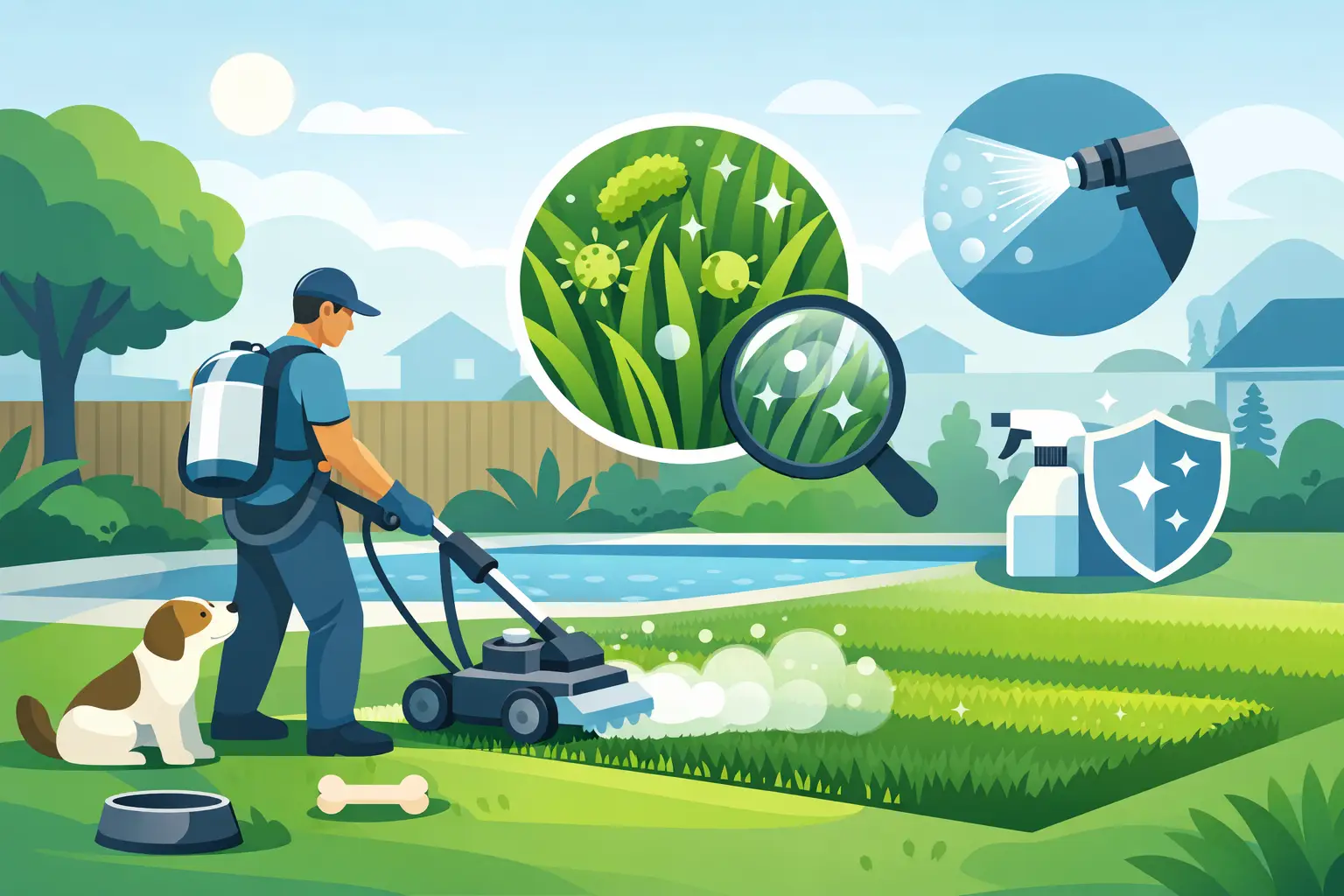
A professional sanitation service targets the full problem. That means lifting matted turf blades, removing embedded debris, flushing contaminants out, treating stains and odor sources, and applying sanitizer and deodorizer where they will actually make a difference. The goal is not to cover smells. It is to remove what is causing them.
Why DIY cleaning usually hits a wall
Most homeowners are not ignoring their turf. They are trying. They rinse it, spray a store-bought cleaner, maybe scrub a few spots, and hope the smell goes away. The trouble is that odor and bacteria problems usually live below the top layer.
Pet urine is the biggest reason DIY methods fall short. Once urine seeps into the infill and backing area, surface products stop being enough. You may improve the smell for a short time, especially right after cleaning, but the odor often returns once the sun heats the turf again. That is why some yards smell strongest in the afternoon.
There is also the appearance issue. Flattened turf does not bounce back with casual brushing. Embedded dirt and pet hair are hard to remove by hand. If the grass looks dingy, feels stiff, or stays matted down, the yard starts to lose the clean, soft look you paid for in the first place.
That is where a specialized service earns its value. It is not basic maintenance. It is restoration.
The difference between cleaning turf and restoring turf
This is the part many homeowners do not hear clearly enough. Surface cleaning and full restoration are not the same thing.
A basic cleaning may remove visible debris and freshen up the top layer. That can be helpful for lightly used turf or newer installations that have not developed deep odor issues yet. But if your yard is used daily by dogs, kids, or both, surface cleaning has limits.
Restoration goes further. It addresses the turf fibers, the infill, the trapped waste, the odor source, and the sanitation side of the job. Power brushing and power sweeping can lift crushed blades and loosen compacted material. Debris and pet hair removal clears out what has been sitting deep in the turf. Deep rinsing helps flush contamination instead of just wetting it. Odor treatment, urine extraction, and sanitizer application tackle the part homeowners care about most – making the space smell fresh and feel safe again.
That full-process approach matters most when the turf is showing several problems at once. If it smells bad, looks flat, and feels dirty underfoot, it usually needs more than one treatment step.
Signs you need an artificial turf sanitation service
Some turf problems are obvious. Others sneak up slowly until the yard has a permanent gross factor. If you notice a recurring urine smell, especially on hot days, that is a strong sign the turf needs professional attention.
A second red flag is appearance. When synthetic grass looks matted, dark, dusty, or patchy, there is often packed-in debris and compressed fibers below the surface. If your pets use the same spots over and over, staining and odor concentration can build up fast.
You may also notice that your yard is technically clean but does not feel clean. Maybe it smells better for a few hours after rinsing, then goes right back. Maybe your kids play on it, but you keep wondering what is living in there. That is usually the point where homeowners stop looking for another spray bottle and start looking for an actual fix.
What the service process should include
Not every company offering turf cleaning is doing the same level of work. If you are comparing options, look for a process that is focused on deep sanitation, not just cosmetic improvement.
The strongest services start by loosening and lifting the turf with power brushing or power sweeping. That step matters because compacted fibers trap debris and make the turf look worn out. From there, the cleaning should remove leaves, pet hair, and built-up grime that regular maintenance misses.
Next comes deep rinsing and targeted treatment. If the yard has pet odor issues, the service should go after urine contamination directly, not simply add fragrance. Urine extraction and odor treatment are what separate a real sanitation service from a quick wash. A sanitizer and deodorizer should be the finishing step, not the whole strategy.
When done well, the turf should look fuller, smell cleaner, and feel fresher almost immediately. The best result is not just visual. It is being able to walk outside without catching that nasty odor you had gotten used to.
Why this matters for pet owners and families
For homes with dogs, turf is convenient until it stops feeling sanitary. That usually happens gradually. The yard becomes the go-to bathroom area, the smell starts hanging around, and no one wants to admit how bad it has gotten.
A true artificial turf sanitation service helps reset the space. It removes the mess your pets leave behind and cuts down the bacteria and odor buildup that make the yard less enjoyable. For families, that means a cleaner place for kids to play and a backyard that feels usable again.
There is also a cost angle. Replacing artificial grass is expensive. If the turf itself is still structurally sound, restoration is the smarter move. Professional cleaning can extend the life of the turf by reducing wear from packed debris and helping the fibers stand back up. It will not reverse every problem forever, especially in high-use pet areas, but it can dramatically improve the condition of the yard without the cost of replacement.
How often should turf be sanitized?
It depends on how heavily the space is used. A backyard with one small dog may need less frequent service than a pet run with multiple large dogs using it every day. Homes with kids, frequent outdoor gatherings, or heavy dust exposure may also benefit from more regular cleaning.
As a general rule, if odor keeps returning, appearance is declining, or your normal routine is no longer keeping up, it is time. Waiting too long usually makes the problem harder to remove because contaminants keep building below the surface.
For many pet-owning households, routine professional service makes more sense than waiting for the yard to become unbearable. It is easier to maintain fresh turf than to rescue severely neglected turf after months of urine and grime buildup.
Choosing a service that solves the real problem
The best company for this job should sound focused, not generic. You want a specialist who understands synthetic grass, pet odor treatment, deep cleaning, and restoration. If the messaging is all about pressure washing driveways and turf is just another add-on service, that is a clue.
A turf-specific company should be able to explain exactly how it removes embedded waste, treats urine odors, sanitizes the area, and restores the look of the grass. The difference shows up in the results. Elite Turf Cleaning, for example, centers the service around bringing turf back to life, not just spraying it down and calling it clean.
If your grass is starting to smell, look flat, or feel unsanitary, do not wait until it gets worse. Fresh, safe turf is not a luxury when your backyard is part of daily life. It is the kind of fix that makes the whole yard feel usable again.