Artificial turf should not turn into a puddle, a sour-smelling pet zone, or a dirty mat that stays damp after a rinse. This artificial grass drainage guide explains what should happen beneath your turf, what can go wrong in Arizona yards, and why drainage problems often look a lot like cleaning problems.
For homeowners with dogs, the biggest surprise is this: water draining away does not automatically mean urine, bacteria, pet hair, and grime are gone. A yard can drain reasonably well and still smell terrible. It can look flat, feel gritty, and hold odor deep in the infill. That is where the right diagnosis matters.
How Artificial Grass Drainage Is Supposed to Work
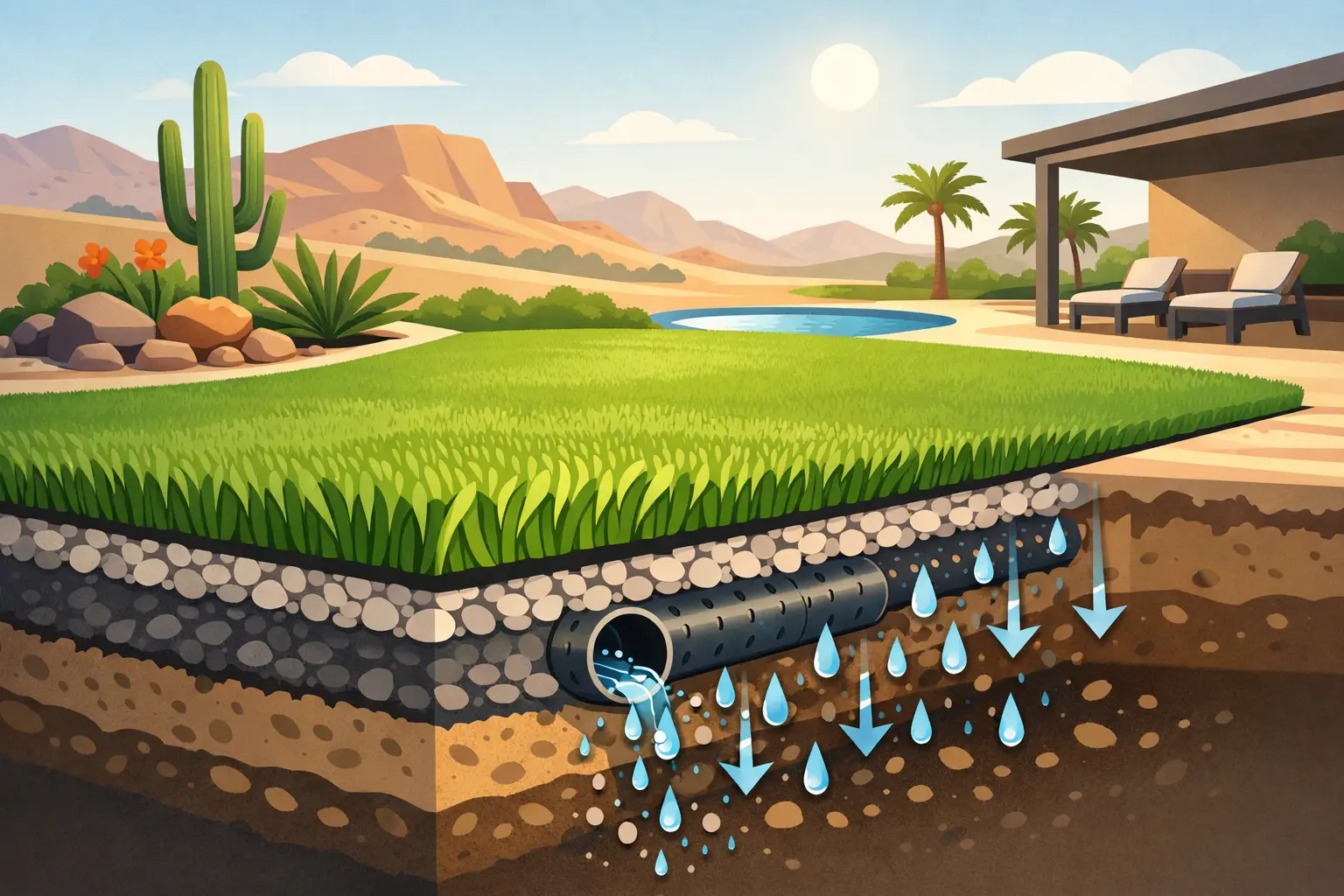
A properly installed artificial lawn is a system, not just a green surface. Rainwater, hose water, and pet urine should move through the turf backing, pass through the infill and compacted base, then disperse into the soil or flow toward a planned drainage route.
Most quality artificial grass has perforations in the backing that allow water to pass through. Beneath it, installers typically use a compacted aggregate base designed to stay stable while allowing water movement. The exact materials and drainage design depend on the yard, soil type, slope, and expected use.
Arizona creates a few special challenges. Our intense sun dries the surface fast, which can make a turf area appear clean even when debris and urine residue are building below. Monsoon rain can also hit hard and fast. If the base is poorly graded, compacted incorrectly, or blocked by fine debris, water may pool instead of draining where it should.
A small amount of moisture after a heavy storm is not always a red flag. Persistent puddles, soggy spots, or water that sits for hours after normal rinsing are different. Those signs deserve attention before the base becomes unstable or odor gets worse.
Drainage Problems vs. Turf Cleaning Problems
Not every unpleasant turf issue is a drainage failure. In fact, many homeowners call a drainage issue when the real problem is heavily impacted, contaminated turf.
If water pools in the same location after rain or a hose test, the issue may be the base, the yard slope, clogged drainage channels, or an installation problem. Water may be trapped beneath the turf or unable to move through compacted material. In those cases, cleaning alone will not change the path water takes.
But if water disappears normally and the turf still smells like urine, feels stiff, looks matted, or has dark grime around the edges, you are likely dealing with buildup. Pet hair, dust, organic debris, dried urine salts, and contaminated infill can restrict water movement near the surface while creating a perfect environment for odor-causing bacteria.
That is why casual hosing often disappoints pet owners. Water may push odor deeper without fully extracting the source. It can also leave behind the urine crystals and bacteria that reactivate when the area gets wet or hot. No more guessing based on a quick rinse. Look at how the turf drains and how it smells after it dries.
Signs Your Artificial Grass May Have a Drainage Issue
A working turf system should shed water without creating a mess. Watch for these warning signs, especially after monsoon storms, regular irrigation, or a thorough rinse:
- Puddles remain on the surface for several hours.
- One section stays damp while the rest of the yard dries.
- Water runs toward the house, patio, pool deck, or low spot instead of away from it.
- The turf feels squishy, shifts underfoot, or develops wrinkles.
- Fine sediment comes up through the turf after rain.
- You notice recurring odor in areas that also stay wet.
One isolated puddle after a major downpour may be manageable. Recurring standing water is not. It can carry debris into the fibers, flatten the turf, create slippery spots, and expose problems beneath the surface.
The Quick Hose Test
A hose test gives you a simple starting point. Pick a dry day and gently spray a few different sections of turf for several minutes. Include the dog’s favorite potty area, the center of the lawn, and any spot near a wall, patio, or landscape border.
Watch the water. It should move through the surface instead of collecting on top. Then check the area again after 15 to 30 minutes. If a spot remains visibly pooled or feels saturated while nearby areas are dry, take note.
Do not blast the turf with a high-pressure nozzle. Strong pressure can move infill, push debris around, and make the test less useful. You are checking drainage behavior, not trying to pressure wash the lawn.
If the surface drains but a strong urine smell rises as it gets wet, that points toward contamination rather than a major drainage failure. The moisture is waking up odor trapped in the infill and backing. That is a deep-cleaning issue, and it needs more than fragrance or a quick deodorizer.
Why Pet Areas Need Extra Attention
Dog urine is concentrated in a small area, often day after day. Even permeable turf cannot make that volume of urine disappear without residue. Liquid passes through, but urine salts, bacteria, and odor compounds can remain in the infill and around the backing.
Over time, the same pet zone may become matted, hard, discolored, and unpleasant to use. The odor can be strongest in the afternoon, after a rinse, or when Arizona heat hits the yard. If your turf smells fine in the morning but gross by midday, the problem is usually below the visible surface.
Proper turf maintenance helps keep drainage pathways clearer. Removing pet hair and embedded debris prevents a dirty layer from forming at the surface. Power brushing lifts flattened fibers and loosens impacted material. Deep rinsing, urine extraction, targeted odor treatment, and sanitizing address what a hose cannot reach.
There is a trade-off here: frequent rinsing can dilute fresh urine, but rinsing alone cannot remove years of buildup. It may even keep a contaminated area damp longer if the infill is compacted. For a high-use dog run, professional restoration is often the faster route back to a clean, fresh yard.
Keeping Turf Drainage Clear Between Cleanings
You do not need to overwork your artificial lawn, but ignoring it is expensive. A few simple habits protect both appearance and drainage.
Pick up solid pet waste promptly. Blow or sweep off leaves, loose dirt, and pet hair before they work down into the fibers. Use a leaf blower carefully rather than digging aggressively with a metal rake. A stiff broom or turf-safe brush can help lift light matting, but avoid scraping the backing or pulling out infill.
Rinse pet areas periodically, especially during hot, dry stretches. The goal is to flush fresh residue, not soak the yard every day. If your water does not drain well, repeated soaking can make a developing issue more obvious without solving it.
Keep nearby landscape material under control. Decomposed granite, loose soil, mulch, and leaves can migrate onto turf and clog the surface over time. Check borders after storms, and do not allow sprinkler overspray to constantly hit one section of the lawn.
Avoid pouring bleach, harsh household chemicals, or heavy soap solutions onto synthetic grass. These products can leave residue, affect color, harm nearby plants, and fail to remove odor at its source. A turf that smells chemically clean for one day but still carries bacteria underneath is not restored.
When Cleaning Is Enough and When Repairs Are Needed
Professional cleaning is the right answer when the turf drains but is dirty, matted, smelly, or unsanitary. A full restoration process can remove embedded debris and pet hair, power brush flattened fibers, rinse the turf deeply, extract urine contamination, and apply pet-safe sanitizer and deodorizer treatments. The result is turf that looks better, smells better, and feels clean underfoot.
Repair or installer evaluation is more likely needed when you have repeated standing water, obvious low spots, shifting turf, drainage flowing toward the home, or a base that stays saturated. Those are structural concerns. A cleaning can remove surface buildup, but it cannot correct poor grading or rebuild a failed base.
Sometimes it is both. A turf area may have a shallow low spot and years of pet contamination. In that case, handle the drainage defect so water has somewhere to go, then restore the turf so the odor and grime do not remain behind.
Elite Turf Cleaning helps Arizona homeowners separate the surface problem from the deeper problem. When your turf drains but still looks gross or smells worse every summer, targeted deep cleaning and urine extraction can bring it back to life without replacing the whole lawn.
Your artificial grass should be the easy part of the yard. If water is pooling, odors return after every rinse, or the pet area no longer feels safe and fresh, do not cover it up with more water or fragrance. Get the cause identified, address the right layer of the problem, and give your turf the clean reset it needs.