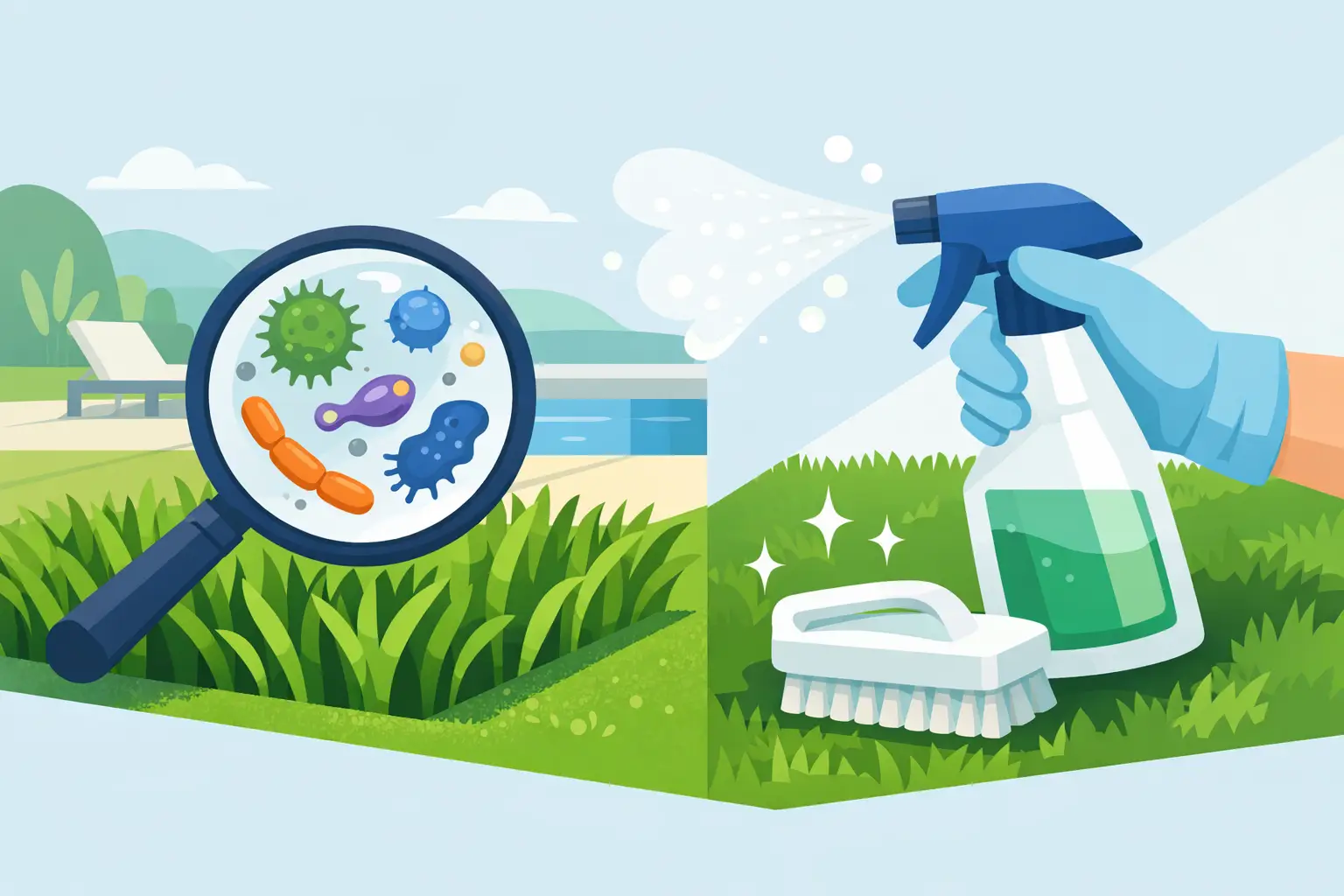
A clean-looking lawn can still hold a not-so-clean secret. If your artificial grass is used by dogs, kids, guests, or backyard wildlife, dirt and bacteria do not just sit on top. They settle into the blades, backing, and infill. So, does fake grass need disinfecting? For many Arizona homes, especially homes with pets, the answer is yes.
Artificial turf does not grow mold and weeds like natural grass, but it still collects organic mess. Pet urine, drool, feces residue, spilled drinks, food crumbs, dust, and debris can all build up over time. Add Arizona heat, and those trapped odors can become impossible to ignore.
Does Fake Grass Need Disinfecting After Everyday Use?
Not every artificial lawn needs a full disinfecting treatment every week. A lightly used decorative front yard may only need occasional rinsing, debris removal, and brushing. But a backyard where dogs pee every day is a different story.
Disinfecting is most valuable when turf is exposed to biological messes. That includes pet urine and waste, vomit, bird droppings, muddy paws, standing water, and high foot traffic. These contaminants can leave behind bacteria and unpleasant smells even after the surface appears clean.
The issue is not that artificial grass is inherently dirty. The issue is what gets trapped beneath the visible surface. Turf fibers can hide hair, dust, and waste particles, while infill can absorb urine and moisture. A quick spray from the hose may rinse away loose dirt, but it often cannot reach the source of a deep-set odor.
If your turf has a sour smell, a strong ammonia odor, dark spots, flattened areas, or flies hanging around one part of the yard, it is telling you something. It needs more than a casual rinse.
Pet Urine Is the Biggest Reason to Disinfect Turf
Dog urine is the number-one reason Arizona homeowners call for turf sanitization. In dry weather, urine salts and bacteria can remain in the infill instead of being naturally washed away by regular rainfall. Then the sun heats the area, and the odor comes right back.
This is why a backyard may smell fine early in the morning but become unpleasant by afternoon. Heat activates the odor that is trapped below the turf blades. Spraying fragrance over the surface may cover it briefly, but it does not remove the urine crystals, bacteria, or residue causing the problem.
A proper treatment targets the full system: the turf fibers, the infill, and the backing where odors linger. That means removing pet hair and debris first, flushing contaminants from the turf, treating affected areas with an appropriate pet-safe solution, and applying sanitizer and deodorizer where needed.
For households with multiple dogs, this is not a one-time concern. Regular deep cleaning prevents years of buildup that can make expensive artificial grass look worn out and smell worse.
Rinsing and Disinfecting Are Not the Same Thing
Hosing down fake grass is helpful. It cools the surface, moves loose dust, and can dilute fresh urine before it dries. For a pet area, rinsing several times a week is a smart maintenance habit.
But rinsing is not the same as disinfecting. Water does not reliably kill bacteria or break down the concentrated urine residue lodged in infill. It also does not lift compacted debris, restore flattened turf fibers, or remove hair wrapped around the base of the grass.
Think of it this way: rinsing is daily upkeep. Disinfecting is a deeper reset when sanitation and odor control matter. Both have a place, but one cannot replace the other.
Avoid using harsh household bleach, ammonia-based cleaners, or products not designed for synthetic turf. These can damage fibers, leave behind strong fumes, create unsafe conditions for pets, or make urine odors worse. Artificial grass needs cleaning products that are effective on bacteria and odor without being aggressive on the turf itself.
When Your Turf Needs More Than DIY Cleaning
Some turf problems are easy to manage at home. You can pick up solid pet waste quickly, remove leaves, rinse urine spots, and use a leaf blower or soft rake to clear loose debris. Those habits make a real difference.
The trouble starts when the contamination is embedded. If the turf has not been professionally cleaned in a long time, the infill may be compacted with dust, hair, and urine residue. The blades may be matted down. Odors may return right after you clean because the real source is still underneath.
Professional turf restoration is designed for that level of buildup. Power brushing helps lift flattened grass fibers and loosen trapped material. Power sweeping and debris removal clear out hair and grime that ordinary tools miss. Deep rinsing flushes the turf, while targeted urine extraction, sanitizer, and deodorizer treatments address the odor and bacteria at the source.
That process does more than make the yard smell better. It improves how the turf drains, feels underfoot, and looks from the patio. A turf area that has started to look gray, flat, or gross can often be brought back to a fresher, fuller appearance without the cost of replacement.
How Often Should Artificial Grass Be Disinfected?
The right schedule depends on how your yard is used. A pet-free front lawn might only need professional cleaning once or twice a year, particularly after dust storms, monsoon season, or heavy entertaining. A backyard with one dog usually benefits from a deeper sanitizing service every three to six months.
For multiple pets, large dogs, puppy training, or a designated dog run, more frequent service is often the better call. Every one to three months can help prevent odor from taking hold, especially through the hottest months of the year.
There is no reason to wait until the smell becomes overwhelming. In fact, maintenance cleaning is usually easier and more effective than trying to rescue turf after years of urine buildup. If you can smell your yard from the door, see discolored areas, or notice that guests avoid the pet zone, it is time to act.
Is Disinfected Turf Safe for Pets and Kids?
It should be, provided the treatment is made for artificial grass and applied correctly. The goal is to remove the mess while leaving a clean, fresh space where your family can use the yard comfortably.
A quality turf cleaning process should prioritize pet-safe, eco-friendly products and avoid leaving behind sticky residue or overpowering chemical smells. It should also include the physical cleaning work that actually removes contaminants. Sanitizer alone is not a magic fix when the turf is full of hair, dirt, or compacted infill.
After treatment, follow the technician’s guidance on when pets and children can return to the area. In many cases, that simply means allowing the turf to dry fully. The result should feel like a backyard again, not a space you have to keep everyone away from.
Bring Back the Fresh Yard You Paid For
Artificial grass is supposed to make life easier, not leave you embarrassed by pet odors or worried about what is living beneath the blades. Routine rinsing helps, but deep disinfecting and restoration are what bring heavily used turf back to life.
If your lawn smells worse when the sun comes out, looks flattened, or has become your dog’s favorite bathroom, do not settle for surface-level cleaning. Elite Turf Cleaning can remove the buildup, treat the source, and leave your turf fresher, cleaner, and ready to enjoy again.