A backyard can look clean from the patio and still hold pet hair, dust, bacteria, and urine deep in the turf fibers and infill. So, how often should turf be cleaned? For most Arizona homes, light upkeep should happen regularly, while a professional deep clean is typically needed every 6 to 12 months. If dogs use the yard every day, that timeline gets much shorter.
Artificial grass is low maintenance. It is not no maintenance. The same features that make turf great for busy families – dense fibers, drainage layers, and infill – can also trap the mess that a quick hose-down leaves behind. Once odors settle in or blades start lying flat, surface cleaning is no longer enough.
How Often Should Turf Be Cleaned in Arizona?
Arizona turf deals with a unique mix of problems: blowing dust, intense sun, monsoon debris, hard water, pool traffic, and pets spending more time outdoors. A realistic cleaning schedule depends on how your yard is used, not just how it looks.
For a low-traffic backyard with no pets, plan on a professional restoration and sanitizing service about once a year. Between visits, remove leaves and loose debris and rinse the turf as needed. This keeps dust from building up and helps your artificial grass stay bright instead of dull and matted.
For homes with one dog using the turf regularly, every 6 months is the better target. Urine does not simply disappear because the turf drains. The liquid may drain away, but odor-causing bacteria and urine salts can remain in the fibers and infill. Arizona heat makes that problem more noticeable fast.
For multiple dogs, a designated pet area, or frequent backyard use, schedule deep cleaning every 3 to 4 months. This is especially true when dogs repeatedly use the same spots. Waiting until the whole yard smells bad usually means the buildup has already spread beyond one small area.
High-traffic family yards also need more frequent attention. Kids, guests, outdoor dining, pool use, and backyard play press dirt and debris down into the turf. The fibers flatten, drainage slows, and the surface starts to feel less fresh. A seasonal cleaning schedule keeps those problems from becoming an expensive restoration job.
A Simple Turf Cleaning Schedule by Yard Type
Use these guidelines as a starting point, then adjust based on odor, traffic, and what you see under the turf blades.
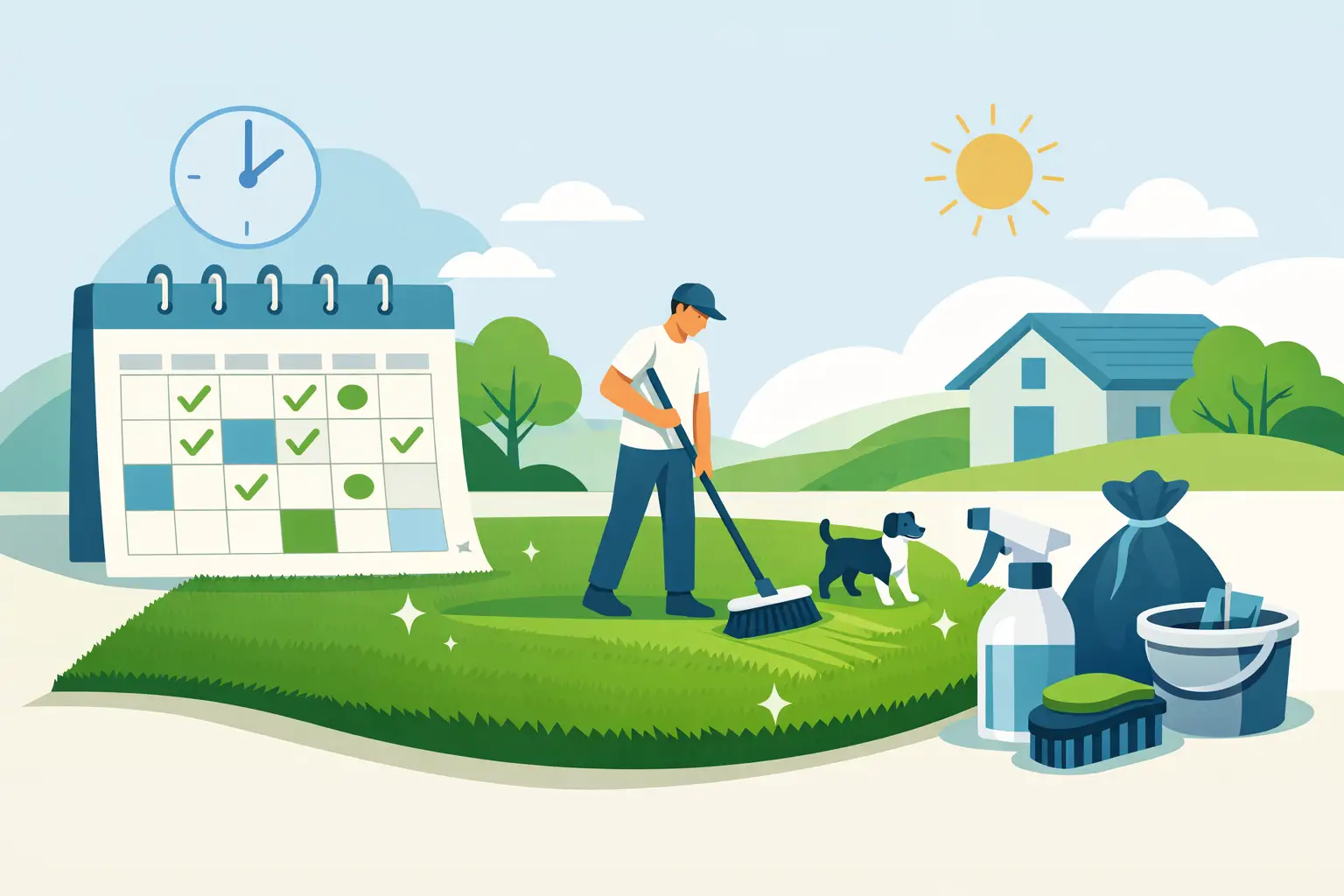
- No pets and light foot traffic: Light debris removal as needed, routine rinsing during dusty periods, and professional cleaning every 9 to 12 months.
- One dog and average family use: Pick up solid waste promptly, rinse pet areas regularly, and book deep cleaning about every 6 months.
- Two or more dogs: Keep up with frequent spot rinsing and waste removal, then schedule professional deodorizing and urine extraction every 3 to 4 months.
- Heavy-use pet runs or active entertaining areas: Expect a professional service every 2 to 3 months, particularly during hot weather or when odors return quickly.
These are not arbitrary dates on a calendar. They are practical intervals designed to stop bacteria, embedded pet hair, compressed infill, and urine residue from taking over your yard.
Why Hosing Turf Off Is Not a Deep Clean
A garden hose is useful. It can wash away loose dust, cool the surface, and help dilute fresh pet urine. But it cannot lift compacted debris from the base of the turf, pull out embedded pet hair, or fully treat the bacteria causing a stubborn urine smell.
This is where homeowners often get frustrated. They rinse the yard, spray a deodorizer, and the turf smells better for a day or two. Then the heat hits, the dogs use the same area again, and the odor returns. The odor was masked, not removed.
A true professional turf cleaning reaches below the surface. Power brushing and power sweeping stand up flattened blades and loosen trapped debris. Deep rinsing flushes out grime. Pet odor treatments and urine extraction target the source of the smell, followed by sanitizing and deodorizing that leave the turf fresh, not perfume-covered.
That difference matters when children play outside, guests come over, or your dog treats the backyard like its personal bathroom. No more odors. No more matted-down grass. No more wondering whether a clean-looking yard is actually clean.
Signs Your Turf Needs Cleaning Now
Do not wait for the next scheduled service if your turf is showing clear signs of buildup. The earlier you deal with the problem, the easier it is to restore the grass and protect the drainage beneath it.
A persistent pet smell is the biggest warning sign, especially when it gets stronger in the afternoon heat or after the area is wet. If you can smell urine from the patio, the contamination has likely moved beyond a quick spot treatment.
Flat, crushed blades are another sign. Turf fibers naturally get pressed down over time, but a yard that looks worn out, shiny, or permanently matted needs power brushing. This lifts the fibers and improves the appearance of the entire lawn without replacing it.
Watch for debris that seems impossible to rake out, including pet hair, leaves, dirt, and small rocks lodged near the base. Slow drainage, dark stains, flies, or a sticky feeling underfoot are also reasons to call for professional service. These are not cosmetic issues alone. They point to trapped organic material and bacteria that routine cleanup is missing.
What You Can Do Between Professional Cleanings
You do not need to spend every weekend maintaining artificial grass. A few consistent habits make a major difference and help your deep clean last longer.
Pick up pet waste as soon as possible. Solid waste leaves bacteria behind even after it is removed, but letting it sit makes cleanup much harder. Rinse the area afterward, especially during the hottest months.
Clear leaves, branches, and loose debris before they break down into the turf. A leaf blower on a low setting or a plastic rake works well. Avoid aggressive metal rakes that can damage turf fibers or pull up infill.
Brush high-use areas periodically with a turf-safe broom or brush. Work against the grain to help the blades stand upright. This is especially helpful near gates, patios, dog runs, and outdoor furniture where foot traffic is concentrated.
Skip harsh household chemicals, bleach, and heavily fragranced products. They can damage turf backing, leave residue, or create a stronger chemical smell without solving the bacteria problem. If the odor is persistent, professional treatment is the faster path to a real fix.
The Cost of Waiting Too Long
Ignoring dirty turf does not save money. It lets the problem settle deeper. Pet urine crystals, embedded hair, compacted infill, and bacteria can turn a manageable cleaning into a tougher restoration job. Severe odor can make homeowners avoid their own backyard, even after investing thousands in artificial grass.
There is also the appearance factor. Artificial turf should make your property look sharp year-round. When it is flattened, dusty, stained, or smelly, it does the opposite. Regular service helps extend the life of the turf, preserve drainage, and keep the yard ready for pets, kids, and company.
Elite Turf Cleaning is built for the jobs that a hose and store-bought spray cannot handle. A focused deep clean can bring tired synthetic grass back to life with power brushing, debris removal, urine extraction, sanitizing, and odor elimination designed for real Arizona backyards.
If your turf has started to look gross, smell worse after the sun comes out, or feel flat underfoot, do not wait for it to become the normal state of your yard. A fresh, clean lawn is closer than you think – and it makes every minute outside better.