Your artificial grass can look clean from the patio and still hold pet hair, dust, flattened fibers, bacteria, and urine residue deep below the surface. That is the real difference in manual brushing vs power sweeping. One can help with light upkeep. The other is built to pull your turf out of the tired, matted, smelly condition that makes a backyard feel gross.
For Arizona homeowners with dogs, kids, and turf that gets used every day, the right method is not just about appearance. It affects drainage, odor, hygiene, and how long your investment keeps looking like a green lawn instead of a flattened outdoor rug.
Manual Brushing vs Power Sweeping: What Changes?
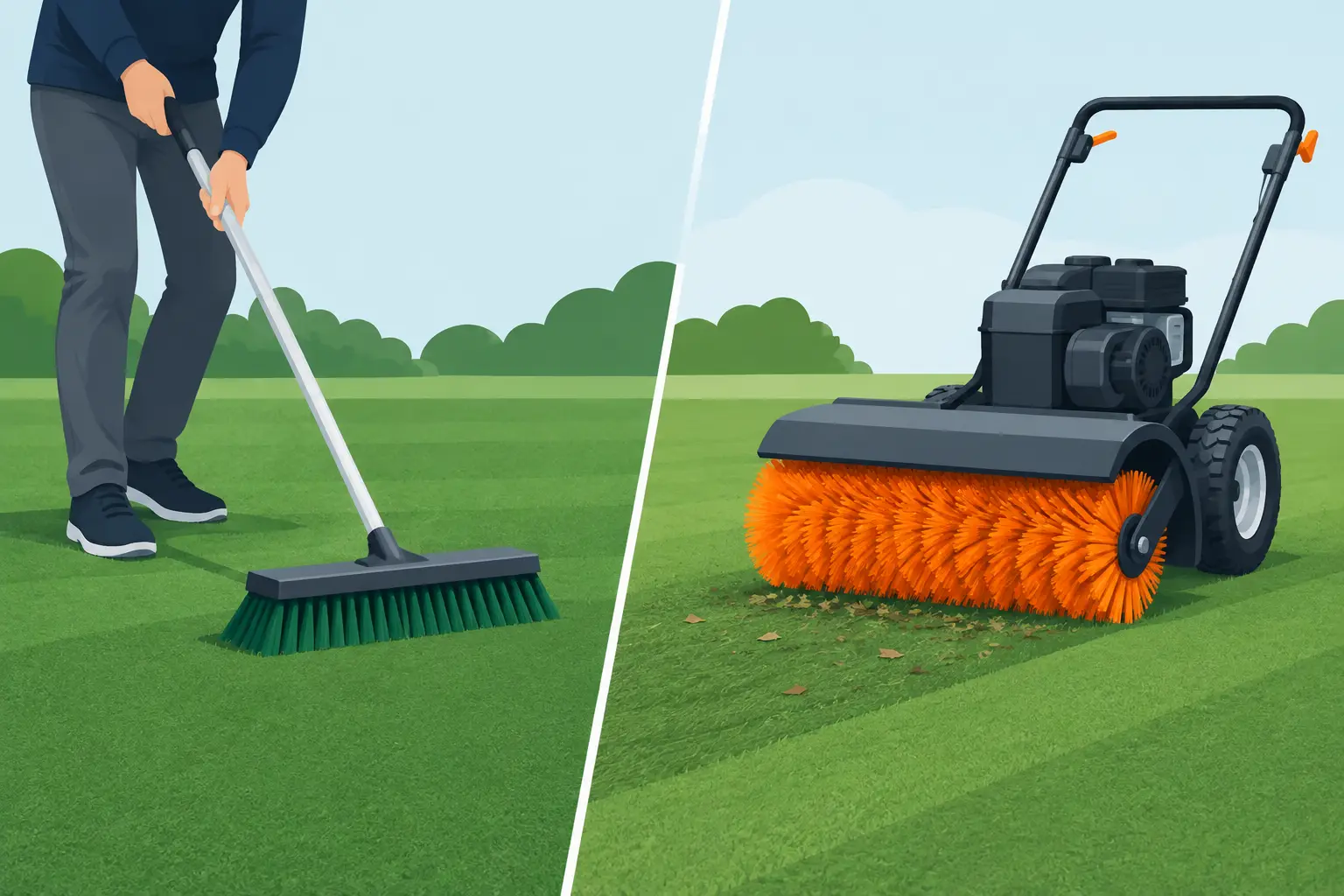
Manual brushing means using a stiff broom, turf rake, or hand brush to move surface debris and lift grass blades. It is a reasonable maintenance step for a small, lightly used area. If a few leaves blew in or one spot looks pressed down after patio furniture was moved, a manual brush can improve the look quickly.
Power sweeping uses professional motorized equipment with rotating brushes designed for artificial turf. The equipment works across a larger area with consistent agitation, lifting fibers while bringing embedded debris, pet hair, and buildup toward the surface. It reaches deeper and works faster than a homeowner can with a rake.
That difference matters because artificial turf does not get dirty only on top. In Arizona yards, fine dust settles into the fibers. Pet hair tangles around the blades. Urine can move through the turf and collect in the infill or backing. A quick hand-brushing session may make the grass stand up, but it does not automatically remove the source of odor or contamination.
What Manual Brushing Does Well
Manual brushing still has a place in regular turf care. It gives homeowners a simple way to keep a low-traffic patch from looking flat between professional cleanings. Brushing against the grain can fluff blades that have been pressed down, especially around patio edges, decorative areas, or spots where pets like to nap.
It can also help loosen dry leaves and visible surface debris before you hose the area. For a small putting strip or a front-yard accent that rarely sees feet or paws, that may be enough for basic cosmetic upkeep.
The problem is effort and depth. Brushing an entire backyard by hand takes time, and uneven pressure can leave some areas matted while others are overworked. A standard broom is not made to separate dense pet hair from turf fibers or extract grime that has settled below the blade level.
Manual brushing also does not sanitize. It does not neutralize urine crystals, treat bacteria, rinse contaminated infill, or correct drainage-related odor problems. If the turf smells fine and only needs a quick lift, manual care is useful. If you smell urine after the Arizona sun heats up, the job is bigger than a brush.
Where Power Sweeping Wins
Power sweeping is the stronger choice for high-traffic yards, dog runs, play areas, and turf that has started to look crushed or feel dirty underfoot. The rotating brush action lifts and separates turf fibers much more consistently than manual tools. That restores the fuller, more natural look homeowners expect from synthetic grass.
Just as valuable, power sweeping helps release the debris hiding underneath. Pet hair, dry organic material, dust, and tracked-in dirt do not simply disappear when you rinse the turf with a hose. They can stay trapped, block airflow, contribute to odors, and leave the turf looking dull even after a basic cleanup.
For pet owners, power sweeping is often the first meaningful step in a full restoration service. It prepares the turf for debris removal, deep rinsing, urine treatment, and sanitizing products by opening up the fibers and breaking loose what has been sitting there. No more brushing around the problem while the smell returns every afternoon.
Professional equipment also allows for better coverage. A technician can treat the whole turf area systematically, including the heavily used zones near gates, shaded corners, and favorite potty spots. Those are usually the areas that need the most attention and get the least effective treatment during casual DIY maintenance.
Power Sweeping Is Not the Same as Cleaning
Power sweeping is powerful, but it is not a complete odor solution by itself. This is where many homeowners get frustrated. They brush the turf, hose it down, and expect the smell to be gone. Then the first hot day arrives, and the urine odor is back.
That happens because the source is often below the visible turf fibers. Urine residue can remain in the infill, on the backing, and in the base beneath the turf. Water may dilute some surface residue, but it can also push contamination deeper when there is no extraction or targeted treatment.
A true turf restoration process pairs power sweeping with the services the condition calls for. That can include pet hair and debris removal, deep rinsing, urine extraction, odor and stain treatment, and a turf-safe sanitizer and deodorizer application. The goal is not to cover the smell with fragrance. The goal is to remove the buildup causing it.
When Manual Brushing Is Enough
Manual brushing may be enough when the turf is newer, used lightly, and free of pet odor. It is a smart touch-up after a windy week, before guests come over, or when a few blades are lying flat under outdoor furniture.
It is also useful between professional visits. Think of it as regular grooming, not deep cleaning. A homeowner who keeps leaves off the turf, picks up solid pet waste promptly, and brushes occasional flat spots will help maintain a cleaner surface.
But do not force a DIY tool to do a restoration job. If the turf feels compacted, looks gray or dingy, sheds pet hair every time you rake it, or smells worse after watering, manual brushing is likely only treating the symptom.
Signs Your Turf Needs Power Sweeping and Deep Cleaning
Your yard is ready for more than a hand brush when several problems show up at once. Flattened traffic lanes, especially around doors and pet paths, are a clear sign. So are stubborn clumps of fur, dark spots, flies, lingering odors, and turf that feels sticky or dusty even after you rinse it.
Pay attention to the timing of odors. A faint smell that becomes strong during hot afternoons is rarely a surface issue. Heat activates trapped urine residue, which is why Arizona pet owners often notice the problem most when they want to use their backyard.
Another warning sign is water behavior. If water pools in places, drains slowly, or leaves a dirty smell behind, there may be compacted debris or contamination below the fibers. Power sweeping can help restore lift and access, but severe odor and drainage problems may require a more targeted professional treatment plan.
The Best Approach for Busy Arizona Pet Owners
For most pet-friendly backyards, the best answer is not manual brushing or power sweeping alone. It is routine light upkeep at home plus scheduled professional restoration when dirt, hair, flattening, and odors begin to build up.
Use manual brushing for small touch-ups. Keep the surface clear of leaves and pet waste. Rinse as needed to remove dust and fresh messes. Then bring in professional power sweeping and sanitation when the turf starts looking worn, smelling unpleasant, or losing that clean, springy feel.
Elite Turf Cleaning approaches artificial grass as a system, not just a green surface. Power brushing and sweeping are used to revive the fibers, while deep cleaning and odor treatments address the mess hiding underneath. That is how turf goes from matted and smelly to fresh, lifted, and ready for the family to enjoy again.
Your backyard should not become the place everyone avoids because the turf looks flat or smells like a dog run. If regular brushing is no longer changing what you see or smell, give the turf the deeper reset it is asking for.