That sharp pet-urine smell that hits when Arizona temperatures climb is not a problem you can always hose away. In the enzyme cleaner vs turf disinfectant debate, the right answer depends on what is trapped inside your artificial grass: odor-causing urine residue, bacteria, surface contamination, or all three.
Homeowners often buy one product, spray it heavily, and expect an instant reset. Then the smell returns a few days later. The reason is simple: artificial turf has layers. Pet waste, hair, dust, bacteria, and urine salts can settle past the blades and into the infill and backing. A surface spray can help, but it cannot always reach or remove the source.
Enzyme Cleaner vs Turf Disinfectant: The Real Difference
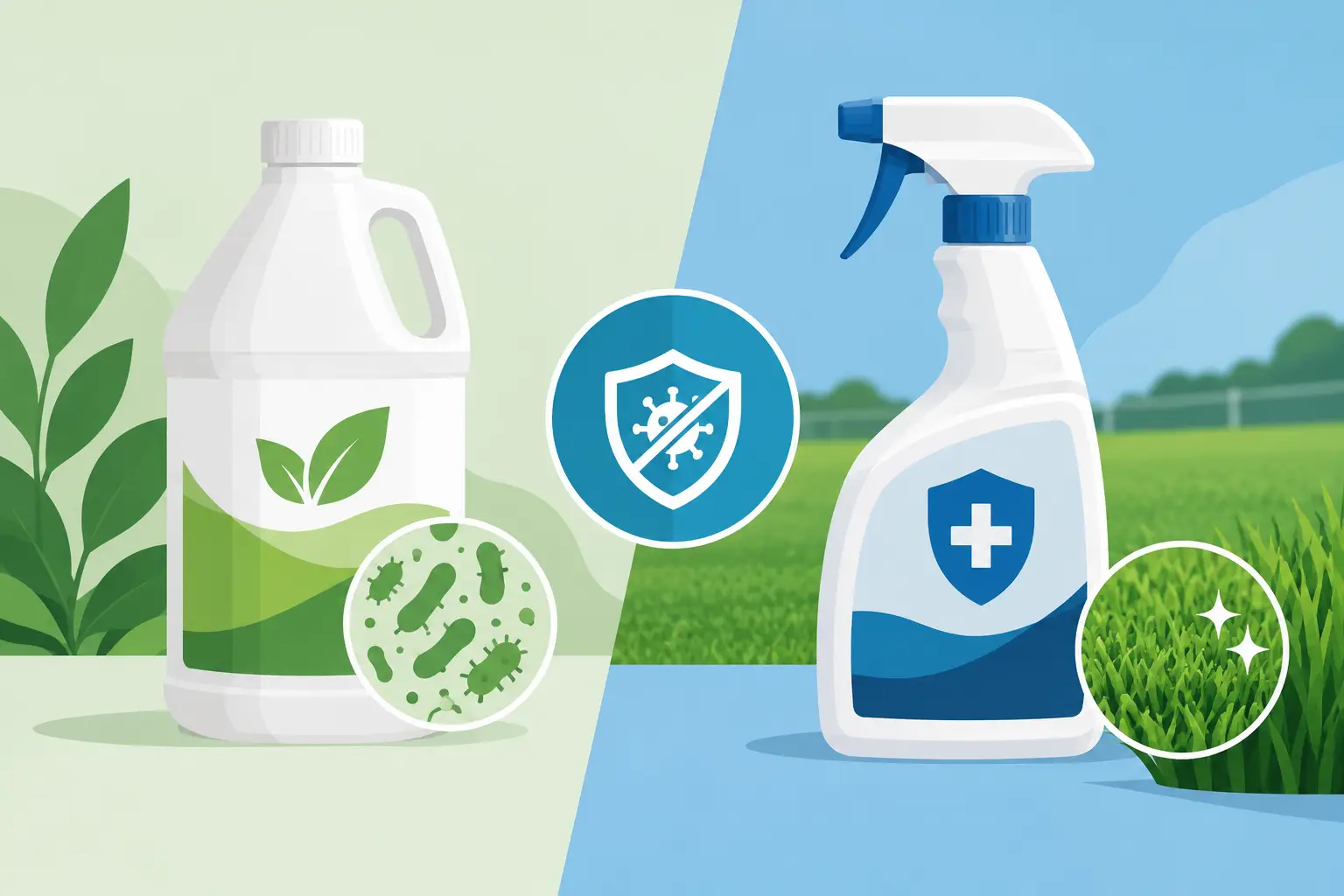
Enzyme cleaners and turf disinfectants do different jobs. They are not interchangeable, and neither one is a magic fix for every turf problem.
An enzyme cleaner is designed to break down organic matter. For pet turf, that usually means the compounds left behind by urine, feces, vomit, and other biological messes. The goal is odor control at the source. Instead of covering up the smell with fragrance, a quality enzyme treatment helps digest the residue that feeds odor-causing bacteria.
A turf disinfectant is made to reduce or kill certain germs on treated surfaces. It is focused on sanitation, not necessarily odor removal. A disinfectant can be a smart part of a professional turf cleaning service, especially in a heavily used dog run or family backyard. But if urine crystals and organic buildup are still packed into the infill, disinfecting alone may leave the odor problem behind.
Think of it this way: enzymes target the mess. Disinfectants target microbes. Truly fresh artificial grass often needs both, along with a deep cleaning process that removes what is embedded below the surface.
When an Enzyme Cleaner Is the Better Choice
If your main complaint is pet urine odor, enzyme treatment is usually the first conversation to have. Urine does not simply disappear when it dries. As moisture and heat return, the odor can reactivate. That is why turf may smell fine in the morning and awful by midafternoon.
Enzyme cleaners are especially useful for localized accident areas, repeat potty spots, and turf that has an organic odor but does not feel generally dirty or contaminated. They work best when they can make direct contact with the affected material. That means a quick spray over dry, compacted turf may not be enough.
For a treatment to work properly, the area often needs to be cleared of pet hair, leaves, loose debris, and surface grime first. Then the cleaner needs time to work. Some products require the turf to stay damp for a specific period. Others should not be rinsed immediately. Product directions matter, and more product is not always better.
There is also a limit to what enzymes can do. If months or years of urine have traveled into the infill and base layers, a store-bought enzyme spray may improve the smell temporarily without fully solving it. That is where urine extraction and deep rinsing make the difference.
When Turf Disinfectant Makes More Sense
Turf disinfectant is about creating a cleaner, more sanitary surface after use, especially in areas with frequent pet traffic. It can be valuable after solid waste cleanup, illness concerns, muddy paws, or long periods of heavy backyard activity.
For families with kids and pets sharing the same artificial grass, sanitation matters. A properly selected turf-safe disinfectant can help reduce bacteria and leave the area feeling cleaner and fresher. The key words are turf-safe and properly used. Harsh household chemicals can damage fibers, affect color, leave unwanted residue, or create risks for pets if they are not used exactly as directed.
Disinfectant also needs adequate contact time to do its job. Spraying a product and immediately rinsing it away may reduce its effectiveness. On the other hand, allowing pets back on turf before a product has dried or cleared according to label instructions is not a good shortcut.
What disinfectant will not reliably do is dissolve built-up urine salts, remove compacted hair, lift dust from the infill, or restore flattened turf blades. It is a sanitation step, not a full restoration service.
Why Your Turf May Need More Than a Spray Bottle
Artificial grass works hard in Arizona yards. It collects airborne dust, monsoon debris, pollen, pet hair, sunscreen residue, food spills, and daily foot traffic. Add multiple dogs using the same small potty area, and the turf can become packed down fast.
When the blades are flat and the infill is clogged, liquids do not move through the system as they should. Odor can linger beneath the surface. Water may pool. The turf starts looking dull, matted, and frankly gross.
This is why professional turf restoration goes beyond applying an enzyme cleaner or disinfectant. At Elite Turf Cleaning, the process is built around the condition of the entire system, not just the visible blades. Power brushing lifts matted fibers. Power sweeping removes embedded debris and pet hair. Deep rinsing flushes buildup, while targeted urine extraction and odor treatment focus on the areas that need the most attention.
After the grime is removed, sanitizer and deodorizer application can support a cleaner, fresher finish. The order matters. Applying a sanitizer over trapped dirt and urine residue is like cleaning a countertop without wiping up the spill first.
The Best Approach for Pet Urine Odor
For persistent urine odor, the strongest approach is usually a combination of removal, treatment, and sanitation. First, identify where pets are actually using the turf. Many homeowners are surprised to find that one corner of the yard holds most of the odor load.
Next, remove the physical buildup. That can include pet hair, leaves, dust, compacted infill, and urine residue. A deep rinse may help, but basic hosing often pushes odor deeper or spreads it to nearby areas if there is no extraction step.
Then apply the right odor treatment. Enzymes can help break down organic residue, while professional deodorizing treatments are designed to neutralize odors rather than simply perfume the yard. Finally, a turf-appropriate sanitizer can address the hygiene side of the problem.
This is not overkill when you have multiple dogs, high heat, or an artificial lawn that has not been professionally cleaned in a long time. It is how you stop treating the symptom and start dealing with the source.
Common Mistakes That Keep Odors Coming Back
The biggest mistake is masking odor with heavily scented products. If the turf smells like perfume and urine at the same time, the problem is still there.
Another common issue is using bleach, ammonia, or harsh cleaners. Ammonia can smell similar to urine and may make the area more unpleasant. Bleach can be tough on turf components and is not a casual solution for a pet space. Avoid mixing cleaning products, especially if you are unsure of their ingredients.
Homeowners also tend to focus only on the grass blades. The trouble is often below them. If the infill is saturated, compacted, or loaded with debris, surface cleaning delivers surface-level results.
Finally, do not wait until the odor is overwhelming. Regular turf maintenance is easier and more affordable than trying to rescue a backyard that has been used as a dog bathroom for years without a deep clean.
How to Choose the Right Treatment for Your Yard
Choose an enzyme cleaner when the primary issue is fresh or localized organic odor. Choose a turf disinfectant when you need a sanitation step after cleaning or want to reduce germs in a high-use pet area. Choose professional deep cleaning when odors return after DIY treatments, turf is visibly matted, water is not draining well, or the entire yard has a stale smell.
For many Arizona pet owners, the best answer is not enzyme cleaner versus turf disinfectant. It is using each product for its intended purpose within a full cleaning process. No more covering up odors. No more flattened, dirty turf. Just a backyard that looks better, smells fresher, and feels ready for the people and pets who use it every day.
If your artificial grass has reached the point where rinsing is no longer working, that is your signal to treat the turf beneath the surface, not just what you can see on top.