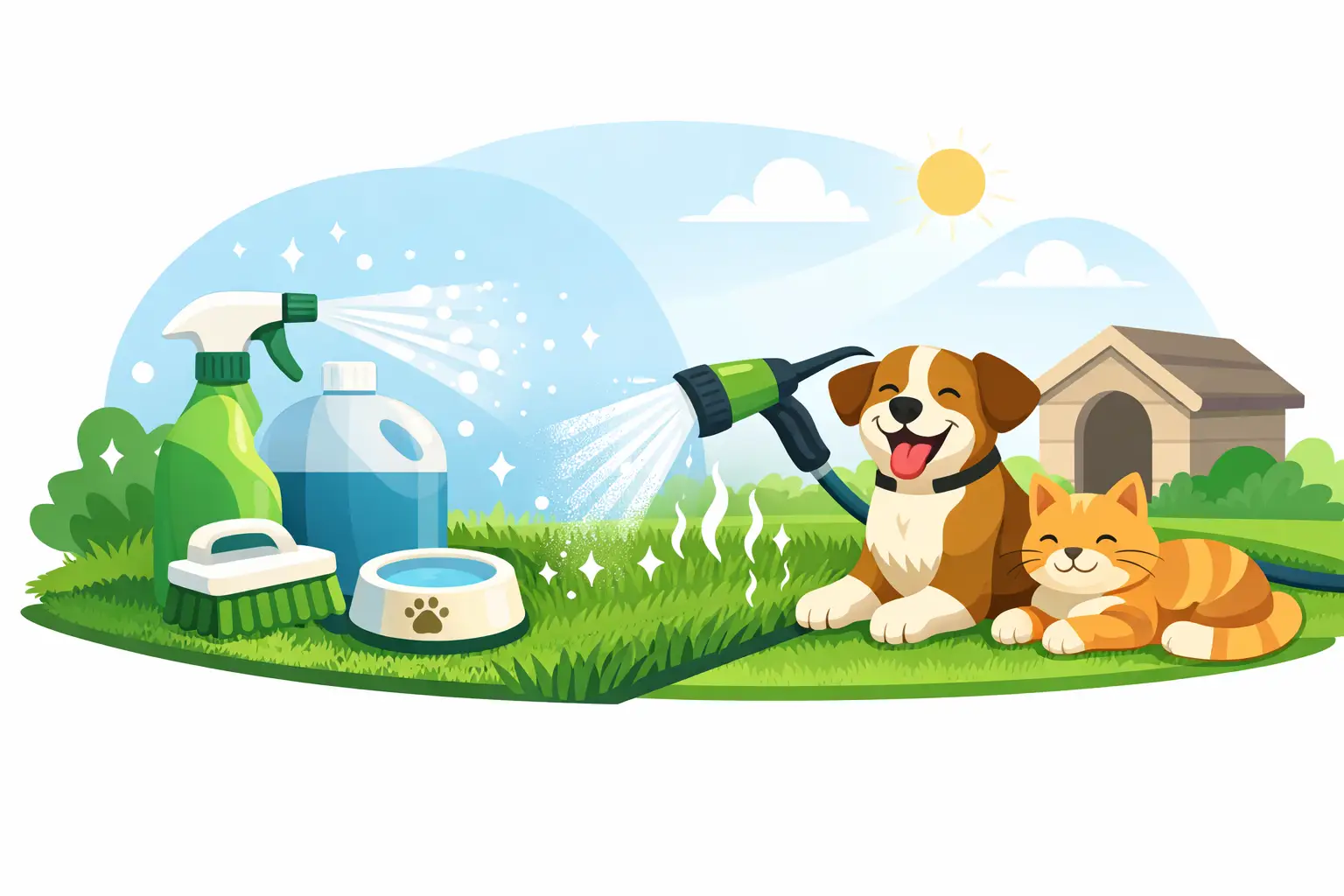
A quick hose-down may make the surface look better, but it does not solve the real problem hiding below the blades. If you are wondering how to disinfect pet turf safely, start by treating the source of the mess – pet waste, urine residue, trapped hair, and bacteria in the infill – not just the top layer.
For Arizona pet owners, heat can make a small urine issue turn into a backyard odor problem fast. The good news is that artificial grass can be cleaned and sanitized without harsh chemicals, damage to the turf, or putting pets and kids at risk. The key is using the right process in the right order.
Why Pet Turf Starts to Smell and Look Gross
Artificial turf does not grow, but it still collects plenty of unwanted material. Pet hair, dust, leaves, food crumbs, waste residue, and airborne debris settle between the blades. Over time, that buildup gets pressed into the infill and drainage layer.
Urine is usually the biggest offender. As urine dries, it leaves behind uric acid crystals and concentrated salts. Water alone may dilute some of the residue, but it often cannot fully break it down. When the Arizona sun heats the turf, those trapped odors can come right back.
Bacteria can also build up in high-use pet areas, especially where pets repeatedly use the same spot. That is why a real cleaning routine needs more than fragrance. A deodorizer can make turf smell better for a day. Proper sanitation and urine treatment address what is causing the smell in the first place.
How to Disinfect Pet Turf Safely: Use the Right Order
The safest and most effective method is a sequence: remove solids and debris, flush the turf, treat urine residue, then apply a turf-safe sanitizer. Skipping ahead to a disinfectant can leave odor-producing material behind and reduce the results.
1. Pick Up Waste and Clear Surface Debris
Start with the obvious mess. Remove pet waste as soon as possible, then pick up leaves, pet hair, toys, and loose debris. A plastic rake, turf broom, or leaf blower can help, but avoid metal rakes that can pull at turf fibers or damage seams.
This first step matters because sanitizers work best on a clean surface. If organic material is still packed into the turf, you are treating around the problem instead of removing it.
2. Rinse the Area Thoroughly
Use a garden hose to rinse the pet area, paying extra attention to the spots your dog uses most. Do not blast one area with a pressure washer at close range. Too much pressure can disturb infill, separate seams, or damage older turf.
A moderate spray helps flush loose dirt and fresh urine through the drainage system. For a small dog and low turf use, a light rinse a few times each week may be enough. Multi-pet homes or homes with large dogs will usually need more frequent rinsing.
If water pools instead of draining, stop adding products. Standing water can point to compacted infill, blocked drainage, or a deeper installation issue. In that case, cleaning the surface will only deliver temporary relief.
3. Apply an Enzyme Treatment for Urine Odor
For urine spots, use a pet-safe enzyme cleaner made for artificial grass. Enzymes help break down the organic compounds that feed odor-causing bacteria. They are especially useful for repeat potty areas where the smell returns after every rinse.
Follow the product directions for mixing and dwell time. Some treatments need to stay wet long enough to work, while others are ready to rinse after a set period. More chemical is not automatically better. Overapplying any product can leave residue behind and create another cleanup job.
Avoid household shortcuts such as bleach, ammonia, or strong acidic cleaners. Bleach can fade turf, weaken backing, irritate paws, and harm nearby landscaping. Ammonia is an especially bad choice for pet urine because its odor resembles urine and may encourage some pets to mark the same area again.
4. Use a Turf-Safe Disinfectant or Sanitizer
Once the turf is free of waste and urine residue has been treated, apply a disinfectant or sanitizer that is specifically labeled as safe for synthetic turf and pet areas. Read the full label before use. Look for directions covering dilution, contact time, rinsing requirements, and when pets can return to the area.
A true disinfectant needs enough contact time to do its job. Spraying it on and immediately hosing it away may leave you with a nice scent but little sanitation benefit. On the other hand, never leave a product down longer than the label allows.
Keep pets, children, and bare feet off the turf until it is completely dry or until the product label says reentry is safe. This is one of the simplest ways to protect paws, skin, and curious noses.
5. Brush the Turf to Lift Blades and Release Buildup
After the turf is dry, brush the fibers against their natural grain using a synthetic-bristle broom or a turf-safe power brush. This lifts flattened blades, redistributes infill, and brings embedded hair and dust closer to the surface.
Brushing also improves the look of the yard. A pet area can become matted and dull even when it is technically clean. Restoring the blade position makes the grass look fuller, fresher, and far less worn out.
What Not to Use on Artificial Pet Turf
Pet turf is durable, but it is not indestructible. The wrong cleaning product or tool can damage the fibers, backing, infill, drainage system, or surrounding landscape.
Avoid these common mistakes:
- Bleach, ammonia, gasoline, and harsh degreasers
- Undiluted vinegar or highly acidic products used repeatedly
- High-pressure washing at close range
- Metal rakes, wire brushes, and sharp scraping tools
- Heavy perfumes that cover odors without removing urine residue
Vinegar is often recommended as a natural cleaner, but it is not a reliable disinfectant for heavily used pet turf. It may help with light odors when properly diluted, but it will not replace an enzyme treatment and turf-safe sanitizing process where bacteria and urine buildup are substantial.
Build a Routine That Matches Your Pets
There is no one schedule that works for every yard. A single small dog using a large backyard creates a very different cleaning need than three dogs using one compact side run.
For everyday maintenance, pick up waste daily and rinse frequent potty spots two to three times per week. Brush the turf once or twice a month to prevent matting and pull up hair and debris. Use an enzyme treatment whenever urine odor starts to return, not just when the smell becomes impossible to ignore.
A deeper sanitation service is a smart move every few months for busy pet households, during hot weather, or before hosting guests. It is also worth scheduling when turf looks flat, smells sour after rinsing, or has dark, dirty-looking traffic zones that basic upkeep cannot fix.
When DIY Cleaning Is Not Enough
If the smell comes back within a day or two, the problem may be below the visible fibers. Compacted infill, embedded urine salts, pet hair, and bacteria can create a stubborn odor reservoir that surface spraying cannot reach.
That is where professional restoration makes the difference. Elite Turf Cleaning uses deep rinsing, power brushing, debris removal, urine extraction, odor treatment, and targeted sanitizer application to clean through the turf system instead of simply masking the surface. The goal is simple: no more odors, no more mess, and turf that looks brought back to life.
If your yard has become the spot everyone avoids because of the smell, do not wait for hotter weather to make it worse. Start with a safe clean today, keep up with the routine, and bring your backyard back to a place your family and pets actually want to enjoy.