Your artificial grass should not smell like a kennel, feel matted underfoot, or collect enough debris to look neglected. A smart artificial turf maintenance schedule keeps your yard fresh between professional cleanings and stops small problems from turning into stubborn odor, bacteria, and drainage issues.
Arizona turf takes a beating. Dust blows in, heat bakes organic debris into the fibers, monsoon weather carries in mud, and pets can create persistent urine odors fast. Artificial grass is low-maintenance, not no-maintenance. Give it consistent care, and it can stay clean, full, and ready for the backyard life you installed it for.
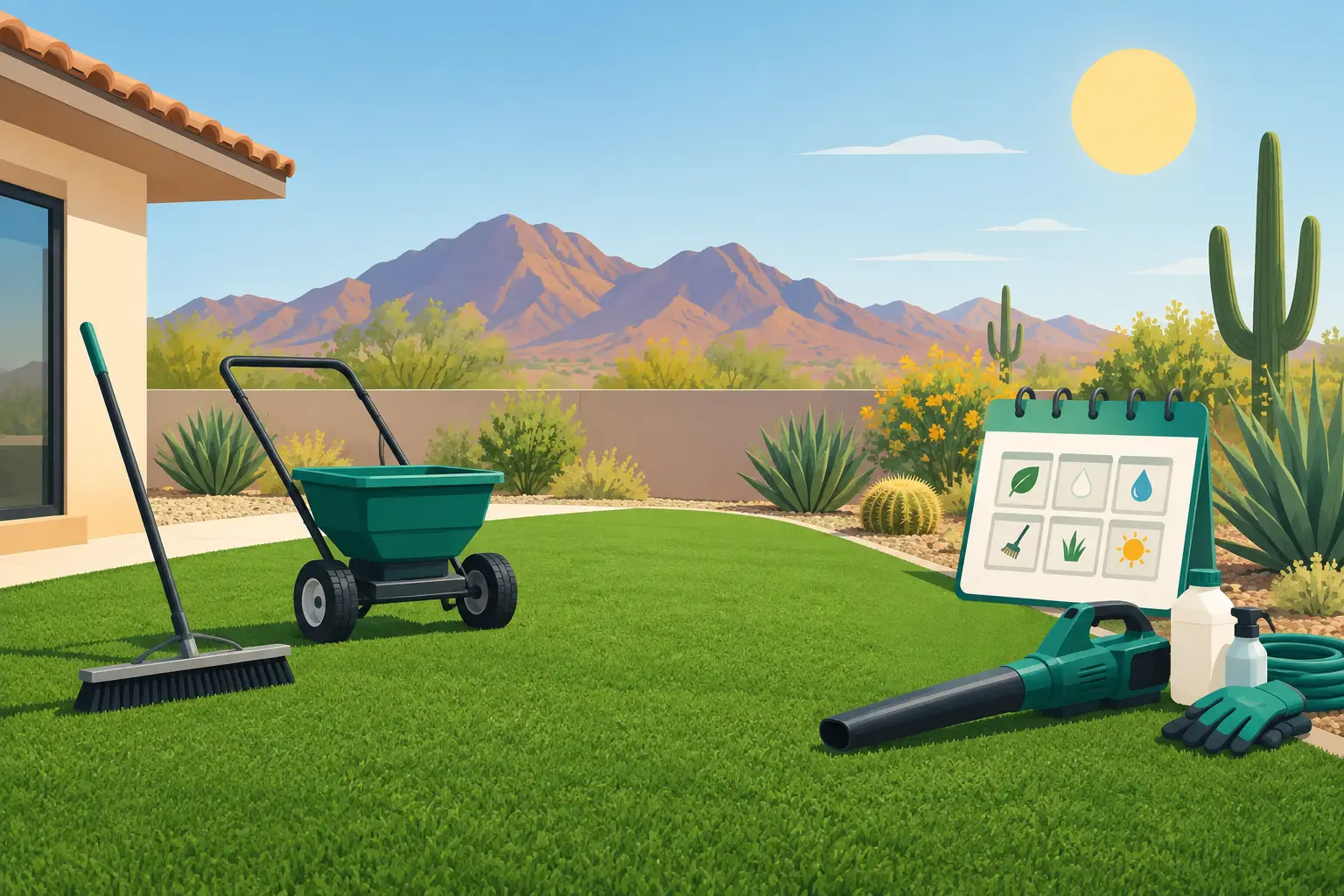
Your Artificial Turf Maintenance Schedule at a Glance
The right schedule depends on how your yard is used. A quiet front yard with no pets needs far less attention than a backyard used daily by two dogs, kids, and weekend guests. Still, most Arizona homeowners can use this simple rhythm:
- Daily or every few days: Pick up pet waste and remove fresh spills.
- Weekly: Clear leaves, sticks, pet hair, and loose debris. Check high-traffic spots.
- Every two to four weeks: Rinse the turf and brush fibers that are starting to flatten.
- Monthly: Inspect for odor, stains, drainage trouble, compacted infill, and weeds around the edges.
- Every three to six months: Schedule a deeper clean for active pet areas and heavily used yards.
- Once a year: Have the entire turf system professionally restored, sanitized, and evaluated.
If you have multiple pets or strong urine odor, move deep cleaning closer to every two or three months. Waiting until the smell is obvious usually means urine has already moved below the surface and into the infill.
Daily Pet Care Prevents Big Odor Problems
Pet waste should come off the turf as soon as possible. Solid waste leaves behind bacteria and residue even after it is picked up, especially during Arizona heat. Use a scooper or bag, then rinse that spot lightly if your dog has loose stool or if residue remains.
Urine is different. You cannot see it, but it does not disappear because the turf looks dry. Liquid travels through the blades and settles into infill and the base below. In hot weather, trapped urine salts and bacteria can create that sharp ammonia smell homeowners notice when they walk outside.
A light rinse in your dog’s favorite bathroom area can help dilute fresh urine. It is useful maintenance, but it is not a complete odor treatment. Too much water without proper extraction can also push contamination deeper or expose drainage problems. If the odor returns quickly after rinsing, the issue is below the surface.
Weekly: Remove What Is Sitting on Top
Set aside a few minutes each week to remove leaves, palm fronds, seed pods, sticks, and pet hair. Organic debris breaks down, traps moisture, and gives bacteria a place to build up. It also makes turf look dull and can block drainage in problem areas.
Use a leaf blower on a low setting, a plastic rake, or a turf-safe broom. Avoid metal rakes and aggressive tools that can pull fibers, damage seams, or disturb infill. Work with the direction of the fibers when clearing debris, then lightly brush against the grain where the turf is matted.
Pay extra attention to fence lines, patio edges, under outdoor furniture, and pet corners. Those spots collect debris first and are usually the last places homeowners notice until the yard starts looking gross.
Every Two to Four Weeks: Rinse and Refluff
A routine rinse removes dust, pollen, and surface grime. In Arizona, this step matters most after windy days, dust storms, heavy backyard use, or monsoon rain. Use a garden hose with moderate pressure. You are rinsing the fibers, not blasting the turf apart.
After rinsing, brush areas that see the most foot traffic. Pathways, play zones, patio exits, and dog runs flatten faster than the rest of the lawn. A turf brush or power broom lifts the blades, redistributes infill, and helps restore the clean, upright look that makes synthetic grass feel like new.
Do not brush with excessive force, especially if your turf is older or has visible wear. The goal is to lift and groom the fibers, not scrape the backing. If one area stays flat no matter how often you brush it, it may need professional power brushing and infill correction.
Monthly: Look for the Problems a Hose Will Not Fix
Your monthly check is where routine care becomes protection for your investment. Walk the yard and look closely at the areas your family and pets use most. Check for discoloration, sticky fibers, uneven infill, loose seams, exposed edges, and slow drainage after rinsing.
Smell is one of the biggest warning signs. If the turf smells fine early in the morning but develops odor in afternoon heat, urine contamination is likely sitting in the infill or base. Spraying fragrance on top only masks the problem for a short time. The bacteria and urine salts are still there.
Also look for weeds along the perimeter and through drainage openings. A few weeds do not mean the turf has failed, but they should be removed before roots spread or lift the edges. Keep nearby landscaping trimmed as well. Less debris entering the turf means less cleanup later.
Seasonal Adjustments for Arizona Yards
Arizona does not have one turf-maintenance season. It has several. Summer heat, monsoon storms, and cooler winter use all create different cleaning needs.
Summer: Focus on Pets, Odor, and High Traffic
Summer is when pet odor problems become impossible to ignore. Heat intensifies smells and accelerates bacterial activity. Increase rinsing in pet areas, remove waste quickly, and inspect for odor at the hottest part of the day rather than only in the morning.
If your turf is used daily by dogs, summer is the time to schedule professional sanitization and urine extraction. A surface spray cannot reach contamination embedded under the blades. Deep treatment is designed to break through the mess that casual maintenance leaves behind.
Monsoon Season: Clear Debris and Check Drainage
After storms, remove branches, mud, and leaves promptly. Letting wet debris sit can stain the turf, compact fibers, and create a dirty layer that holds moisture. Rinse away surface mud once the weather clears, then check whether water drains evenly.
Standing water, soggy sections, or a sour smell after rain deserve attention. Those can point to blocked drainage, compacted infill, or a deeper buildup that needs more than a garden hose.
Winter: Restore the Look Before Outdoor Gatherings
Cooler weather often means more time outside. Before holiday gatherings, backyard play, or entertaining, clear debris, brush down flattened areas, and deal with lingering pet odors. This is also an ideal time for a full cleaning that leaves the turf looking sharp without fighting extreme summer temperatures.
When DIY Maintenance Is Not Enough
Home maintenance keeps turf under control. It does not replace the equipment and process needed to restore neglected synthetic grass. Call in a professional when urine odor comes back after rinsing, the turf feels sticky or heavily matted, pet hair is embedded in the fibers, stains linger, or the lawn looks dirty even after you clean the surface.
A proper restoration goes beyond deodorizer. It should include power brushing or sweeping, debris and pet hair removal, deep rinsing, targeted urine extraction, pet odor and stain treatment, and sanitizer application. That sequence matters because deodorizing dirty turf only covers up what is still trapped inside it.
Elite Turf Cleaning focuses on that deeper reset: lifting flattened fibers, removing embedded grime, treating odor at the source, and leaving the space fresher for pets, kids, and everyone who uses it. For busy pet owners, professional service is not about avoiding a chore. It is about solving the problem that keeps coming back.
Protect Your Turf Between Professional Cleanings
Avoid harsh household chemicals, bleach, and oil-based products unless your turf manufacturer specifically approves them. These can discolor fibers, damage backing, or create runoff concerns for pets and plants. Skip high-pressure washing too. It can displace infill and stress seams.
Keep grills, fire pits, and hot tools away from the turf. Synthetic fibers can melt, and a small burn can become a permanent eyesore. If a spill happens, blot it quickly, rinse with water, and use a turf-safe cleaner only when needed.
The best schedule is the one you can actually keep. Pick up waste promptly, clear debris weekly, rinse and brush regularly, and do not ignore odors just because the turf still looks green. A clean artificial lawn should feel like part of your home, not another mess waiting outside.