That sharp urine smell usually shows up right when you want to enjoy your yard. You step outside, the sun hits the artificial grass, and suddenly it smells worse than it did yesterday. If you’re wondering how to get pet smell out of turf, the truth is simple: a quick hose-down helps a little, but deep odor problems need more than surface cleaning.
Pet odor in turf is not just sitting on top of the blades. It sinks into the infill, backs up in the base, and sticks around because bacteria feed on the urine left behind. That is why the smell keeps coming back, especially in Arizona heat. If your turf still stinks after rinsing, you are not dealing with a basic mess anymore. You are dealing with buildup.
Why pet odor gets trapped in artificial turf
Artificial grass is built to drain, but drainage is not the same thing as full odor removal. When dogs use the same area over and over, urine passes through the turf and into the infill and lower layers. Over time, those layers hold onto waste residue, especially if the area is not being flushed properly or cleaned deeply.
Heat makes the problem worse. Warm turf bakes odor into the yard and activates the bacteria causing that strong ammonia-like smell. You may notice the yard smells tolerable in the morning and awful by afternoon. That is a common sign that urine contamination has built up below the surface.
There is also a wear-and-tear side to this. Flattened turf, compacted infill, pet hair, dust, and debris all reduce airflow and drainage. Once that happens, odor has an easier time sticking around.
How to get pet smell out of turf at home
If the smell is light or just starting, you may be able to improve it with a thorough cleaning routine. The key word is thorough. Most homeowners are not using enough water, not removing enough debris, and not treating the bacteria that cause the smell.
Start by clearing the area completely. Pick up solid waste, remove leaves, and get rid of pet hair or organic debris sitting in the grass. Anything left behind can trap moisture and feed odor.
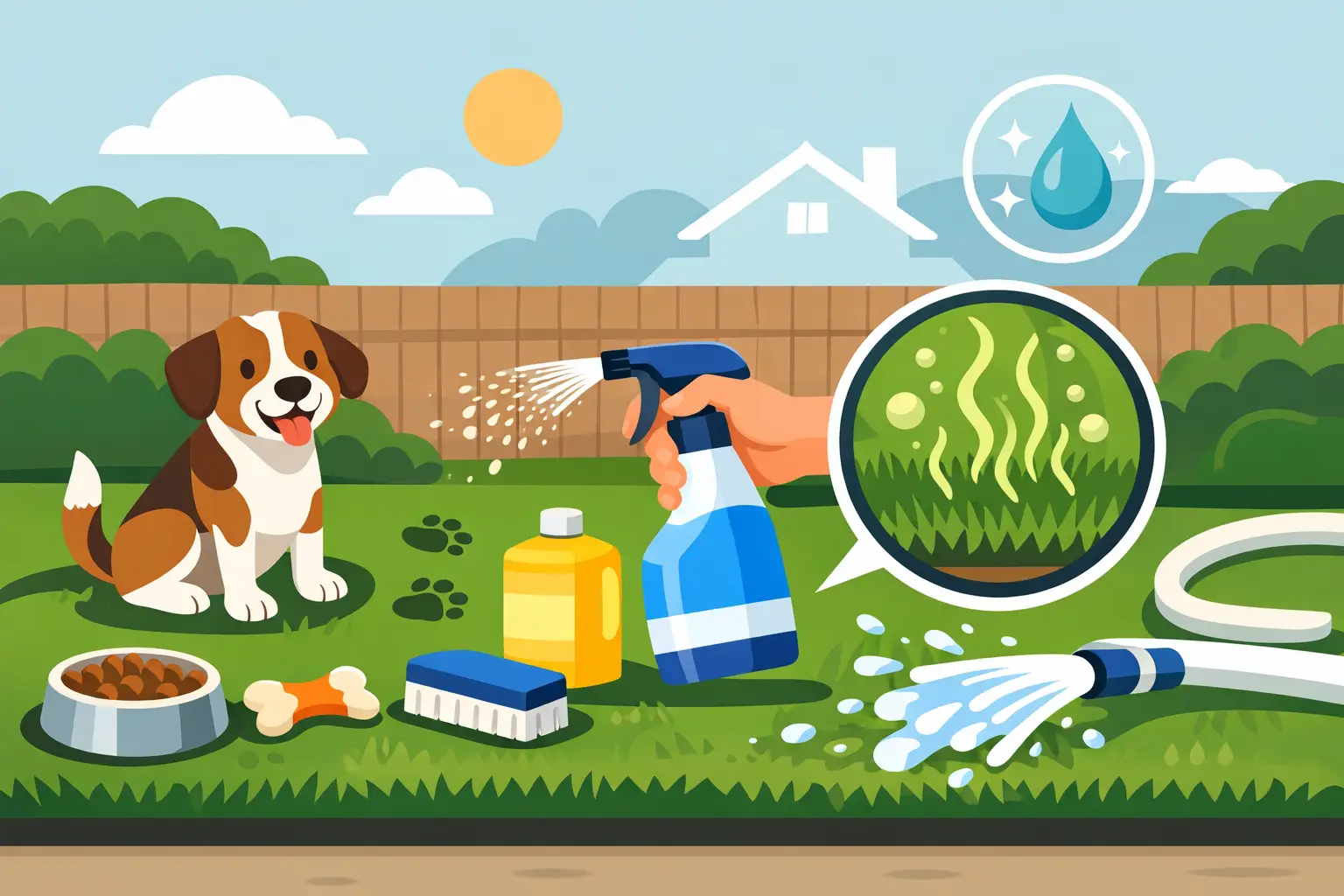
Next, rinse the turf heavily, not lightly. A fast spray across the top is not enough. You want to flush the area where your pets usually go and push residue through the system. Focus on the spots they use most often. If your yard has poor drainage or a heavy urine load, this may take more water than you expect.
After rinsing, apply a turf-safe enzymatic cleaner or pet odor treatment made specifically for artificial grass. This matters. General household cleaners, bleach, and heavily perfumed products can damage turf components or just mask the smell without fixing it. An enzyme-based product is designed to break down the organic waste causing the odor.
Let the treatment sit for the amount of time listed on the label, then rinse again if needed. Some products are leave-on treatments, while others require flushing. It depends on the formula.
Once the area dries, brush the turf fibers up if they look matted. This step gets ignored a lot, but it helps more than people think. Lifting the blades improves airflow and keeps the surface from holding onto grime.
What usually goes wrong with DIY odor removal
The biggest mistake is treating odor like a surface problem. If the urine has already worked its way into the infill and base, a spray bottle and a garden hose will only touch part of it.
Another issue is using the wrong product. Vinegar is a common suggestion, but it is not a complete fix for heavy pet odor in synthetic grass. It may cut the smell for a short time, but it does not restore the turf or remove deeper contamination. Soap can also create residue if it is not rinsed out well, which can attract more dirt and make the yard feel grimy.
Too little water is another problem. In Arizona, evaporation happens fast. If you apply cleaner without fully flushing the area first, you may just spread the odor around instead of removing what is causing it.
Then there is the hidden issue: compaction. If the infill is packed down and loaded with debris, the turf cannot breathe or drain like it should. That is when smells linger no matter what product you use.
Signs the smell is too deep for basic cleaning
Sometimes the yard is telling you very clearly that it needs more than DIY maintenance. If the odor comes back within a day or two of cleaning, that is a red flag. If certain spots smell much stronger than others, those areas may have concentrated urine saturation below the turf.
You should also pay attention to how the turf looks and feels. If it is flat, dingy, sticky, or full of trapped pet hair and dust, the odor problem is probably tied to overall turf buildup. When synthetic grass starts to look worn out and smell bad at the same time, it usually needs restoration, not just deodorizer.
Another sign is when the smell gets much stronger after rain or rinsing. That often means old urine residue is being reactivated instead of washed away.
What professional turf odor treatment does differently
A real turf cleaning service does more than spray fragrance over the problem. The goal is to remove the source, sanitize the area, and restore the turf so it looks and smells clean again.
That usually starts with debris removal and power brushing to loosen compacted fibers and pull up trapped material. From there, a deep rinse helps move contamination out of the turf system. Targeted pet odor and stain treatment goes after the urine-heavy areas, and sanitizing products help reduce the bacteria causing the smell.
For severe cases, urine extraction is often the difference-maker. This is what many homeowners cannot replicate on their own. If waste has settled deep into the turf layers, extraction and deeper flushing can remove what regular rinsing leaves behind.
The result is not just a better smell. The turf often looks fuller, cleaner, and more alive. That is the difference between surface cleanup and full restoration.
How to keep pet smell from coming back
Once the turf is clean, maintenance matters. You do not need to overcomplicate it, but you do need consistency.
Rinse pet areas regularly, especially during hotter months. Pick up waste quickly. Remove leaves and debris before they break down into the turf. If you have multiple dogs or a small potty area, clean that zone more often than the rest of the yard.
It also helps to rotate where your pets go when possible. Some dogs always return to the same patch, which creates a concentrated odor problem. Even small changes in routine can reduce buildup.
Brushing the turf occasionally keeps the blades upright and the infill from becoming too compacted. That supports better drainage and makes future cleaning more effective.
Still, there is a point where maintenance alone will not keep up. High-use pet turf needs periodic deep cleaning the same way carpet, tile, and upholstery do. The difference is that outdoor turf gets hit by heat, dust, pet waste, and weather all at once.
When it makes sense to call a turf cleaning specialist
If you have already rinsed, treated, and repeated the process without lasting results, it is probably time. The same goes for yards with strong urine odor, visible flattening, discoloration, or a general dirty smell that never fully goes away.
Professional service makes the most sense when you want a real reset instead of another temporary fix. That is especially true for families with kids, multiple pets, or backyard spaces that should feel clean and usable every day.
A turf-specific company understands the difference between cleaning synthetic grass and cleaning any other outdoor surface. That matters because the job is not just about smell. It is about bacteria, drainage, appearance, and preserving the investment you made in your yard. Companies like Elite Turf Cleaning focus on that full restoration process, which is why the results are stronger than a basic rinse-and-spray approach.
Pet odor does not usually disappear because you covered it up well. It goes away when the buildup causing it is actually removed. If your yard smells fine for a few hours and then turns bad again in the heat, trust what that is telling you. Your turf is not ruined, but it probably does need a deeper clean than you have been giving it.