If your turf smells fine right after you hose it down but goes back to smelling like pet urine by the next afternoon, you are not dealing with a simple mess. You are dealing with buildup below the surface. An artificial grass deep cleaning service is designed for exactly that problem – the grime, bacteria, trapped debris, and urine residue that regular rinsing leaves behind.
Artificial turf is supposed to be low maintenance, not no maintenance. That difference matters. In Arizona, heat bakes in odors fast. Add dogs, backyard traffic, dust, and fallen debris, and even good-looking turf can turn into a dirty, flattened, bacteria-holding surface that no longer feels fresh or safe. When that happens, surface cleaning is not enough.
What an artificial grass deep cleaning service actually fixes
Most homeowners call when the smell becomes impossible to ignore. That is usually the biggest trigger, but odor is rarely the only issue. Turf also starts to mat down, collect pet hair, trap dust, and look dull. In shaded or heavily used spots, it can feel sticky, grimy, or just plain gross.
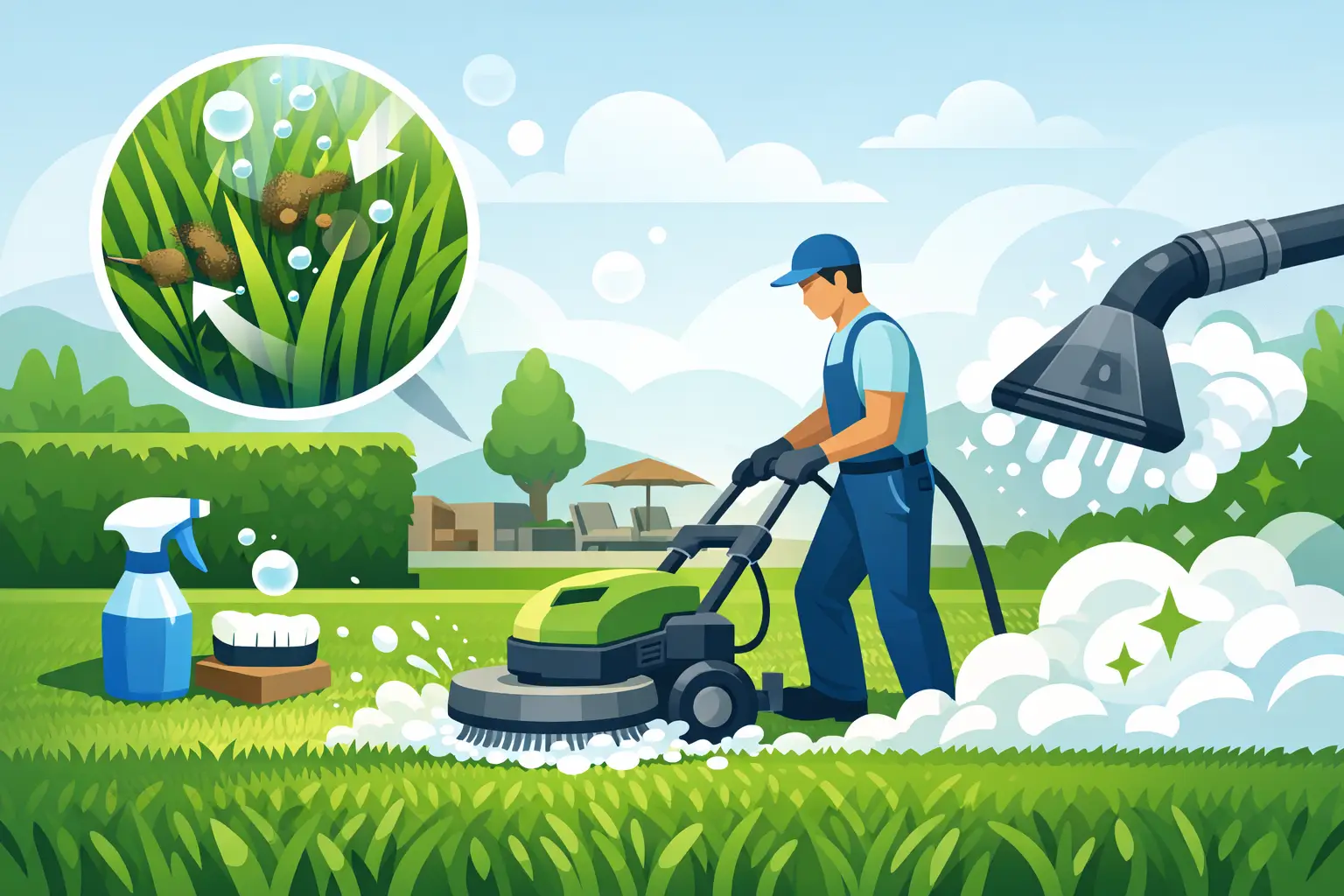
A true deep cleaning service goes after the contamination inside the turf system, not just on top of it. That means lifting the blades, pulling out embedded debris, flushing contaminants from the infill, treating stains and urine zones, and applying sanitizer and deodorizer where they will actually make a difference.
This is where many DIY efforts fall short. A garden hose can rinse away loose dirt. It cannot extract urine salts buried in the turf base. Store-bought sprays may cover odor for a day or two. They usually do not solve the source. If the problem is living below the surface, surface products will not fix it.
Why turf gets so dirty even when you maintain it
Artificial grass takes a beating in family backyards. Pets use it daily. Kids run across it. Wind blows in dust and organic debris. Over time, that material settles between the blades and into the infill. Once moisture and waste get involved, the turf becomes a holding area for odor-causing bacteria.
Heat makes the problem worse. In Arizona, warm temperatures intensify smells and speed up the breakdown of organic material. That is why a yard can seem manageable in the morning and foul by late day. The odor is not random. It is trapped contamination reacting to heat and use.
There is also the flattening issue. Turf fibers get crushed in high-traffic lanes, around play areas, and in pet zones. When the grass lies down, debris gets trapped more easily and the whole yard starts looking worn out. A proper cleaning is part sanitation, part restoration.
Signs you need artificial grass deep cleaning service now
Sometimes the need is obvious. Sometimes it sneaks up on you. If your yard has a persistent urine smell, dark or stained areas, matted turf, visible pet hair, or a dusty, dingy look that does not go away after rinsing, it is time.
Another common sign is embarrassment. If you avoid having guests over because the yard smells bad or looks rough, your turf is past basic upkeep. The same goes if your dog area is becoming the one part of the property nobody wants to walk through.
For families with small kids or multiple pets, sanitation matters just as much as appearance. Turf can hold bacteria when waste is not fully removed. That does not mean every lawn is hazardous, but it does mean heavily used turf needs more than cosmetic care.
What professional deep cleaning looks like
A real service should follow a process, not just show up with a hose and a fragrance spray. The first step is usually power brushing or power sweeping to lift flattened blades and break loose embedded debris. This helps open the turf so the deeper cleaning stages can actually reach the problem areas.
Next comes debris and pet hair removal. That sounds basic, but it makes a huge difference. Pet hair, leaves, dust, and organic waste all contribute to odor and bacterial growth. If they stay trapped in the turf, they keep feeding the problem.
Then comes deep rinsing and extraction. This is where urine-contaminated areas need special attention. The goal is not to wet the turf. The goal is to flush out what is stuck inside it. On pet-heavy lawns, that often includes targeted urine treatment and extraction to remove the source of lingering smells.
After that, sanitizer and deodorizer are applied. Good products do more than mask odor. They help eliminate bacteria and leave the turf fresh without creating a harsh chemical environment for kids or pets. Eco-friendly methods matter here, especially if your backyard gets daily use.
The final result should be obvious. The turf should stand taller, smell cleaner, feel fresher, and look more alive. That is the difference between maintenance and restoration.
Why odor removal is the hardest part
Pet odor is the number one reason homeowners book this kind of service, and it is also the most misunderstood. Urine does not just disappear because the visible wet spot dries. It moves through the turf, settles into the infill and backing, and leaves behind compounds that keep producing odor.
That is why some yards smell stronger after a light rinse. Water can reactivate old urine deposits instead of removing them. If the area is not properly treated and flushed, the smell comes right back.
It also depends on how long the issue has been building. A newer turf system with occasional pet use may respond faster. An older yard with multiple dogs, years of buildup, and heavy sun exposure may need a more aggressive treatment plan. Honest service means recognizing that not every odor problem is identical.
Is professional service worth it over DIY?
For light upkeep, DIY has its place. You should remove solid waste quickly, rinse pet areas often, and keep loose debris from piling up. That routine helps. It also extends the life of your turf between professional cleanings.
But if the smell keeps returning, if the turf looks flat and tired, or if you have tried sprays and rinses without results, DIY is no longer saving you time. It is just delaying the fix. Professional equipment, turf-specific cleaning methods, and odor treatment designed for synthetic grass go much deeper than what most homeowners can do on their own.
There is also a cost angle. Replacing artificial turf is expensive. Restoring it is not. A quality deep clean can help you avoid premature replacement by improving appearance, hygiene, and usability.
How often should turf be deep cleaned?
It depends on how you use the space. A backyard with one small dog may need professional service less often than a pet run used by multiple large dogs every day. Families who entertain often or have children playing on the turf may also want more frequent cleanings simply for freshness and sanitation.
As a general rule, pet-heavy turf needs closer attention than decorative turf. If odor starts building before the yard looks dirty, do not wait for it to get worse. Deep cleaning is most effective when buildup is handled before it becomes extreme.
Many homeowners benefit from a recurring schedule because it keeps the turf in good shape year-round. That approach is especially useful in Arizona, where heat can turn a manageable issue into a major one fast.
What to look for in an artificial grass deep cleaning service
Not every exterior cleaning company understands turf restoration. You want a service that focuses on synthetic grass problems specifically – odor, bacteria, debris, flattening, and urine contamination. If a company talks only about making the surface look better, that is a red flag.
Look for a clear process, turf-safe products, and visible before-and-after results. Ask whether they offer power brushing, debris removal, deep rinsing, pet odor treatment, sanitizer application, and urine extraction. Those are the services that separate real restoration from a quick cosmetic cleanup.
You also want a provider that understands the homeowner mindset. You are not calling because you want a technical lecture. You are calling because your yard smells bad, looks worn out, and needs a real fix. A good company should make that process simple and give you confidence that the problem can be handled.
That is exactly why specialized companies like Elite Turf Cleaning exist. This is not generic pressure washing. It is turf restoration built for the way families and pets actually use their yards.
Your turf does not need to stay smelly, flat, or frustrating. If it is starting to look gross, smell worse, or feel like a lost cause, that is usually a sign it needs the kind of cleaning that goes below the surface and brings the whole yard back to life.