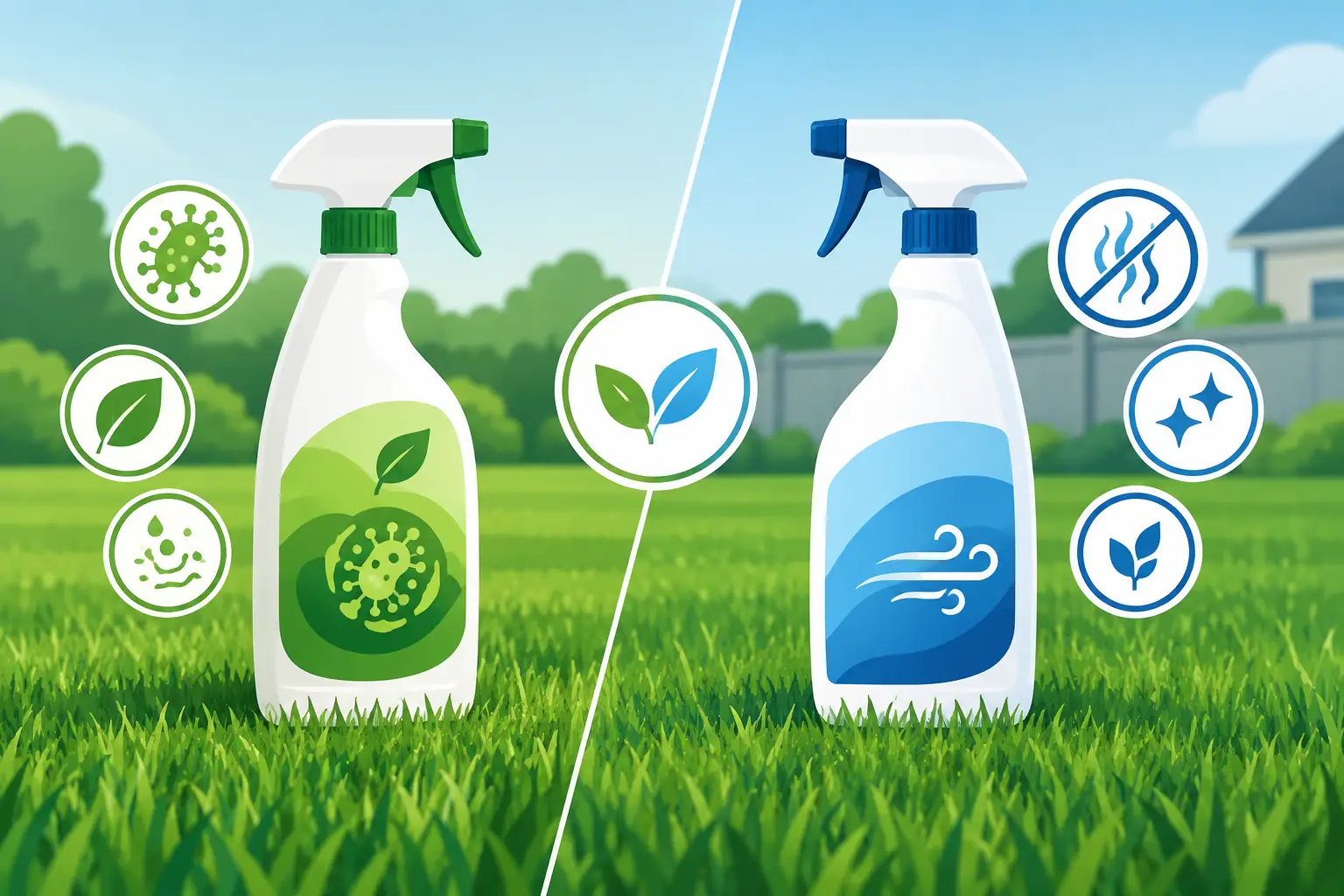
That sour, ammonia-like smell that hits when the Arizona sun warms up your backyard is not a small problem. It usually means pet urine has moved below the turf blades and into the infill, backing, and base beneath it. When comparing enzyme spray vs odor neutralizer, the right choice depends on where the odor is living and whether the turf needs more than a surface treatment.
A bottle from the store may make the yard smell better for a day or two. But if urine crystals, pet hair, bacteria, and trapped debris are still packed into the turf system, that smell can come right back. No more masking the problem. The goal is to remove what is causing it.
Enzyme Spray vs Odor Neutralizer: What Is the Difference?
Enzyme sprays are made to break down organic messes. In a pet turf setting, that means they are designed to target compounds left behind by urine, feces residue, vomit, and other biological waste. The enzymes work on the material creating the odor rather than simply covering it with fragrance.
An odor neutralizer is designed to reduce or change odor molecules so they are less noticeable. Some products bind to odor molecules. Others use oxidation or deodorizing ingredients to reduce the smell. A quality neutralizer can be useful, especially after cleaning, but it does not automatically remove the urine buildup trapped deep in artificial grass.
Think of it this way: enzyme treatment goes after the food source feeding the odor. Odor neutralizer helps clear the air after the source has been addressed. Both can have a place in turf care, but neither is a magic fix when the turf is saturated below the surface.
Why Artificial Turf Odors Keep Returning
Artificial grass does not absorb urine like natural soil and grass. Liquid passes through the turf, but pet urine can leave concentrated salts and uric acid crystals behind. In Arizona heat, those residues can become especially noticeable. Warm temperatures activate odor, and a yard that seemed fine in the morning can smell awful by midafternoon.
Routine hosing helps dilute fresh urine, but it often cannot flush out buildup that has settled into infill or compacted at the base. Add flattened turf fibers, shed pet hair, dust, leaves, and bacteria, and you have a layer of grime that holds moisture and traps odors where a spray cannot fully reach.
That is why homeowners often say, “I already tried enzyme cleaner.” The cleaner may have helped the top layer. The deeper contamination was still there.
When an Enzyme Spray Can Work Well
Enzyme spray is a smart first response for a fresh, localized pet accident. If your dog has one favorite spot and the odor has not been building up for months, treating that area quickly can make a real difference.
It is also useful for light maintenance between professional cleanings. Apply it according to the product directions, give it the required contact time, and avoid immediately rinsing it away before it has a chance to work. Enzymes need time and moisture to do their job.
The trade-off is that enzyme products can be inconsistent on heavily used turf. They may also struggle when the yard has compacted infill, poor drainage, years of urine accumulation, or hot-weather odor that appears across a large area. Spraying more product on top does not solve a problem buried underneath.
When an Odor Neutralizer Makes Sense
A good odor neutralizer can be helpful when the source has already been cleaned or extracted. It is often part of the finishing step that leaves turf smelling fresh after a deeper service. It can also be useful for mild environmental odors, such as mustiness from damp debris or a lingering smell after a cleanup.
What it should not be used for is a cover-up. Strong fragrance can make a backyard smell like perfume mixed with urine, which is not the fresh, clean result anyone wants. If the odor returns every time the heat rises or your dog uses the yard, the issue is likely below the turf surface.
For pet owners, safety matters too. Always use products intended for pet areas and follow label directions. Avoid mixing chemicals or applying multiple products without knowing how they interact. More product is not always better, especially where kids and pets play.
The Real Fix for Deep Pet Urine Odor
When odors are widespread, stubborn, or worse after watering, it is time for a full turf restoration approach. This is more than spraying deodorizer over artificial grass. It starts by lifting the turf fibers and removing the debris that ordinary rinsing leaves behind.
A professional deep cleaning can include power brushing and power sweeping to pull up pet hair, dirt, leaves, and compacted debris. Deep rinsing helps move contaminants through the turf. Targeted urine extraction and pet odor treatment address the concentrated areas where urine has collected. Sanitizer and deodorizer are then applied as part of the final treatment, helping eliminate bacteria and leave the space fresh.
The order matters. If deodorizer goes on before the grime and urine buildup are removed, it is working against a problem that is still in the yard. Clean first. Treat the source. Sanitize. Then deodorize.
Signs Your Turf Needs More Than a Spray
You do not need to wait until the entire backyard smells bad. Persistent odor is one warning sign, but the appearance and feel of your artificial grass can tell you a lot too.
If your turf looks flattened, feels gritty, has dark pet spots, drains slowly, or seems dirty again right after you hose it down, buildup is likely taking over. Another common sign is odor that only appears in direct sun. The heat is not creating the issue. It is exposing the urine residue and bacteria already trapped in the system.
A yard with several dogs, a dedicated dog run, or frequent pet use generally needs deeper maintenance more often than a lightly used backyard. It depends on pet size, the number of pets, how often they use the turf, drainage, shade, and how long it has been since the last deep cleaning.
Don’t Forget the Turf Fibers and Infill
Odor is only one part of the problem. Artificial grass that has been walked, played on, and used by pets every day can become matted and worn-looking. When turf fibers lie flat, they hold debris more easily and make the whole yard look neglected.
Power brushing restores the upright appearance of the grass while loosening material trapped between the blades. Cleaning the infill and surface debris improves drainage, helps odor treatments reach the areas that need attention, and makes the turf feel better underfoot. The result is not just a better smell. It is a backyard that looks cleaner, feels safer, and is ready for people and pets again.
A Better Plan for Fresh, Safe Turf
For a fresh accident, an enzyme spray may be enough. For a light lingering smell after cleaning, an odor neutralizer can be a useful finishing product. But for months of pet use, repeated odor, visible grime, and turf that has lost its lift, neither option should replace deep cleaning.
Elite Turf Cleaning treats artificial grass like the specialized surface it is. The focus is on removing the buildup that is making your yard smell, look, and feel gross – then restoring it with targeted odor treatment, sanitization, and a clean finish.
If your turf smells fine only when the weather is cool, do not wait for the next hot afternoon to prove there is a problem. A properly cleaned yard gives your pets a better place to play and gives you a backyard you can actually enjoy again.