A hose can wash away loose dirt, but it cannot fix stains and odors that have settled deep into artificial turf. Effective synthetic grass stain treatment goes beyond the surface to break up grime, treat pet messes, refresh turf fibers, and restore the clean look your yard had when it was new.
For Arizona homeowners, this matters fast. Heat bakes pet urine, spilled drinks, food residue, mud, and bacteria into the turf. What started as a small spot can turn into a lingering odor, a discolored patch, or a backyard that feels less clean for kids and pets.
Why Artificial Turf Stains Keep Coming Back
Artificial grass does not grow, but it still collects a lot. Dust, pet hair, pollen, leaves, soil, and everyday debris settle between the blades. When a pet repeatedly uses the same area, urine can move through the turf backing and infill before reaching the base below. Surface rinsing may dilute the problem for a day or two, but it often does not remove what is trapped underneath.
That is why the same yellowed area, sticky patch, or urine odor can return after you hose it down. The visible mark is only part of the issue. Embedded contamination can flatten fibers, attract more debris, and leave the turf looking worn out long before its time.
Arizona heat makes the problem more noticeable. Warm temperatures can intensify odors, especially in pet areas with limited drainage or heavy daily use. If your turf smells worse in the afternoon than it does in the morning, there is a good chance the source needs more than a quick rinse.
When Synthetic Grass Stain Treatment Is Needed
Not every small spill requires a full professional restoration. A fresh drink spill, a little mud, or a dropped piece of food can often be handled quickly with water and a mild turf-safe cleaner. The key is acting before the residue dries and works its way down into the turf.
Professional synthetic grass stain treatment is the better move when you notice any of these problems:
- Persistent pet urine odor, especially after the yard heats up
- Dark, yellowed, sticky, or discolored areas that return after rinsing
- Turf blades that look matted, flattened, or packed with debris
- Pet hair, grime, and organic buildup caught deep in the fibers
- A backyard that looks clean from a distance but feels dirty up close
These issues are usually connected. Urine buildup can hold odor, debris can block airflow, and flattened fibers can make the entire lawn look neglected. Treating only the top layer may improve appearances temporarily, but it will not deliver the fresh, sanitized result most homeowners want.
What a Real Turf Stain Treatment Should Include
A proper service starts with the condition of your turf, not a one-size-fits-all spray. Pet areas, play spaces, poolside turf, and front yards all collect different types of mess. The treatment should focus on the source of the stain or odor while protecting the turf, infill, and surrounding landscape.
First comes debris and pet hair removal. Loose leaves, dust, hair, and compacted surface grime need to come out before deeper treatment can work effectively. If that debris stays in place, cleaners and deodorizers cannot reach the areas that actually need attention.
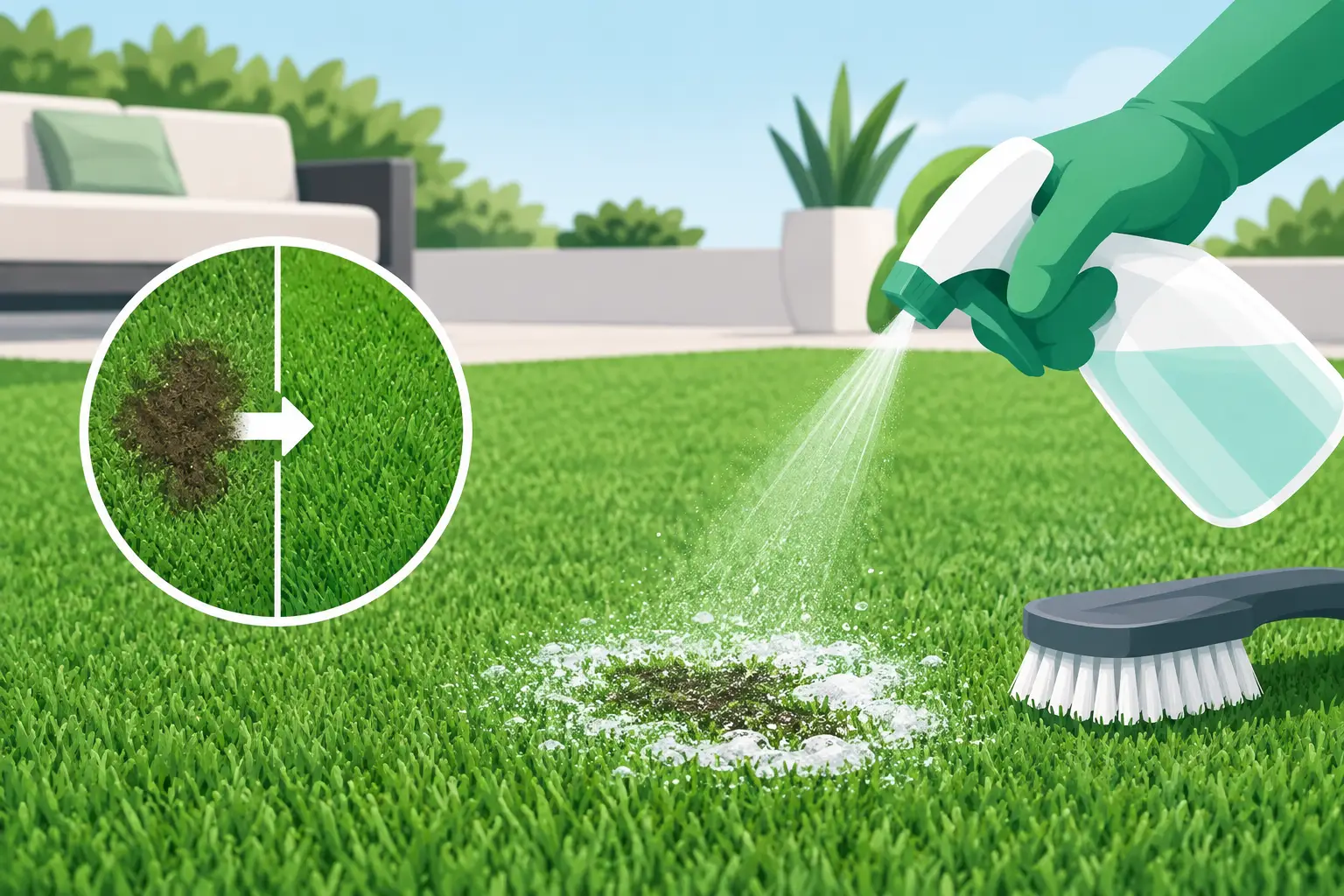
Next, power brushing and power sweeping lift matted fibers and help release material trapped between the blades. This step makes a visible difference on its own. Turf that has been crushed by foot traffic, pets, patio furniture, or weather begins to stand taller and look more even.
Deep rinsing follows to flush away loosened grime. For urine-heavy turf, extraction is especially valuable because the goal is not to cover the smell. The goal is to pull out the urine residue that is feeding it. Once the turf is properly cleaned, a turf-safe sanitizer and deodorizer can be applied to leave the space fresh and ready for normal use.
That is the difference between masking a problem and restoring the yard. Elite Turf Cleaning focuses on the full process: lift, remove, rinse, treat, sanitize, and refresh.
Pet Urine Stains Need More Than Fragrance
Pet urine is the number-one reason homeowners call for turf cleaning. Even the best artificial grass can develop odor issues when dogs use the same spots every day. The problem is not that your turf is failing. It is that the buildup has reached a point where routine maintenance is no longer enough.
Many store-bought odor products rely heavily on fragrance. They may make the area smell better for a short time, but fragrance does not remove urine salts or deep residue. When the sun hits the turf again, the odor returns.
A professional approach treats the affected area thoroughly, including the turf fibers and the material below them. Results can vary based on drainage, the amount of infill, the age of the turf, and how concentrated the pet use is. A small dog using a large yard creates a different cleaning challenge than multiple large dogs using one corner every day.
In severe cases, the base beneath the turf may also need attention. That does not automatically mean replacement is necessary. It means the cleaning plan should be honest about what is causing the odor and what it will take to get the best result.
Avoid These Common DIY Mistakes
Homeowners have good intentions, but a few common fixes can make synthetic grass stains worse. Bleach, harsh degreasers, and strong household chemicals can affect turf color, damage backing, or create runoff concerns around plants and pets. Artificial grass is durable, but it is not indestructible.
Overwatering is another mistake. Flooding the turf repeatedly may push some surface debris away, but it can also leave residue behind and create drainage issues if the underlying area is already compacted. More water is not always better.
Skipping brushing is also a missed opportunity. When turf blades stay flat, debris settles more easily and stains become more visible. A regular gentle brush keeps fibers upright and helps your lawn maintain that clean, freshly installed appearance.
For fresh accidents, remove solids promptly, blot excess liquid when possible, rinse the area, and use a cleaner made specifically for artificial grass. For odors that return, stains that keep reappearing, or turf that looks generally grimy, save yourself the cycle of spraying and hoping. That is the point where professional cleaning pays off.
How to Keep Turf Cleaner Between Treatments
You do not need to spend every weekend maintaining your artificial grass. A few simple habits can make a major difference between deep cleanings. Pick up pet waste promptly, rinse pet areas regularly, remove leaves before they break down, and brush high-traffic zones when you see the fibers starting to flatten.
It also helps to watch where your pets naturally go. If they use one or two favorite spots, give those areas extra attention instead of treating the whole yard the same way. Consistent light maintenance reduces the amount of buildup that reaches the backing and infill.
The right cleaning schedule depends on how your yard is used. A low-traffic front lawn may only need occasional maintenance. A backyard with several dogs, kids, and frequent outdoor gatherings may benefit from professional cleaning more often, particularly before warm-weather entertaining or after a long summer of heavy use.
Your artificial grass should be a clean, comfortable place to enjoy – not the part of the yard you avoid because it smells bad or looks worn down. When stains, pet odor, and matted turf start taking over, targeted treatment can bring your backyard back to life without the cost and disruption of replacement.