A backyard can look clean from the patio and still hold months of pet hair, dust, urine residue, crushed fibers, and bacteria below the surface. That is where real turf maintenance makes the difference. Artificial grass does not need mowing or watering, but it does need regular care to stay fresh, soft, sanitary, and ready for the people and pets who use it every day.
For Arizona homeowners, heat and daily outdoor use can turn neglected synthetic turf into a flat, dusty, smelly mess fast. A quick rinse helps with surface dirt, but it will not remove the buildup trapped deep in the infill and backing. If your turf is starting to look gross, smell worse, or feel hard underfoot, it is time to give it more than a hose-down.
What Turf Maintenance Really Means
Good artificial grass care is about restoring the whole system, not just making the blades look greener. Dirt, leaves, pet hair, sunscreen residue, pollen, and dust settle into turf over time. Pets add another challenge: urine can move below the fibers, soak into infill, and leave behind odor-causing bacteria that come back every time the yard warms up.
Professional turf maintenance addresses the problems that are easy to miss. It lifts flattened fibers, removes embedded debris, rinses away grime, treats urine-affected areas, and sanitizes the surface. The goal is simple: no more odors, no more mess, and no more backyard you avoid using.
A clean-looking yard is nice. A clean, odor-free, sanitized yard is what makes artificial grass worth having.
The Most Common Signs Your Turf Needs Attention
Turf does not always announce a problem with an obvious stain. In fact, the biggest issues usually build slowly. You may first notice a faint urine smell after an Arizona afternoon heats up. Then the odor becomes stronger after your dog uses the same spot for weeks. Before long, rinsing the area only masks the issue for a day or two.
Flattened grass is another clear sign. Heavy foot traffic, patio furniture, kids playing outside, and pets running the same route can press fibers down until the turf loses its full, natural appearance. Debris and compacted infill can make the problem worse because the fibers no longer have room to stand up.
Watch for turf that smells musty, feels gritty, drains slowly, has visible pet hair, or looks darker and matted in high-use zones. None of these problems mean you need to replace your artificial grass. They do mean basic upkeep is no longer enough.
Why Hosing It Off Is Not Always Enough
A garden hose is useful for light dust, a small spill, or fresh pet waste. It is not a deep-cleaning system. Water can push loose debris around, but it cannot reliably pull embedded hair, compacted grime, urine crystals, and bacteria out of the turf.
This matters most in pet areas. Urine odor does not live only on the surface. It can settle into the infill and lower layers, where heat activates the smell again and again. Adding more water may temporarily dilute the odor, but it does not remove the source.
Harsh household chemicals are not the answer either. Bleach and strong cleaners can leave residue, irritate paws, damage surrounding landscaping, or create an unpleasant chemical smell. The right approach uses turf-safe treatments that break down odor at its source while leaving the space safe for your household.
A Smarter Routine for Artificial Turf Care
The exact schedule depends on your yard. A low-traffic front yard may only need occasional brushing and debris removal. A backyard used daily by two dogs, children, and guests needs more frequent attention. Heat, monsoon dust, nearby trees, and the amount of pet use all affect how quickly turf gets dirty.
Start with simple weekly care. Pick up solid pet waste promptly, remove leaves and larger debris, and lightly rinse areas that receive regular pet use. This keeps surface waste from working deeper into the turf and makes your yard more pleasant between professional cleanings.
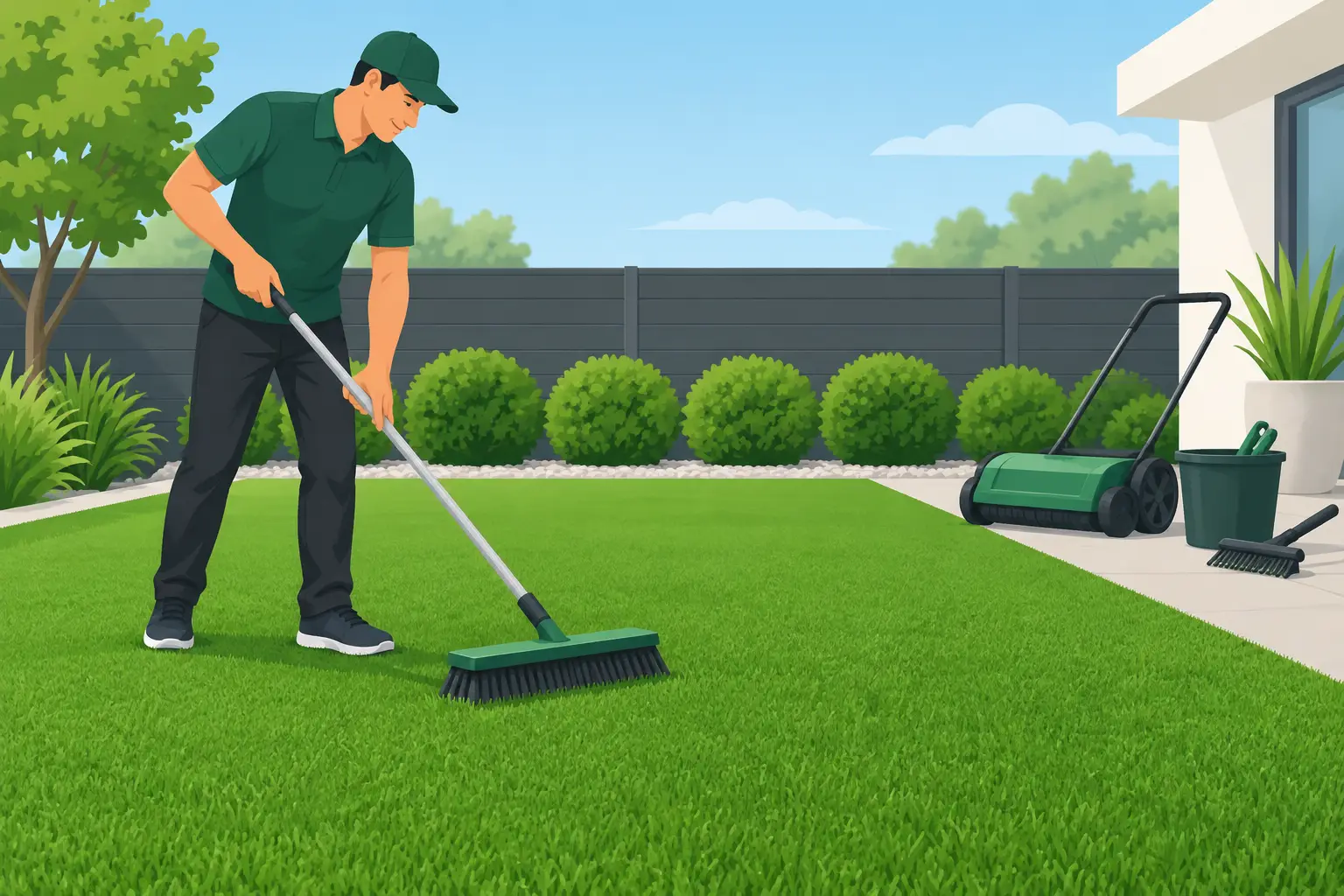
Every few weeks, inspect the fibers. If the grass is looking flat, use a turf-safe brush to lift it against the grain. Avoid aggressive metal tools that can snag or damage the fibers. Brushing also helps redistribute loose debris and identifies problem areas before they become obvious from across the yard.
For pet households, pay attention to favorite bathroom spots. Dogs rarely use every inch of the yard equally. The same few patches can take most of the abuse, which is why they are usually the first places to smell. Those zones need targeted urine extraction, odor treatment, and sanitization, not a generic spray over the whole lawn.
Deep Cleaning Restores What Routine Care Cannot
There is a major difference between maintenance and restoration. Routine care helps slow buildup. Deep cleaning removes what has already collected in the turf.
A full professional service typically starts by power sweeping or power brushing the fibers to pull up trapped pet hair, dust, and debris. This step brings flattened turf back to life and opens the surface so rinsing and treatment can work where they need to work. Next comes a deep rinse that flushes away loosened grime.
For yards with pets, urine extraction and odor treatment are the turning point. The affected areas are treated to target the bacteria and residue responsible for persistent smells. A turf-safe sanitizer and deodorizer finish the process, leaving the yard cleaner, fresher, and more comfortable for pets and people.
The visible difference can be dramatic. Turf that looked tired and crushed can stand taller. Areas that carried a sharp urine smell can become usable again. That is why homeowners often choose restoration before considering expensive replacement. If the turf itself is still in good condition, professional cleaning can save a yard that seemed beyond help.
How Often Should You Schedule Professional Turf Maintenance?
For most Arizona homes with pets, professional cleaning every three to six months is a practical range. A single dog with a large yard may need service less often. Several dogs using a smaller backyard, especially during hot weather, may need quarterly treatments to stay ahead of odors and bacteria.
High-traffic yards also benefit from scheduled brushing and cleaning even without pets. Kids, pool traffic, cookouts, and frequent entertaining all bring dirt into the fibers. Waiting until the turf smells bad or looks flat means more buildup has already settled in.
Think of it like cleaning carpet in a busy home. You vacuum regularly, but occasional deep cleaning keeps the material looking better and extends its usable life. Artificial turf deserves the same mindset. It is a major investment, and the right maintenance protects it.
Protect Your Yard Between Cleanings
The best results come from pairing professional service with a few smart habits. Clean pet waste as soon as possible. Keep grills, fire pits, and sharp-edged furniture away from the turf. Do not park vehicles or leave heavy objects in one spot for long periods. If you have trees overhead, clear leaves and seed pods before they break down into the surface.
It also helps to avoid treating turf like a drainage shortcut. Dumping soapy mop water, pool chemicals, or oily spills onto artificial grass creates residue that attracts more dirt and can affect the look and feel of the fibers. When a spill happens, blot it, rinse gently, and address it quickly.
Most of all, do not ignore recurring odor. A smell that returns after rinsing is not a minor inconvenience. It is a sign that urine residue and bacteria are still below the surface. The sooner it is professionally treated, the easier it is to restore the space.
Bring Back the Clean, Fresh Backyard You Paid For
Your artificial grass should make outdoor life easier, not create another cleaning problem. When it is properly maintained, turf stays fuller, cleaner, safer, and more inviting for the whole family. Pets can play, kids can run, and guests can step outside without being greeted by a blast of odor.
Elite Turf Cleaning focuses on the deep work that casual upkeep misses: power brushing, debris removal, deep rinsing, urine extraction, pet odor treatment, and sanitization designed for artificial grass. The result is not a temporary cover-up. It is a backyard that feels fresh again.
If your turf has lost its lift, holds onto pet smells, or no longer feels clean underfoot, do not wait for the problem to get worse. A professional restoration can give your yard the reset it needs and help you enjoy it again tomorrow.