That artificial grass looked clean when it was installed. Then came the dogs, the kids, backyard barbecues, dust, monsoon debris, and daily foot traffic. If your yard now smells like pet urine, feels matted down, or looks dull no matter how often you hose it, turf sanitation is the fix that basic rinsing cannot deliver.
Artificial turf does not need mowing or watering, but it absolutely needs maintenance. The biggest problems do not sit on top of the blades where you can see them. They settle deep into the turf fibers and infill, where urine residue, bacteria, pet hair, dirt, and organic debris build up over time. That is why a quick rinse may make the surface look better for an afternoon, then leave the odor and grime right where they started.
What Turf Sanitation Actually Fixes
Turf sanitation is more than spraying a deodorizer over synthetic grass. A real service targets the material trapped below the surface, where odors begin and bacteria can multiply. The goal is to restore the turf’s appearance, improve cleanliness, and leave the space fresh enough for pets, kids, and guests to use comfortably.
For Arizona homeowners, heat makes the problem harder to ignore. High temperatures can intensify urine odor, especially in pet areas that get used every day. When moisture hits old urine crystals in the turf, that familiar smell can come right back. It is frustrating because the lawn may appear dry and tidy while the odor tells a different story.
Sanitation also helps with turf that has become flat, stiff, or visibly dirty. Dirt and pet hair can pack into the fibers, preventing them from standing upright. Debris can clog drainage areas. Without deep cleaning, the turf slowly loses the clean, full look you paid for.
Pet Urine Does Not Stay on the Surface
When a dog uses artificial grass, liquid moves through the blades and into the infill and base below. Some drainage systems handle liquid well, but drainage alone does not remove the urine salts and residue that cause persistent odor. Over time, repeat use in the same area creates concentrated hot spots.
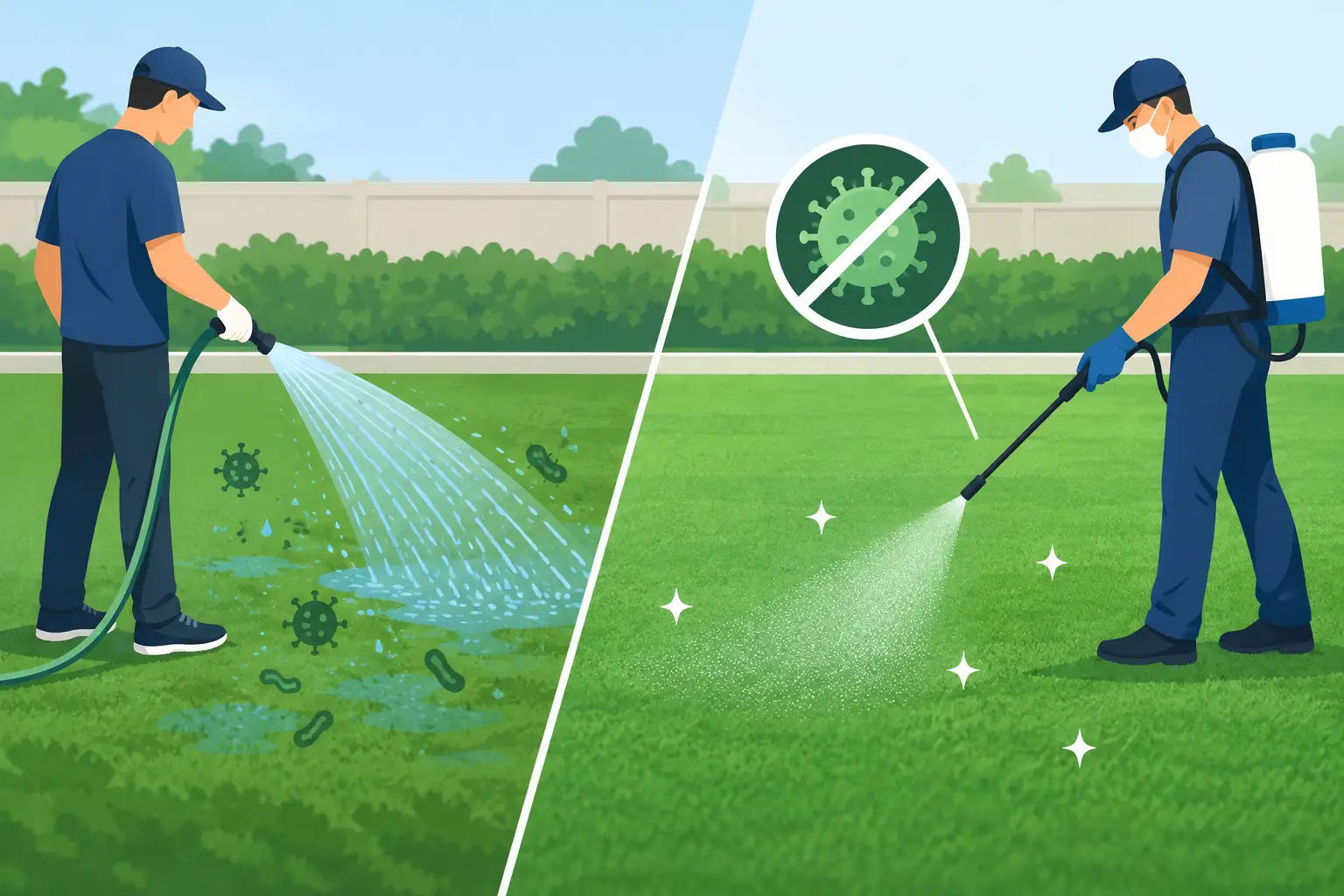
A garden hose dilutes some surface residue, but it does not extract the buildup buried in the turf. Household cleaners can make the situation worse if they leave behind sticky residue, damage turf backing, or simply mask odors for a few days. The right treatment has to reach the source, not cover it up.
Signs Your Artificial Grass Needs Sanitizing
You do not have to wait until the yard smells terrible to schedule service. Turf often gives clear warning signs that it needs a deeper reset. Watch for these common issues:
- A urine smell that returns after rain, rinsing, or humid weather
- Flattened turf blades that no longer brush upright
- Pet hair, leaves, and dirt packed down between the fibers
- Dark spots, stains, or areas that look worn and dingy
- A backyard that no longer feels comfortable for children or pets to play on
One sign may be enough to act. If you are dealing with several, the turf likely needs more than routine upkeep. The longer urine residue and debris sit in place, the more difficult it can be to fully restore freshness.
The Professional Turf Sanitation Process
Professional cleaning works because it combines mechanical removal, deep rinsing, odor treatment, and sanitation in the right order. Skipping steps is how homeowners end up with a yard that looks better briefly but still smells bad underneath.
Step 1: Lift the Turf and Remove Embedded Debris
Power brushing and power sweeping do more than make artificial grass look fluffy. They lift compressed turf fibers, loosen embedded dirt, and pull out pet hair, leaves, and other debris that ordinary blowing misses. This is the first step toward bringing the turf back to life.
The difference is often visible immediately. Matted traffic lanes begin to stand up, and hidden buildup comes to the surface where it can be removed instead of pushed deeper into the lawn.
Step 2: Deep Rinse the Fibers and Infill
Once dry debris is removed, the turf needs a thorough rinse. Deep rinsing flushes out loose grime and prepares odor-prone areas for treatment. The goal is not to flood the yard. It is to clean the turf carefully while respecting its drainage system and backing.
This matters most in dog runs, side yards, and favorite potty spots. Those areas may need focused work because they carry a heavier concentration of urine residue than the rest of the lawn.
Step 3: Treat Urine Odor and Stains at the Source
Persistent pet odor requires more than fragrance. Professional urine extraction and targeted treatment address the residue responsible for the smell. When the treatment reaches the affected infill and fibers, it can break down odor-causing buildup instead of just making the yard smell artificially perfumed.
Results depend on the age of the turf, the amount of pet use, the drainage design, and how long the odor has been present. A yard with one small dog and good drainage may clean up quickly. A heavily used pet area with years of buildup may need more intensive treatment. Honest service means recognizing that difference and treating the problem accordingly.
Step 4: Sanitize and Deodorize for a Fresh Finish
After cleaning and odor treatment, a turf-safe sanitizer helps reduce bacteria on the surface and throughout the treated area. A deodorizing application finishes the job, leaving the space smelling clean rather than chemically covered up.
For families, this step is about confidence. Your backyard should not feel like a dirty pet zone. It should be a place where kids can play, dogs can relax, and you can walk outside without bracing for a smell.
How Often Should You Schedule Turf Sanitation?
There is no one schedule for every home. A lightly used decorative lawn may only need a professional deep cleaning once or twice a year. A backyard with multiple dogs, active kids, or frequent entertaining may benefit from service every three to six months.
Pay attention to the conditions in your own yard. If you notice odor after rinsing, flattened fibers, or debris collecting faster than you can remove it, it is time to schedule a cleaning. Waiting until the turf becomes unbearable usually means more buildup and a tougher restoration job.
Between professional visits, simple habits help extend the fresh result. Pick up solid pet waste promptly, remove leaves before they decay, rinse pet areas occasionally, and brush high-traffic spots when they begin to flatten. These steps are useful maintenance, but they are not a replacement for deep sanitation.
Why DIY Cleaning Has Limits
DIY care is fine for surface maintenance. A hose, leaf blower, and basic turf brush can keep a yard looking decent between services. The limitation is depth. Most homeowners do not have commercial power equipment or the right turf-specific products to remove packed debris, extract urine buildup, and sanitize the turf without damaging it.
There is also the issue of product choice. Harsh chemicals may affect turf fibers, backing, nearby plants, or pets. Heavy soap applications can leave residue that attracts more dirt. Strong fragrances can hide an odor temporarily while the source remains below. What looks like a quick fix can turn into a repeat problem.
That is where a specialized service earns its value. Elite Turf Cleaning focuses on the full restoration process: lifting compressed blades, removing what is trapped inside, treating pet odor at its source, and leaving artificial grass clean, fresh, and ready to use.
Restore Your Yard Before the Problem Gets Worse
Dirty, smelly turf does not automatically mean you need expensive replacement. In many cases, the grass is still in good condition beneath the buildup. It needs the right cleaning process to look and smell like it should again.
If your artificial grass has become the part of the yard everyone avoids, do not settle for another quick rinse. Give it the deep care it needs, and get back to enjoying a backyard that feels clean the moment you step outside.