That sharp pet odor that hits when the Arizona sun warms up your yard is not just an inconvenience. It is a sign that urine has worked below the synthetic fibers and settled into the infill and backing. Synthetic grass urine extraction is the professional process that pulls that buildup out instead of simply covering it with fragrance. No more watering the same spot and hoping for a different result.
Artificial turf is built to drain, but daily pet use can overwhelm even a well-installed system. As liquid passes through the grass, urine salts, waste residue, hair, dander, and bacteria can cling to the infill. Over time, those materials create a stubborn odor source beneath the surface. A quick hose-down may rinse the top layer, but it rarely reaches the contamination that is causing the problem.
Why Pet Urine Gets Trapped in Artificial Turf
Your turf does not need to look dirty to hold a serious odor problem. In fact, many pet owners notice the smell first on hot afternoons, after rain, or when they step onto a heavily used potty area. Heat activates odor-causing compounds that have been sitting in the turf system for weeks or months.
The biggest issue is usually accumulation. One dog using the same corner a few times a day creates concentrated buildup. Multiple dogs, puppies, senior pets, and small yards can make the problem move fast. If the turf is flattened, matted with pet hair, or filled with leaves and debris, drainage can slow down and hold even more odor close to the surface.
Arizona’s dry climate can add another layer to the issue. Urine residue can dry and crystallize in the infill instead of being naturally diluted by regular rainfall. Then, when moisture and heat return, the smell comes back hard. That is why a deodorizing spray alone often delivers only a short-lived improvement.
What Synthetic Grass Urine Extraction Actually Does
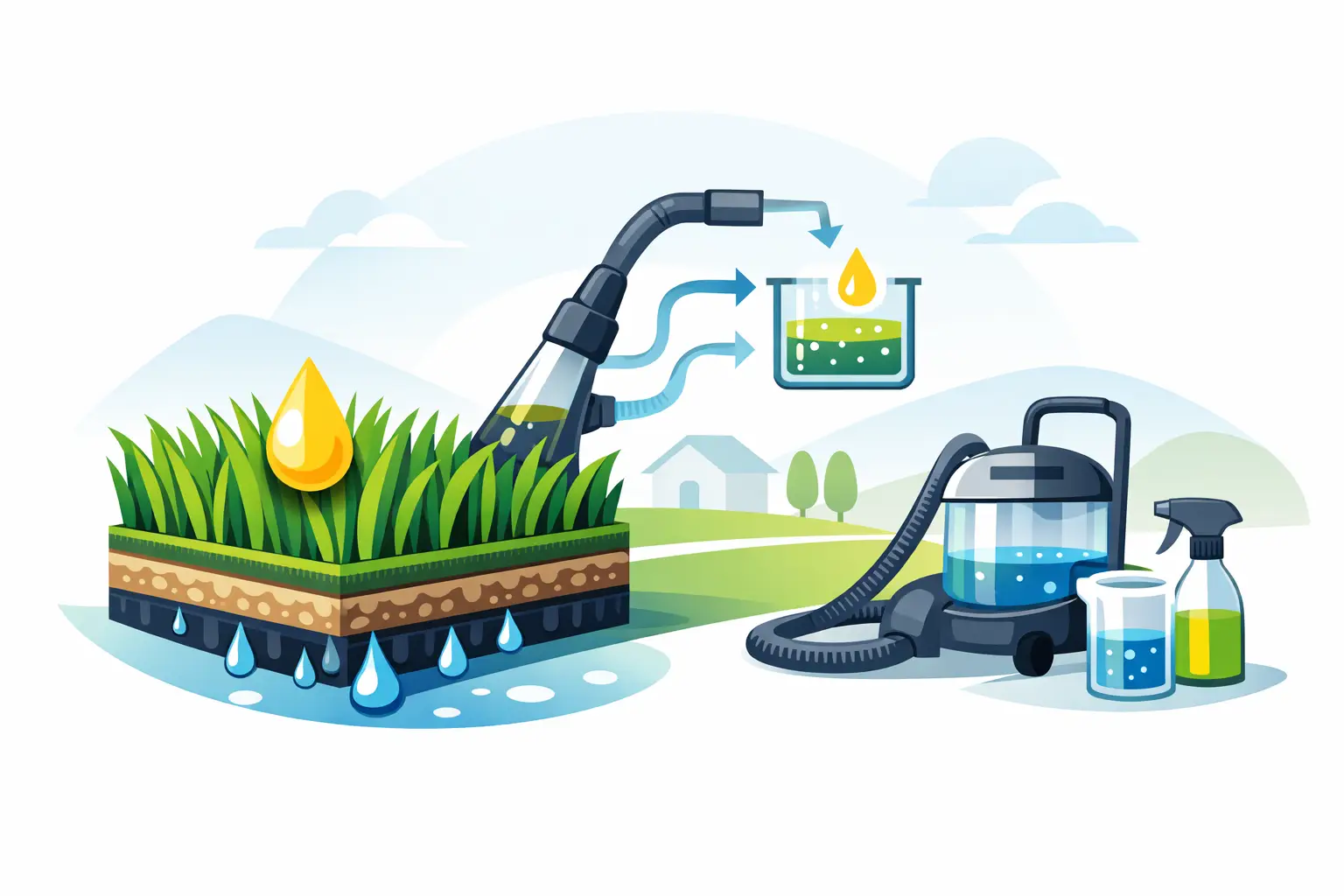
Real synthetic grass urine extraction is not a surface treatment. It is a deep-cleaning process designed to remove odor-producing material from the places a garden hose cannot reach.
The job begins with clearing the turf surface. Pet hair, leaves, dust, and loose debris are removed so the cleaning process can reach the fibers and infill. Next comes power brushing or power sweeping to lift compressed blades, loosen embedded grime, and open up the turf surface. This step matters because flat, packed turf holds onto contaminants and makes the entire yard look worn out.
After the turf is prepared, deep rinsing and extraction work together to flush urine residue and dirty water out of the system. Professional equipment provides more force and control than casual rinsing, helping break up the concentrated areas where pets repeatedly go. The goal is not to push odor deeper into the turf. The goal is to pull the contaminated material out.
A turf-safe odor treatment and sanitizer are then applied where needed. These products are designed to address the bacteria and organic residue behind the smell, not just replace it with a stronger scent. When the turf is treated correctly, it should smell clean and fresh without smelling like heavy perfume.
Why Hosing It Down Usually Is Not Enough
Hosing is still a good habit. It can remove dust, cool the surface, and dilute fresh urine before it dries. For a low-use area with one small dog, routine rinsing may keep odors manageable for a while. But it has limits.
Water alone does not remove packed pet hair, compacted infill, sticky urine salts, or bacteria buildup. It can also leave dirty water moving through the same layers without fully lifting the source of the odor. If your turf smells better right after rinsing but bad again a day later, the urine is still there.
Store-bought turf deodorizers have a place for light maintenance between professional cleanings. They are not a replacement for extraction when the odor is strong, the yard has multiple pets, or the same urine spots keep coming back. Masking a dirty turf system is not restoration.
Signs Your Turf Needs Urine Extraction
The most obvious sign is a smell that returns, especially after heat, rain, or watering. But odor is not the only clue. Turf that feels crusty, looks gray or dull, stays matted down, or has dark, heavily used pet zones may be overdue for a deeper service.
Watch for flies gathering around a specific area, visible pet waste residue, and turf that no longer feels pleasant for kids to play on. If you avoid using your own backyard because it smells embarrassing, that is a clear signal that routine maintenance is no longer enough.
You do not need to wait until the whole yard feels gross. Treating concentrated potty areas early can stop the problem from spreading into a larger, more expensive restoration job.
The Right Cleaning Schedule Depends on Your Pets
There is no single schedule that fits every yard. A household with one dog and a large turf area may only need a professional deep cleaning once or twice a year, along with regular rinsing and waste pickup. A small backyard used by two or three dogs every day may need treatment more often.
Puppies and older dogs can create more frequent urine spots, while large dogs produce more volume. Turf used for boarding, pet sitting, or regular gatherings also takes more abuse. The right plan depends on how much use the turf gets, where your pets go, the condition of the infill, and how quickly odors return.
The key is to act before urine buildup becomes your normal. A fresh yard should not smell like a kennel when the sun comes out.
What You Can Do Between Professional Cleanings
Good daily habits make a professional cleaning last longer. Pick up solid waste promptly, rinse favorite potty zones regularly, and remove leaves and pet hair before they get ground into the turf. If the blades are starting to lay flat, a stiff turf-safe brush can help lift them back up.
Avoid dumping harsh household chemicals, bleach, or heavily scented cleaners onto artificial grass. These products may irritate paws, leave residue, damage portions of the turf system, or create a temporary fragrance without solving the contamination underneath. More chemical is not the answer.
Also pay attention to drainage. If water pools, moves slowly through the turf, or collects near seams and edges, the issue may be bigger than odor alone. Extraction can improve cleanliness, but a drainage or installation problem may need separate attention. A good service provider should be honest about that trade-off instead of promising that one treatment will fix every turf issue.
Bring Your Backyard Back to Life
A clean turf yard should be a place where dogs can run, kids can play, and guests can step outside without noticing an odor. When urine, bacteria, flattened fibers, and embedded debris take over, replacing the turf is not always necessary. In many cases, the right restoration service can make a major difference.
Elite Turf Cleaning focuses on the work regular rinsing misses: lifting matted turf, removing embedded debris, extracting urine buildup, sanitizing the surface, and eliminating the odors that keep your yard from feeling clean. The result is not just a better-smelling backyard. It is turf that looks refreshed, feels safer underfoot, and is ready to be enjoyed again.
If your artificial grass smells worse every time the temperature rises, do not keep masking it. Give the turf the deep clean it has been asking for, and get your backyard back to being a place you actually want to use.