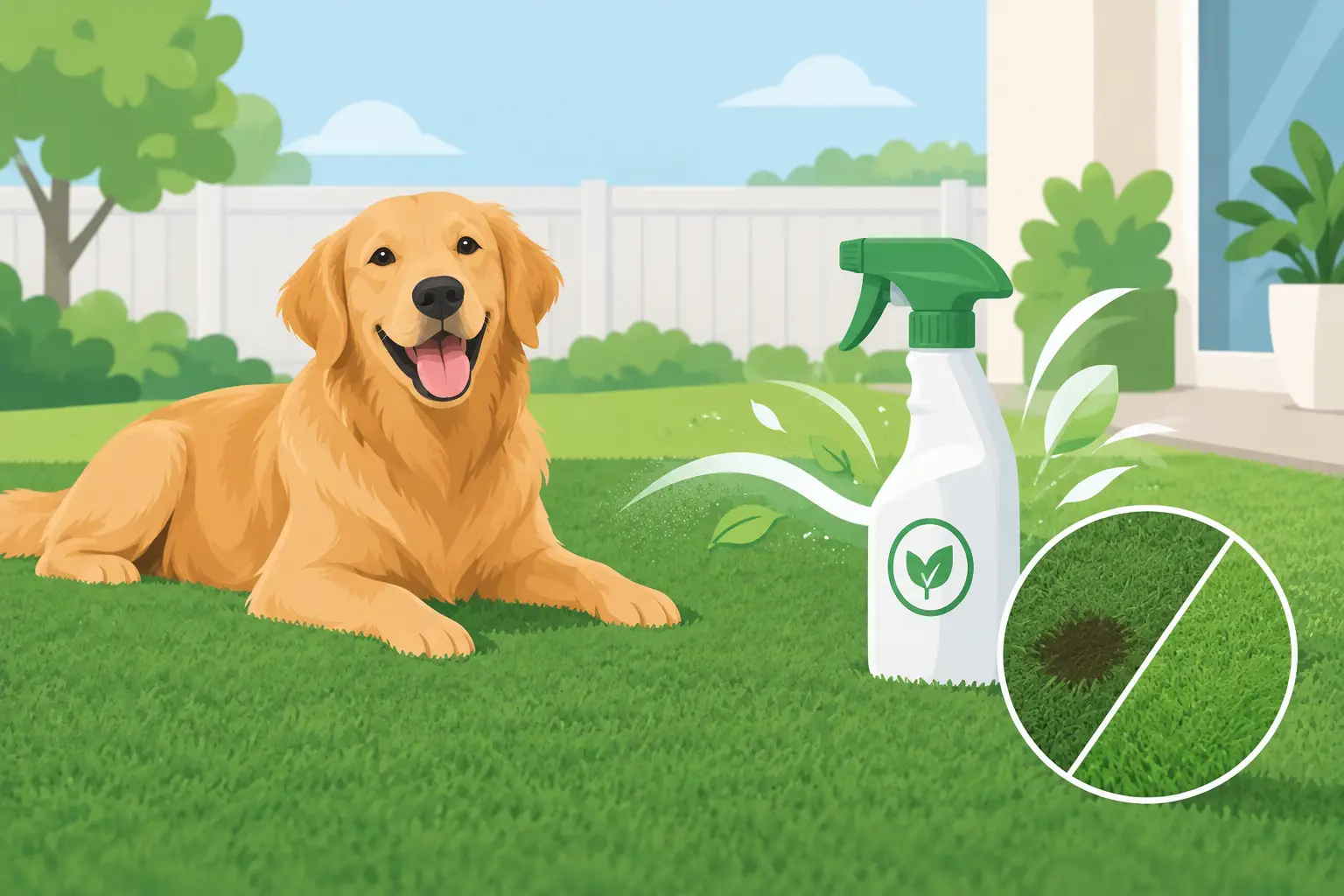
A backyard can look perfectly green and still smell like a kennel the second Arizona heat hits it. That is the real test behind any pet odor eliminator turf review: not whether a product leaves a temporary clean scent, but whether it removes the urine buildup trapped below the artificial grass.
For homes with one dog, a light odor may respond to consistent cleaning. For yards used daily by multiple dogs, surface sprays and hose rinses rarely solve the whole problem. The right solution depends on where the odor is sitting, how long it has been there, and whether the turf system can be flushed clean.
Why Artificial Turf Holds Pet Odor
Dog urine does not simply disappear through artificial grass. Liquid moves through the turf blades and backing, then settles in the infill and base below. As urine dries, it leaves behind uric acid crystals, bacteria, and odor-causing residue. Add summer heat, and those odors can come back hard.
This is why a yard may smell fine after a quick rinse, then become unbearable by afternoon. Water can dilute fresh urine near the surface, but it does not always remove concentrated contamination deeper in the turf. If pet hair, dust, leaves, and compacted infill are also present, the turf cannot drain or breathe as it should.
A true odor eliminator has to do more than cover the smell. It needs to break down odor sources, reach the affected areas, and leave the turf sanitary enough for pets and family use.
Pet Odor Eliminator Turf Review: The Options
There is no single product that works perfectly for every pet yard. Here is the straight answer on the methods homeowners use most often.
Garden Hose Rinsing
Rinsing is necessary maintenance, especially during dry Arizona weather. It helps move away dust, cools the surface, and dilutes fresh urine before it dries. For a small dog that uses different spots around the yard, regular rinsing can keep mild odor under control.
The limitation is depth. A hose does not extract old urine deposits from infill or remove bacteria that has worked down into the base. It is upkeep, not restoration. If your turf has a strong odor even after a thorough rinse, water alone is no longer enough.
Enzyme Cleaners
Enzyme-based cleaners can be useful because they are designed to break down organic waste rather than just perfume over it. When used correctly on a recent accident or a small concentrated area, they can reduce odor without harsh chemicals.
But enzymes need the right conditions to work. They need enough contact time, adequate saturation, and access to the source of the odor. Spraying a thin layer over a large backyard with years of urine buildup usually will not produce the result the label promises. High heat can also dry a product before it has time to work.
Look for pet-safe formulas, follow dilution directions, and avoid assuming that more product means better results. Overapplying cleaner can leave residue behind and create its own mess.
Deodorizers and Fragrance Sprays
Deodorizers may make a yard smell fresh right away. That can be helpful after cleaning, but it is not proof that the odor problem is gone. Fragrance sprays are best viewed as a finishing step, not the main treatment.
If the smell returns as soon as the lawn warms up, the deodorizer is masking a deeper issue. The same goes for products that claim instant results but do not address urine, bacteria, pet hair, or compacted infill.
Baking Soda, Vinegar, and Household Fixes
These options are popular because they are inexpensive and already in the garage or pantry. They may help with a small spot, but they are not a dependable plan for a pet-heavy artificial lawn.
Baking soda can leave powdery residue in the turf, while vinegar may create a sharp smell of its own and is not designed to restore a contaminated turf system. Mixing household products can also create avoidable safety problems. Artificial turf is an investment. Treat it like one instead of experimenting with a different internet remedy every weekend.
Professional Turf Odor Treatment
Professional treatment is the strongest option when odor is persistent, widespread, or immediately returns after DIY cleaning. The difference is not just a stronger spray. A turf-specific service starts by removing debris and pet hair, lifting flattened blades, loosening compacted material, deep-rinsing the area, extracting urine contamination, and applying sanitizer and deodorizer where they can actually do their job.
That process matters because odor rarely has one cause. It is usually a combination of urine residue, bacteria, trapped organic debris, poor drainage, and neglected infill. Addressing only the smell leaves the rest behind.
What Actually Makes a Turf Treatment Effective?
An effective treatment should create a noticeable change in both odor and appearance. The turf should smell clean without being overwhelmed by perfume. It should also look less matted, feel cleaner underfoot, and drain more freely once debris and buildup have been removed.
The strongest treatments generally include these four elements:
- Mechanical power brushing or sweeping to lift turf fibers and pull out embedded pet hair and debris.
- Deep rinsing and urine extraction to flush contamination from the turf system instead of pushing it around.
- Pet-safe sanitizing to reduce odor-causing bacteria in high-use areas.
- A quality deodorizing treatment applied after the source of the odor has been addressed.
Skip any one of these steps, and results can be limited. A beautiful-smelling yard that still has compacted, dirty infill may develop the same odor again. On the other hand, a deep cleaning without proper deodorization may be sanitary but not deliver the fresh finish homeowners want.
Signs You Need More Than a Store-Bought Spray
A simple odor product may be enough for minor maintenance. It is time to bring in a turf cleaning specialist when the problem has moved beyond maintenance and into restoration.
Watch for odors that return every afternoon, yellowing or dark spots around favorite potty areas, turf blades that stay flat after brushing, visible pet hair and debris stuck in the grass, or a backyard you avoid using because it smells bad. Those are not signs that you need a better air freshener. They point to buildup inside the turf.
Multi-dog homes are especially likely to need deeper service. So are small yards where dogs use the same few places every day. Even high-quality turf can hold odors when it is not routinely cleaned at the level its use requires.
How to Keep Odor From Coming Back
Once the yard is restored, a little ongoing care goes a long way. Pick up solid pet waste promptly, rinse frequent potty zones regularly, and remove leaves and loose debris before they work their way into the turf. If your dog always uses one corner, rotate that area when possible or give that spot extra rinsing attention.
Do not wait until the odor is overwhelming. Regular professional cleaning is easier and more cost-effective than allowing months or years of urine residue to build up. The best schedule depends on the number of pets, yard size, drainage, and how often the space is used. A single small dog may need less frequent service than a multi-dog household with a compact backyard.
Elite Turf Cleaning focuses on the full reset: lifting flattened turf, clearing out debris, treating urine buildup, sanitizing high-use areas, and leaving artificial grass clean and fresh again. No more guessing whether another bottle from the store will finally work.
Your turf should be a place where kids play, dogs relax, and guests can step outside without noticing an odor. If the smell keeps coming back, the helpful next move is simple: stop masking it and treat what is trapped underneath.