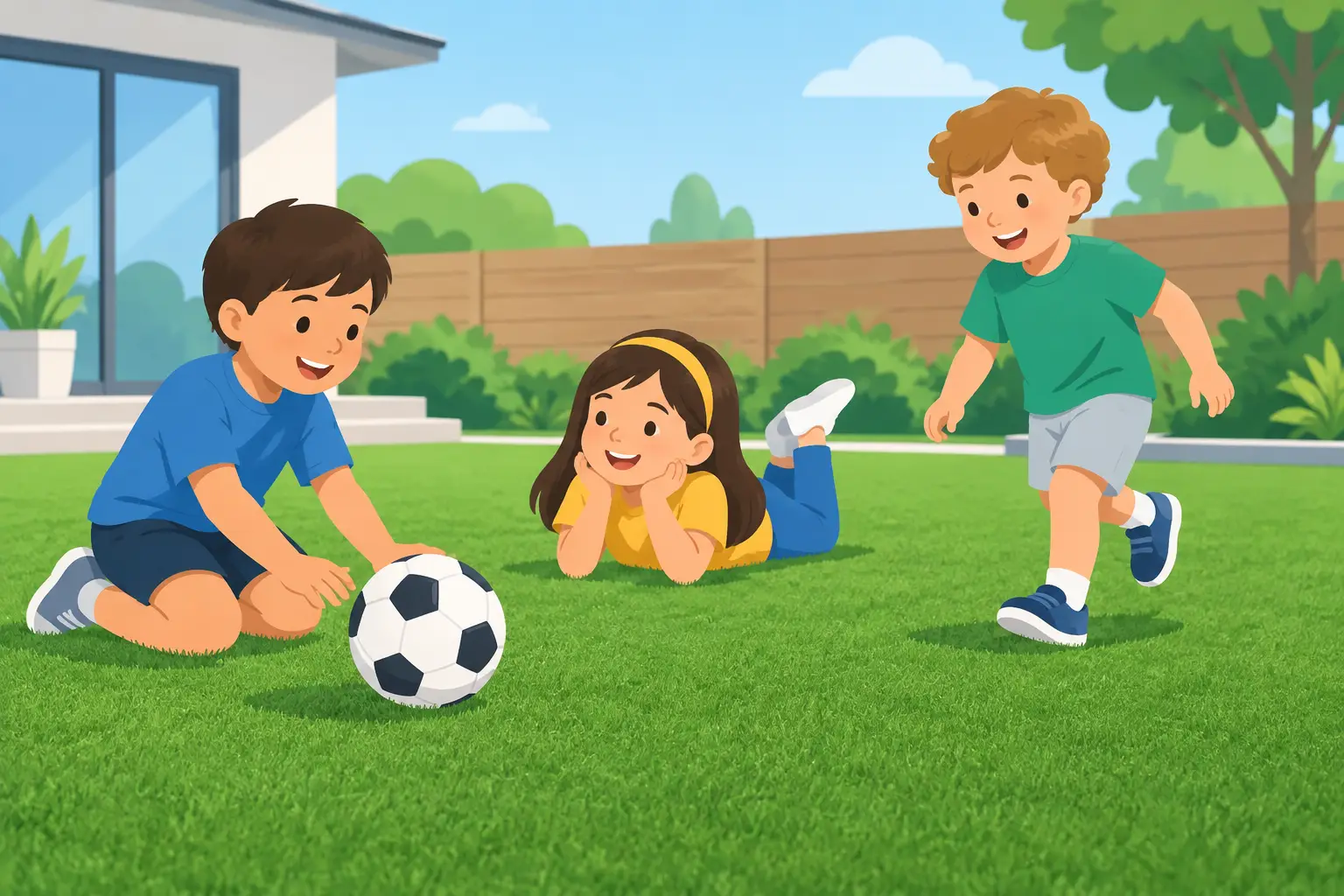
A backyard should be the easy part of family life: kids running barefoot, snacks on the patio, no muddy footprints through the house. But when parents ask, is artificial grass safe for kids, they are asking the right question. Synthetic turf can be a clean, durable play surface, but its safety depends on the turf materials, Arizona heat, drainage, and how well the surface is maintained.
A clean turf yard is very different from turf that is packed with pet urine, flattened debris, bacteria, and lingering odor. The goal is not just to make artificial grass look good. It is to keep the place where your children play fresh, comfortable, and sanitary.
Is Artificial Grass Safe for Kids in Arizona?
Yes, artificial grass can be safe for kids when it is made with quality materials, installed correctly, and kept clean. It offers real family-friendly benefits: no pesticides from natural lawn treatments, fewer muddy areas, consistent footing, and a surface that holds up to daily use.
But artificial grass is not maintenance-free. That idea causes most of the problems homeowners deal with later. Turf collects dust, pollen, food crumbs, pet hair, leaves, spills, and bacteria. In homes with dogs, urine can move through the turf and settle in the infill and base below. A quick hose-down may rinse the surface, but it does not always remove what has become trapped underneath.
For families in Arizona, heat is another serious consideration. Direct sun can make synthetic grass much hotter than natural grass, especially in the middle of the afternoon. Safe turf is not just about what the product is made from. It is about how it performs in the real conditions of your yard.
What Makes Turf Safer for Children?
Start with the product itself. Choose turf from a reputable manufacturer that clearly identifies its materials and is designed for residential landscape use. If you are installing new turf, ask about third-party testing, product warranties, backing materials, and the type of infill being used. If a contractor cannot give straight answers about the turf and infill, that is a red flag.
Infill matters because it sits between the blades and helps the turf stay upright, cushioned, and stable. Options vary widely. Some homeowners prefer products labeled as silica sand, coated sand, or plant-based infill. Others may have older crumb-rubber infill and want to understand whether it is still appropriate for their family. There is no one answer for every yard, but parents should know exactly what is in their play area and replace damaged or degraded materials when needed.
Proper installation is just as important. Turf should have secure seams, stable edges, and drainage that moves water away instead of allowing moisture and waste to sit below the surface. Loose seams can create trip hazards. Poor drainage can create odors and turn a clean-looking yard into a bacteria-holding problem.
Heat Is the Biggest Arizona Turf Issue
On a sunny Arizona afternoon, artificial grass can get hot enough to make bare feet uncomfortable fast. This does not mean you cannot have turf where kids play. It means you need a smart plan for sun exposure.
Check the surface with the back of your hand before letting children run out barefoot. If it is too hot for your hand after a few seconds, it is too hot for their feet. Plan active play for mornings, evenings, or shaded parts of the yard during peak summer heat. Shade sails, trees, patio coverage, and misting systems can make a major difference.
Rinsing turf with water can temporarily cool the fibers, but it is not a permanent fix. It also should not be used as a substitute for cleaning. If the turf has pet odor or embedded grime, adding water without proper treatment can sometimes reactivate smells rather than solve them.
Footwear helps, but it does not eliminate the risk of hot surfaces. Young children may still sit, crawl, or place their hands directly on the turf. Build heat checks into your routine, especially when guests, playdates, and energetic kids are involved.
Clean Turf Is Safer Turf
Kids touch the ground. They sit on it, fall on it, drag toys across it, and sometimes eat snacks without washing their hands first. That is why a turf surface that looks green but smells like urine or feels matted down needs more than cosmetic attention.
Pet waste should be removed promptly. Solid waste left behind can spread bacteria across the turf fibers, especially if children and dogs use the same area. Urine is more complicated. It drains down through the turf, but uric salts can remain in the infill and backing. Over time, heat and moisture can bring those odors right back.
Routine maintenance should include removing debris, brushing high-traffic areas, and rinsing as needed. For a family yard with pets, regular professional deep cleaning can handle the work that surface care misses: embedded pet hair, compacted infill, bacteria buildup, urine extraction, and stubborn odor sources below the blades.
At Elite Turf Cleaning, the focus is restoration, not a quick fragrance sprayed over a dirty surface. Power brushing, deep rinsing, pet odor treatment, and sanitization help bring turf back to a condition families can feel good about using.
Watch for These Signs Your Turf Needs Attention
Your artificial grass may need a deeper cleaning or inspection if you notice several of these issues:
- Persistent urine odor, especially after the yard is watered or humidity rises
- Flattened, matted blades in play areas, walkways, or pet zones
- Dark stains, sticky spots, or visible buildup around favorite pet areas
- Slow drainage, pooling water, loose edges, or separated seams
- Children avoiding the turf because it feels dirty, smells bad, or gets painfully hot
Odor is not just an inconvenience. It is often a sign that urine and organic matter are still sitting in the turf system. Covering it with deodorizer alone may make the yard smell better for a day or two, but it does not remove the source.
Don’t Use Harsh Chemicals Around Play Areas
Homeowners often reach for bleach, harsh disinfectants, or heavily perfumed cleaners when turf starts smelling bad. That can create a bigger problem. Strong chemicals may irritate skin, damage turf fibers or backing, and leave residues in an area where children and pets spend time.
Use products specifically intended for artificial turf and follow the label directions. More product is not better. Avoid mixing cleaners, and give treated areas time to dry before kids use them. If you are dealing with a serious odor issue, repeated DIY products can become expensive without reaching the urine trapped below the surface.
Professional turf cleaning is especially useful when the problem keeps returning. A thorough service should address debris, infill, odor sources, stains, bacteria, and the turf fibers themselves. The result should be a genuinely fresher yard, not a temporary cover-up.
A Safe Play Yard Takes More Than Good-Looking Turf
Artificial grass can be an excellent choice for busy Arizona families. It can reduce mud, eliminate lawn chemicals, and create a durable space for daily play. But the safest yard is the one that is managed with the same care you would give a patio, pool deck, or indoor playroom.
Check the heat. Keep pet waste under control. Pay attention to drainage and loose edges. Do not ignore odors just because the turf still looks green from a distance. When your turf is clean, brushed up, sanitized, and free of lingering urine buildup, your kids get what they need most: a backyard that feels ready for real life.
Before the next barefoot race to the swing set, step outside and take an honest look at the surface beneath their feet. Fresh, clean turf makes the whole yard more inviting – and gives parents one less thing to worry about.