Pet hair does not just sit on top of artificial grass. It works its way down between turf blades, clings to infill, traps dust, and gives your yard that dull, matted look. Knowing how to clean pet hair from turf helps you stay ahead of the mess, but it also reveals when a quick backyard cleanup is no longer enough.
For Arizona pet owners, the problem builds fast. Dry dust, windblown debris, shedding coats, muddy paws, and repeated bathroom use can turn even premium synthetic grass into a spot that looks rough and smells worse. The goal is not simply to pull out visible fur. It is to lift the turf fibers, remove the trapped debris, and keep urine-related bacteria and odors from settling deeper into the system.
Why Pet Hair Gets Stuck in Artificial Turf
Artificial turf is designed to hold up under paws, playtime, and harsh sun. That durability also creates tight spaces where pet hair can collect. Long hair wraps around the turf blades. Short, fine hair settles into the infill. Once the grass is flattened by daily traffic, hair becomes even harder to reach with a basic leaf blower or garden hose.
Hair also holds onto the dirt around it. This is why a turf area may look gray, dusty, or compacted even after you remove the obvious clumps. If your turf has a lingering odor, hair is not always the cause, but it can contribute by trapping organic debris where bacteria thrive.
A light cleanup every week or two can make a major difference. Homes with multiple dogs, heavy shedders, or a dedicated dog run may need attention more often.
What You Need Before You Start
Skip harsh household cleaners, metal rakes, and anything that can tear, melt, or discolor synthetic fibers. The right tools make the job easier without beating up your turf.
For a regular pet-hair cleanup, use a stiff synthetic-bristle broom or turf rake, a leaf blower or outdoor vacuum designed for dry debris, a hose with an adjustable spray nozzle, and a rubber broom or pet-hair removal brush. A turf-safe enzyme cleaner can help in pet bathroom areas, but it should be made specifically for artificial grass and used according to its directions.
Avoid vacuuming turf with a standard indoor vacuum. The infill can damage the machine, and powerful suction may pull up material your turf needs for support. Also avoid pressure washing close to the surface. High pressure can displace infill, damage seams, and push contaminants deeper rather than removing them.
How to Clean Pet Hair From Turf Step by Step
Start When the Turf Is Dry
Dry hair is far easier to remove than wet hair. Wait until morning dew is gone, and do not begin immediately after hosing or rain. When fur is wet, it clumps with dust and sticks tightly to the blades and infill.
Walk the area first and pick up solid waste, toys, sticks, and large debris. If there are fresh urine spots, make a mental note of them. Those areas may need odor treatment after the hair is cleared away.
Blow Off Loose Fur and Surface Debris
Use a leaf blower on a low or medium setting to move loose hair into manageable piles. Work with the direction of the turf grain, especially if the blades are already lying flat. Keep the blower moving so you do not concentrate air in one spot and scatter infill.
A blower works best for surface hair, leaves, and dry dust. It will not remove the fur that has wrapped around turf fibers or settled deeper into the grass. That is where brushing comes in.
Brush Against the Grain
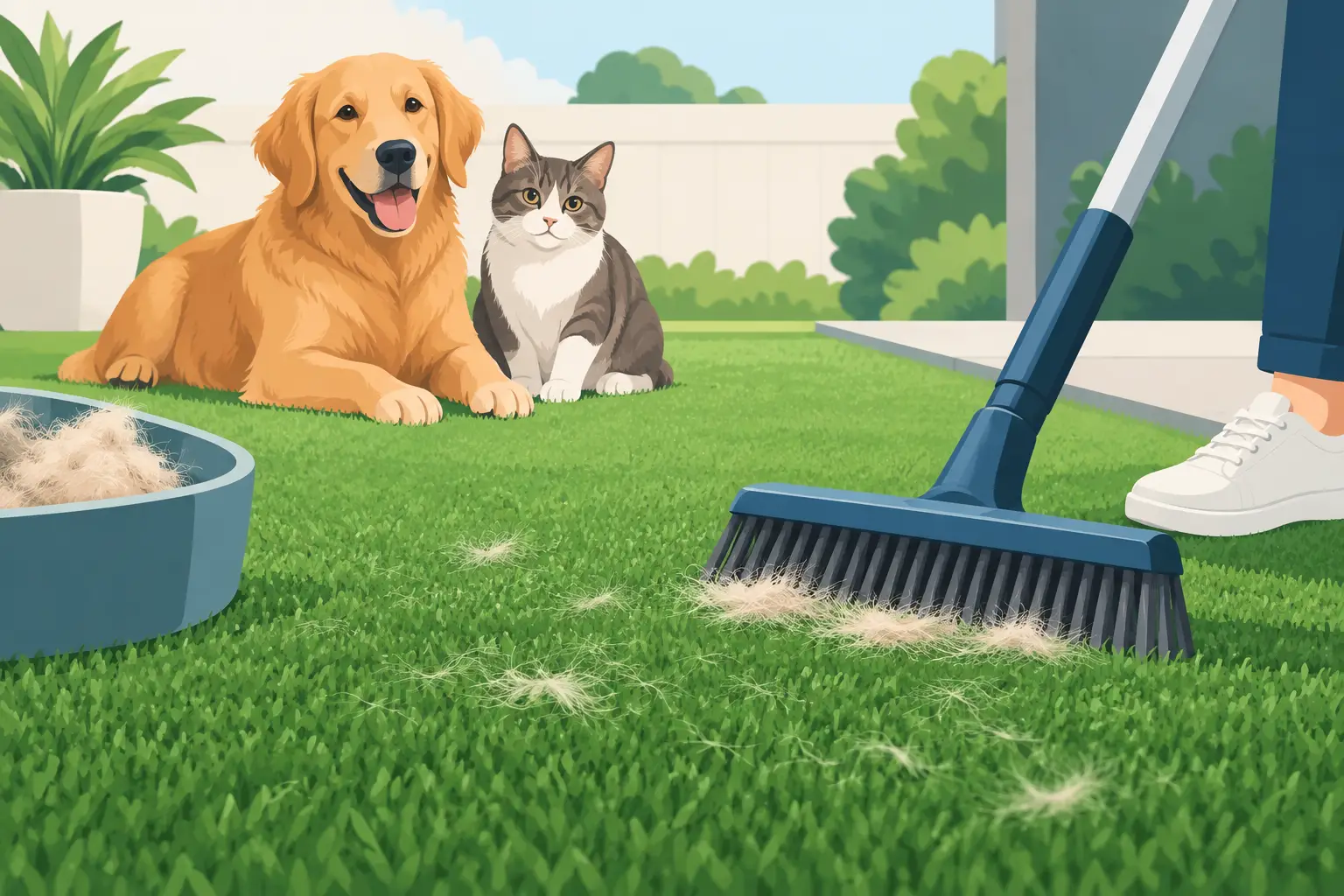
Use a synthetic-bristle turf broom, carpet rake made for turf, or rubber broom to lift embedded pet hair. Brush against the natural direction of the turf blades. This helps stand the fibers upright while loosening the hair, dirt, and compacted debris caught near the base.
Work in small sections instead of making one fast pass over the whole yard. You should see the turf begin to look fuller as the blades rise. Collect loosened hair as you go, then blow or sweep it away.
Do not use a metal garden rake. It may seem faster, but sharp tines can pull fibers, snag seams, and leave your turf looking worse than when you started.
Use a Rubber Brush on Stubborn Patches
Rubber is especially effective on clingy pet hair. If your dog has a thick undercoat or your turf is used as a favorite lounging spot, a rubber broom can grab hair that ordinary bristles leave behind.
Pull the brush toward you in short, steady strokes. You may need to repeat the process from different directions. This is not a sign that you are doing it wrong. Hair can weave through turf blades in several directions, particularly in high-traffic areas near doors, shade structures, and pet beds.
Rinse the Turf Gently
After brushing and collecting the hair, rinse the turf with a gentle, even spray. The rinse removes fine dust and helps flush loose particles through the drainage system. Do not blast the surface at close range.
For a yard that is only dusty, a quick rinse may be all you need. For pet areas, rinsing alone is not a true odor treatment. Water can dilute surface urine, but it cannot reliably remove the bacteria and urine crystals that create that sharp smell when Arizona heat kicks in.
Treat Urine Areas Separately
If the turf smells after cleaning, target the places your pets use most. Apply a turf-safe enzyme or odor treatment that is designed to break down pet waste, not cover it with fragrance. Follow the product instructions, let it dwell for the required time, and rinse only if directed.
This is the point where many DIY cleanups fall short. A scented spray can make the yard smell better for a day, but it does not remove the source of the odor. If smell returns as soon as temperatures rise, the contamination is likely deeper in the turf and infill.
How Often Should You Remove Pet Hair?
It depends on the number of pets, their coat type, and how much they use the yard. A single short-haired dog may only need a quick blowout and brush every two to four weeks. A multi-dog household, a German Shepherd, Husky, Golden Retriever, or any heavy shedder may need weekly attention during shedding season.
Keep an eye on the turf rather than following a rigid calendar. If blades stay flattened after brushing, you see dark debris at the base, or fur comes up in thick clumps, it is time for a deeper clean. If the turf smells clean but looks tired, it may need power brushing to restore the fibers and redistribute compacted infill.
When DIY Cleaning Is Not Enough
A broom and hose are great for maintenance. They are not designed to solve years of embedded hair, compacted grime, urine buildup, bacteria, or persistent odors. If your turf still looks matted after brushing, feels dirty underfoot, or has an odor that returns after rinsing, the issue is below the surface.
Professional turf restoration goes further than surface cleanup. At Elite Turf Cleaning, the process can include power sweeping and brushing to pull out embedded debris, deep rinsing, urine extraction, targeted stain and odor treatment, and sanitizer and deodorizer application. The result is turf that looks lifted, feels cleaner, and smells fresh without the need to replace an expensive yard.
This is particularly valuable for dog runs and heavily used backyard areas. The more frequently urine hits the same spots, the more likely basic rinsing will leave behind odor-causing residue. A deep treatment addresses what your eyes cannot see.
Keep Hair From Building Up Again
A few small habits protect your cleanup work. Brush your dog outdoors when possible, especially during seasonal shedding. Pick up leaves and yard debris before they mix with fur. Rinse pet bathroom areas regularly, and brush high-traffic spots before they become flat and compacted.
Most of all, do not wait until the turf looks gross or the odor reaches the patio. Pet hair is easy to manage when it is loose. Once it mixes with infill, dirt, bacteria, and urine residue, it becomes a restoration job. Give your turf regular attention, and when the buildup has gone beyond a simple brush-out, bring in a turf-specific cleaning team to get your yard feeling fresh again.