Your artificial grass looked clean, green, and low-maintenance when it was installed. Then came the dogs, dusty Arizona winds, backyard barbecues, spilled drinks, shed pet hair, and daily foot traffic. Before long, turf that should feel like a clean outdoor retreat can start looking flat, smelling sour, and feeling downright gross.
Knowing how to freshen artificial grass backyard areas starts with recognizing one key fact: a quick rinse is useful, but it does not solve every problem. Surface dust may wash away. Embedded debris, compacted fibers, urine crystals, bacteria, and stubborn pet odors need a deeper approach.
Start by Identifying What Is Making Turf Feel Unfresh
Artificial grass can look dirty for several different reasons, and the right fix depends on what is sitting in the turf or trapped beneath it. A backyard used mostly for relaxing may just need debris removal and brushing. A dog run with repeat urine spots may need odor treatment and extraction below the fibers.
Look closely at the turf before you start. Flattened blades, matted pet hair, leaves, dust buildup, and dark spots all point to regular maintenance needs. If you notice a strong smell after the yard gets wet or the afternoon sun heats up, that is usually a deeper pet urine and bacteria issue.
Do not cover up odors with heavily scented sprays. If the source remains in the turf backing or infill, the smell will return. Fresh turf should smell neutral, not like fragrance trying to fight a problem.
How to Freshen Artificial Grass Backyard Turf at Home
For light buildup, a consistent maintenance routine can make a major difference. The goal is to remove what is sitting on the surface before it gets pressed deeper into the turf.
Clear leaves, pet hair, and loose debris
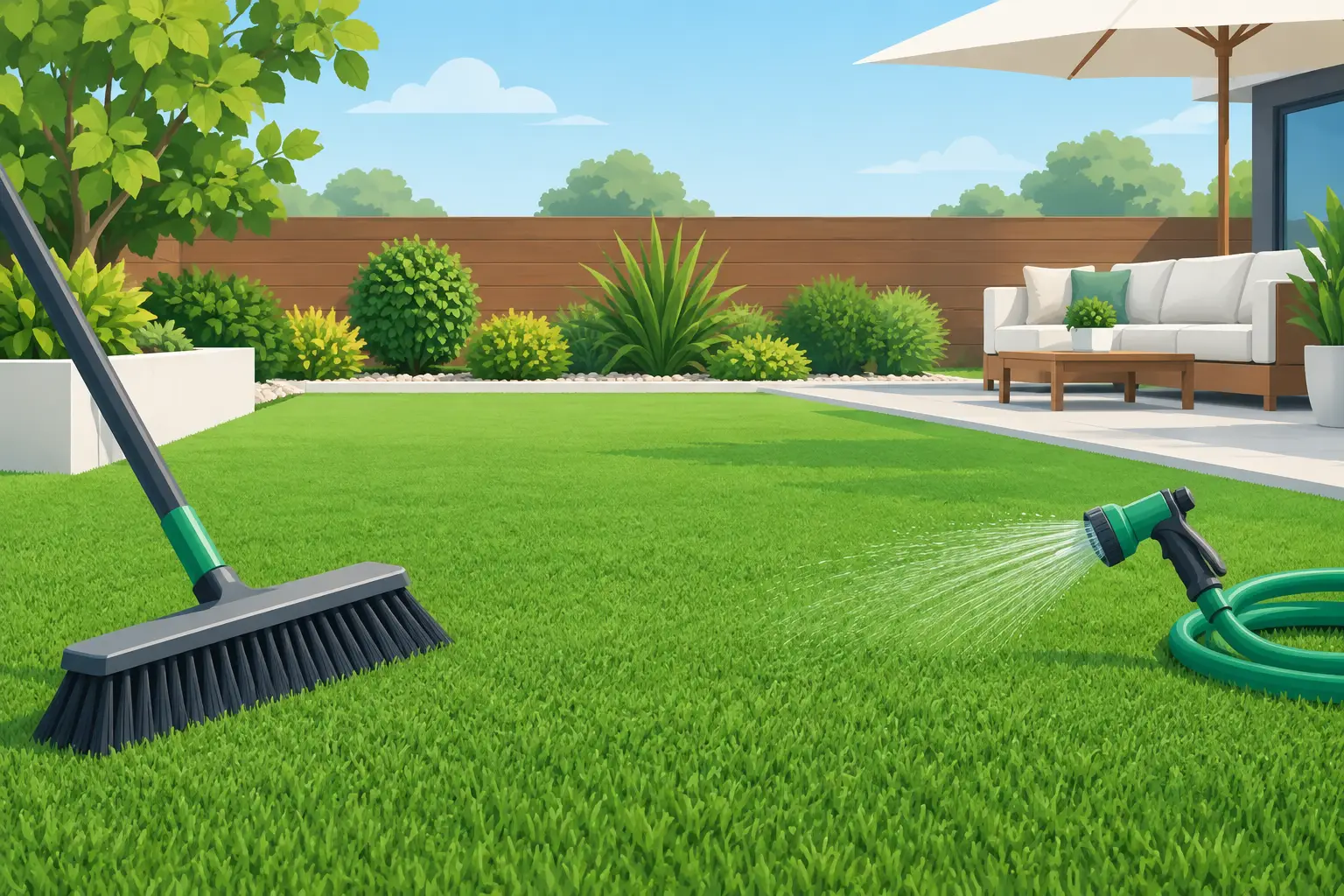
Start by picking up larger debris, then use a leaf blower, plastic rake, or turf-safe broom to clear leaves, twigs, grass clippings, and pet hair. Avoid metal rakes with sharp tines. They can pull fibers, damage seams, and disrupt infill.
Pet hair deserves extra attention. It does not simply sit on top of synthetic grass. Over time, it weaves between blades and catches more dirt, making the turf appear darker and more worn. A power broom is especially effective when hair has built up in high-use pet areas.
Rinse away dust and surface grime
A garden hose rinse is one of the easiest ways to brighten artificial grass, particularly during dry, dusty Arizona weather. Spray evenly across the lawn to wash away pollen, fine dust, and light spills. Work in sections so water reaches the full surface instead of running quickly across the top.
Use moderate water pressure. There is no need to blast the turf with a pressure washer at close range. Too much force can move infill, stress seams, and push grime farther into the backing.
For a small drink spill or sticky spot, rinse promptly and gently blot any remaining residue with a clean cloth. The sooner you address a spill, the less likely it is to become a dirt-catching patch.
Brush fibers back upright
Flat, tired-looking turf is not always dirty. Often, the grass fibers have simply been crushed by patio furniture, active kids, pets, or regular foot traffic. Brushing restores the appearance of the lawn by lifting blades and redistributing light surface debris.
Use a stiff synthetic-bristle broom or a turf power brush, and brush against the grain of the fibers. Work slowly around the most-used areas, such as the path from the back door, play spaces, and pet relief zones. If your yard has deep matting, brushing by hand may improve it, but it may not fully restore the turf without professional power brushing.
Treat pet waste right away
Solid pet waste should be removed as soon as possible. Follow with a light rinse of the spot. This limits bacteria buildup and helps prevent residue from settling into the infill.
Urine is more complicated. Even if you hose the area down daily, urine can dry into crystals and settle below the visible grass blades. Hot temperatures can reactivate the odor, which is why a backyard may smell fine in the morning and unpleasant by late afternoon.
A turf-safe enzyme treatment can help with minor odor areas. Apply it according to the product directions and give it enough contact time to work. Do not assume a stronger concentration means better results. Using too much product can leave residue, and many household cleaners are not designed for synthetic turf or pet safety.
Avoid Shortcuts That Can Damage Your Turf
Homeowners often reach for whatever cleaner is already in the garage. That can create a bigger problem than the original stain or smell. Bleach, harsh solvents, highly acidic cleaners, and strong degreasers can fade fibers, weaken backing materials, or create an unsafe area for pets and children.
Skip cleaners that leave a slippery or sticky film. They may make the turf feel clean for a day, but residue attracts dust and can trap more grime. Also avoid using a steam cleaner or extremely hot water. Artificial grass is built for outdoor conditions, but excessive heat can affect the fibers and backing.
If your turf has infill, be cautious about aggressive sweeping and high-pressure washing. The infill supports the fibers, helps drainage, and affects how the lawn feels underfoot. Removing too much of it can leave the grass looking uneven and less natural.
When a Hose and Brush Are Not Enough
There is a clear line between routine freshening and true turf restoration. If you are dealing with persistent urine odor, bacteria concerns, heavy pet hair, blackened traffic lanes, severe matting, or smells that return after rinsing, surface-level maintenance will not fully fix it.
This is where a professional turf cleaning service earns its keep. A proper deep clean addresses what is buried under the visible surface. Power sweeping and power brushing lift matted fibers and loosen compacted debris. Deep rinsing flushes grime from the turf. Urine extraction targets odor at the source rather than masking it with perfume.
Professional sanitizing and deodorizing treatments are especially valuable for homes with multiple dogs, large breeds, puppies in training, or turf that functions as the primary pet area. The goal is not just a lawn that looks greener from the street. It is a backyard that feels cleaner for bare feet, kids, guests, and pets.
At Elite Turf Cleaning, the process is built around bringing worn synthetic grass back to life – removing embedded mess, treating pet odors, and restoring a fresher, more upright appearance without the cost of replacing the turf.
Build a Simple Fresh-Turf Routine
The best schedule depends on how your backyard is used. A low-traffic decorative lawn may only need a debris sweep and rinse every few weeks. A busy family yard with dogs may need light cleanup several times a week, especially during shedding season or windy weather.
For most pet owners, remove waste daily, rinse frequent urine areas several times a week, and brush high-traffic zones monthly. Watch for early warning signs between cleanings: odors after watering, turf that stays matted after brushing, dark debris at the base of fibers, or flies gathering around a particular area.
A seasonal professional deep clean is a smart baseline for many Arizona homes. Properties with several pets or constant backyard activity may benefit from service more often. It depends on use, drainage, the amount of infill, and how quickly odor returns after home maintenance.
Keep the Backyard Fresh Between Deep Cleanings
Small habits prevent big buildup. Move lightweight patio furniture occasionally so fibers do not stay crushed in one direction. Trim nearby plants to reduce leaves and clippings falling onto the turf. Keep food and messy projects on hardscape areas when possible.
If your dog has a favorite bathroom spot, encourage rotation when you can. Spreading use across the yard reduces concentrated urine buildup in one small zone. More importantly, do not wait until the entire backyard smells bad before taking action. Early treatment is easier, faster, and more effective.
A clean artificial lawn should invite you outside, not make you wonder what is trapped underneath it. Keep up with the basics, treat pet messes at the source, and call for deep restoration when the odor or grime has moved beyond a simple rinse. Your backyard can look finished, feel clean, and be ready for the people and pets who use it every day.