If your artificial grass looks dusty, matted, and covered in fur no matter how often you hose it down, the problem usually is not the turf itself. It is the layer of debris and pet hair removal turf care that gets skipped. Leaves, dirt, dander, and pet hair settle deep into the blades and infill, and once that buildup starts, your yard can go from low-maintenance to flat-out gross fast.
For Arizona homeowners with dogs, this is one of the biggest reasons turf stops looking and smelling clean. A quick rinse can wash away surface dust, but it will not pull embedded pet hair out of the fibers or lift compacted debris that is holding onto moisture, bacteria, and odor. When that mess stays in place, the turf loses its bounce, drainage slows down, and the whole area starts to feel dirty even when it looks decent from a distance.
Why debris and pet hair removal turf care matters
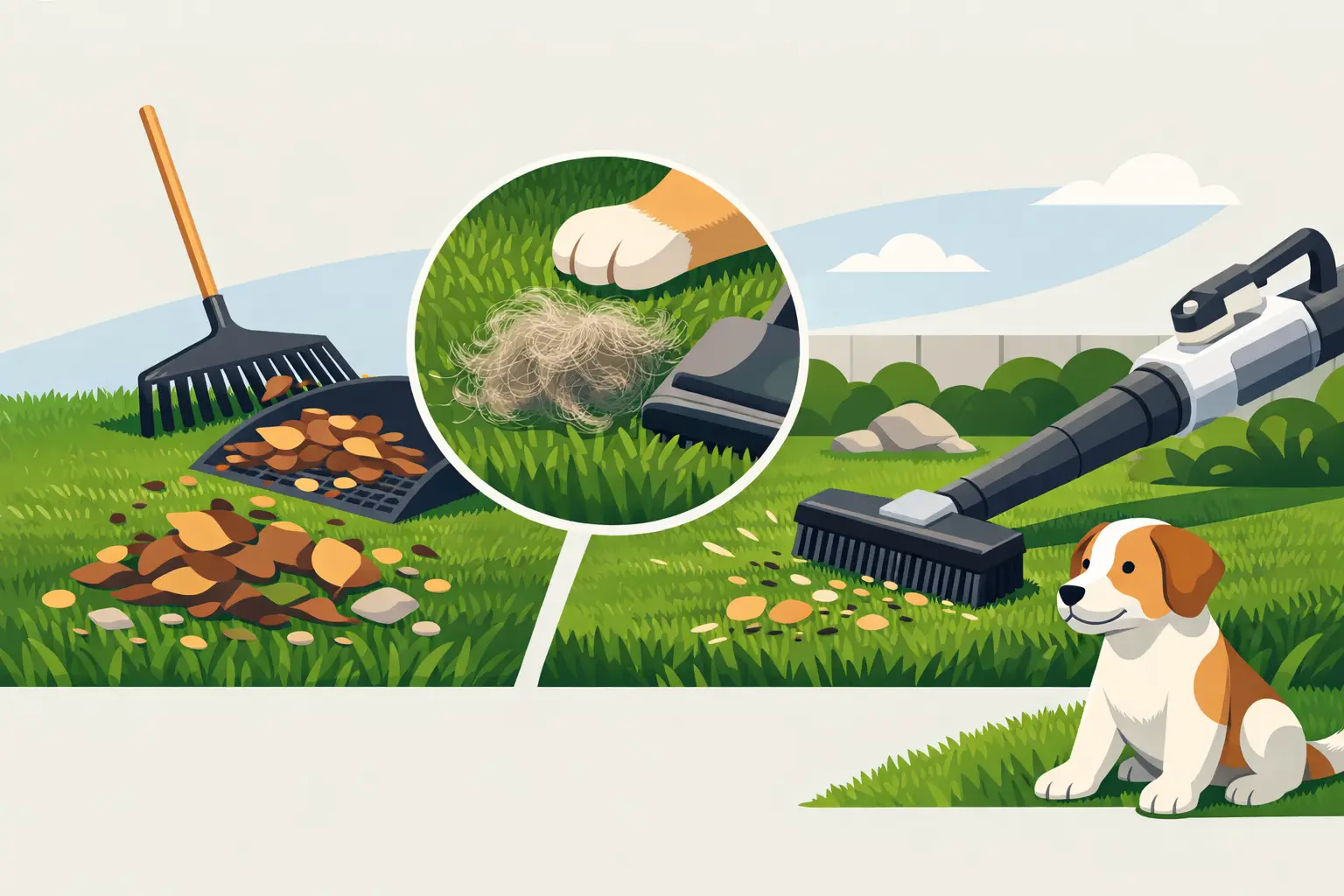
Artificial turf is designed to handle heavy use, but it still needs real maintenance. Pet hair is light, clingy, and stubborn. It wraps around turf blades, settles into the infill, and mixes with dust, pollen, and organic debris. That combination creates a packed layer that regular sweeping or spraying usually cannot touch.
This buildup does more than hurt curb appeal. It can trap pet waste residue, hold onto urine crystals, and make odors much worse. If you have kids playing outside or pets rolling around in the same area every day, that is not a small issue. Clean turf is not just about appearance. It is about hygiene, comfort, and getting your yard back to a condition you actually want to use.
There is also a texture problem. When debris and hair collect over time, turf blades start to lie down. The surface feels rough, uneven, and worn out. Homeowners often think the turf is old or damaged when the real issue is deep, compacted buildup that needs to be removed properly.
What gets trapped in turf fibers
Most people notice the obvious stuff first – leaves, twigs, and dog hair on the surface. But the bigger problem is what sits below that top layer. Fine dust, dead grass from nearby landscaping, pet dander, food crumbs from backyard gatherings, and dirt tracked in from shoes all work their way down into the turf.
Once mixed with moisture or pet urine residue, that debris starts acting like a sponge. It holds onto smells, encourages bacteria growth, and makes rinsing less effective. This is why some yards still smell bad even after they have been sprayed, deodorized, or treated with store-bought products.
It depends on how your yard is used. A small side dog run with multiple pets will usually build up hair and odor faster than a decorative front turf area. Homes near trees or desert landscaping may also deal with more fine debris. The point is simple: the more traffic your turf gets, the more important deep removal becomes.
Why hosing it down is not enough
A hose helps with loose dust and surface dirt. That is useful for light upkeep, but it is not deep cleaning. Water alone does not lift embedded pet hair from the turf backing or break apart compacted debris sitting in the infill.
In some cases, too much casual rinsing can make the issue feel worse. Water pushes debris deeper, especially if the turf has not been power brushed or swept first. You end up with a damp layer of trapped organic material below the surface, and that creates the perfect setup for lingering odor.
This is where homeowners get frustrated. They are putting in effort, but the turf still looks tired and smells off. That usually means the problem has moved beyond maintenance and into restoration.
The right way to handle debris and pet hair removal turf service
A real debris and pet hair removal turf service is built around extraction, not just appearance. The goal is to remove what is embedded in the turf system, not simply push it around.
That usually starts with power brushing and power sweeping to loosen matted fibers and pull out packed hair, dust, and debris. Once the turf is opened up, deep rinsing can work more effectively because water can move through the surface instead of sitting on top of buildup. If pet use is heavy, odor and stain treatment often needs to happen after the debris is removed, not before. Otherwise, treatment products may never reach the actual source.
This is why professional turf cleaning gets better results than DIY cleanup. The equipment is designed to agitate, lift, extract, and restore. Instead of masking the issue, it addresses the reason your turf looks flat and smells bad in the first place.
Signs your turf needs more than basic cleanup
Some yards tell on themselves right away. You walk outside and catch a stale smell, or you notice clumps of pet hair stuck at the base of the blades. Other signs are easier to miss at first.
If the turf feels crunchy, drains slowly, or looks darker in pet areas, buildup is probably sitting below the surface. If the grass is flattened and does not spring back after brushing, debris may be weighing it down. If odor returns quickly after rinsing, the source is likely trapped deep in the infill and backing.
None of these problems mean you need to replace your turf. In many cases, the surface just needs a full reset. That is the difference between routine tidying and actual restoration.
Why pet owners deal with this faster
Pet owners put more stress on artificial grass than almost any other household. Dogs shed, track in dirt, use the same bathroom spots, and grind hair into the turf every time they run or roll around. In Arizona heat, that buildup can turn into odor fast.
Warm weather speeds everything up. Urine residue dries quickly, but the bacteria and crystals do not just disappear. Add embedded fur and debris, and now your turf has a layer that traps smell and blocks freshness. That is why pet areas often need more than deodorizer. They need the turf opened up, cleaned out, rinsed deeply, and sanitized correctly.
For families, this matters beyond smell. A clean yard is safer for kids, more comfortable for pets, and easier to enjoy. No one wants to avoid their own backyard because the turf looks dirty or gives off an odor every afternoon.
What professional restoration changes
When turf is cleaned the right way, the difference is immediate. The blades stand up better. Loose and embedded debris are removed. Pet hair is no longer clinging to the surface. Rinsing works the way it should. Odor treatments can finally reach the real source instead of sitting on top of buildup.
The visual change is part of it, but the bigger win is how the yard feels after service. Cleaner. Fresher. More usable. That matters when your backyard is part dog run, part play area, and part everyday living space.
Professional restoration also helps protect your investment. Artificial turf is not cheap, and replacing it early because it looks worn out is often unnecessary. In many cases, the problem is maintenance neglect, not material failure. Deep cleaning can bring back the look and function homeowners thought they had lost.
When to call for help
If you have already tried hosing, raking, or spot-treating and the turf still smells bad or looks matted, it is time to stop guessing. The longer debris and pet hair sit in the turf, the harder the problem becomes to fix with basic upkeep.
A focused service like Elite Turf Cleaning is built for exactly this kind of issue – deep debris removal, pet hair extraction, rinsing, sanitizing, and odor treatment that works together instead of as random one-off fixes. That matters because turf problems usually stack up. Hair leads to buildup. Buildup traps urine residue. Trapped residue leads to odor and bacteria. You do not solve that with a garden hose and a hope.
If your artificial grass is starting to look worn, smell off, or feel dirty underfoot, do not assume it is done for. Most of the time, your turf does not need replacing. It needs to be brought back to life.