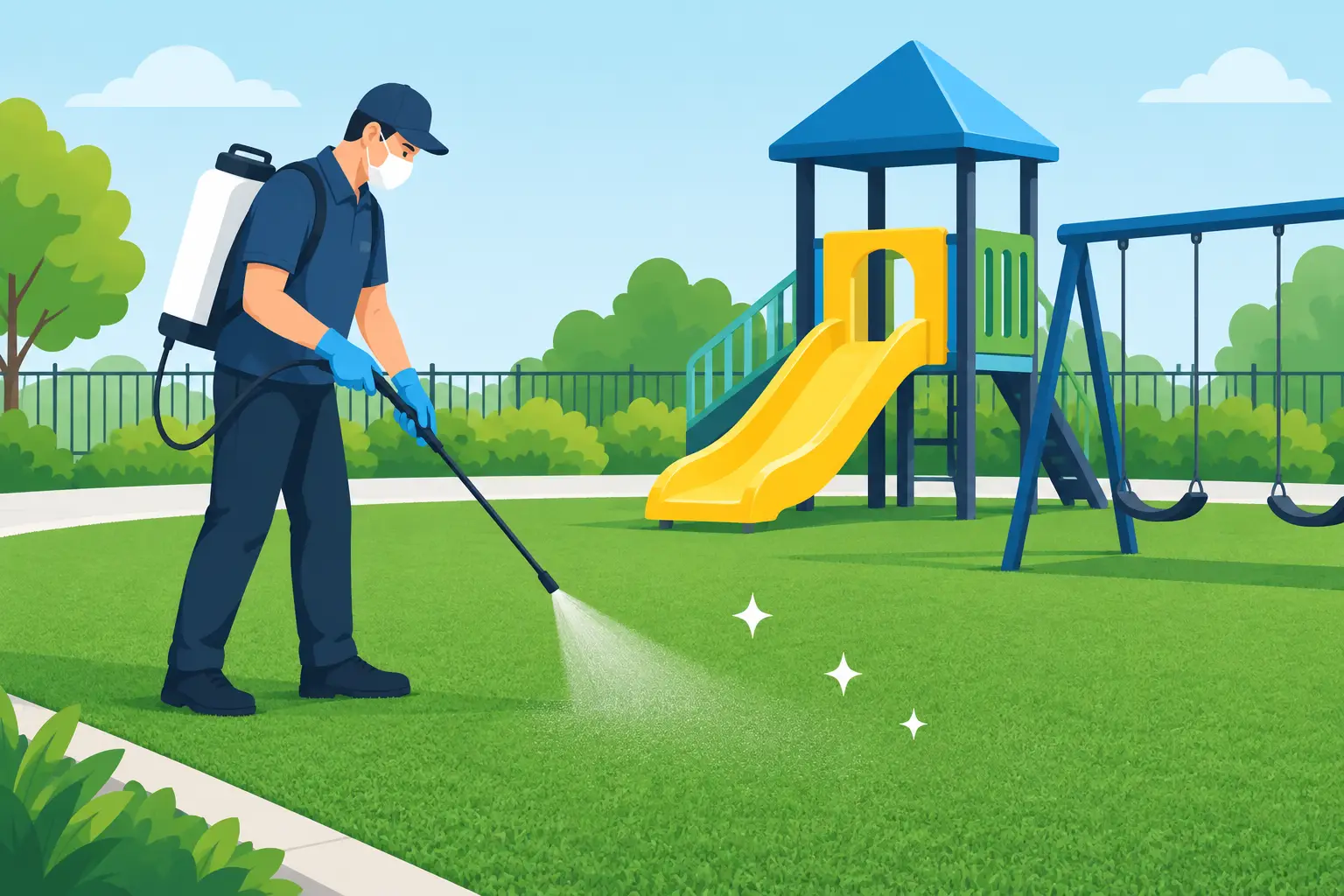
A backyard play zone can look clean from the patio and still hold pet urine, loose hair, dust, sticky spills, and bacteria deep between the turf fibers. This play area sanitation example shows what a real cleanup looks like when artificial grass is used every day by kids, dogs, and the whole family.
The goal is not to make the turf smell better for an hour. The goal is to remove the grime and odor sources trapped in the system, lift crushed blades, and leave the area fresh enough to enjoy again. No more avoiding the dog run. No more wondering why the turf smells worse every time Arizona temperatures climb.
A Realistic Play Area Sanitation Example
Picture a typical Arizona backyard: artificial grass under a swing set, a soccer goal on one side, and a favorite potty spot near the gate. Two dogs use the area daily. The kids run barefoot across it after school. The turf has started looking flat, dusty, and a little gray, while a sharp urine odor hits as soon as the afternoon sun warms the yard.
A garden hose may rinse away surface dust, but it will not pull dried urine crystals, embedded hair, compacted debris, and odor-causing buildup out from the turf backing and infill. That is where a true sanitation service starts.
First, the area is inspected. A technician looks for the spots with the heaviest pet traffic, matted fibers, visible staining, seams that collect debris, and drainage concerns. This matters because not every section of the yard needs the same level of treatment. The section below a shaded play structure may need debris removal and sanitizing, while the dog potty zone may need concentrated urine extraction and odor treatment.
Next comes dry removal. Leaves, pet hair, food crumbs, dirt, and other loose material are cleared away before moisture is added. Skipping this step creates a muddy mess and leaves contamination behind. The turf is then power brushed or power swept to stand up flattened blades and loosen debris hiding below the surface.
That brushing step changes more than appearance. When turf fibers are packed down, urine, dust, and organic debris can stay trapped closer to the backing. Lifting the blades gives the cleaning process a better chance to reach where the problem actually lives.
Deep Rinsing Is Not the Same as Hosing It Off
Once debris is out and the turf is opened up, the surface receives a deep rinse. The purpose is to flush loosened dirt and dissolved residue through the turf toward its drainage layer, not simply wet the top fibers.
For a pet-heavy play area, deep rinsing is paired with targeted urine and stain treatment. The strongest odor zones get focused attention because one quick pass across the whole lawn will not solve a spot that has been used as a bathroom for months. Persistent odor almost always means material is still sitting in the turf, infill, or base below it.
This is also why the right amount of water matters. Too little water leaves residue behind. Too much water in an area with poor drainage can create its own issue. A professional should evaluate how the turf drains and adjust the process rather than treating every backyard exactly the same.
Sanitize After the Turf Is Actually Clean
Sanitizer is not a shortcut around cleaning. Applying sanitizer over pet hair, soil, urine residue, and debris may freshen the surface, but it does not produce the deep-reset result homeowners expect.
After the turf has been brushed, cleared, treated, and rinsed, a turf-safe sanitizer and deodorizer can be applied across the play area, with extra focus on high-use zones. The product should be used according to its label directions, including any required contact time and guidance for children and pets returning to the space. This is the step that helps address bacteria concerns while leaving the area smelling clean instead of perfume-covered.
For a family play area, the finish should feel simple: no lingering pet odor, no visible debris, no sticky residue, and no flattened, neglected look. Kids should not have to navigate around a gross patch of turf just to play outside.
What the Finished Area Should Look Like
A properly serviced play area looks brighter because dirt and dust have been removed from the fibers. The blades stand more upright after power brushing, and the turf feels less packed down underfoot. Most noticeably, the sour or ammonia-like urine smell should be gone after treatment and drying.
There is a limit worth understanding. If odor returns quickly in the same location, the issue may be continued daily pet use, a drainage problem, heavily saturated infill, or contamination that has reached deeper into the base. In that case, the right answer is not more fragrance. It is a closer look at the source and a more targeted restoration plan.
Why Play Areas Need More Than a Surface Spray
Artificial turf does not grow moldy grass clippings like natural lawn, but it still collects everything that lands on it. In Arizona, wind-blown dust and debris settle into the fibers. Add dogs, snacks, sunscreen, spilled drinks, and daily foot traffic, and the turf can become a collection point for grime fast.
The areas around play equipment are especially easy to miss. Dust gathers along the edges of turf near posts and borders. Pet hair mats underneath benches and patio furniture. Urine often concentrates at fence lines, gates, and corners where dogs feel comfortable marking. These are the spots that need hands-on attention, not a quick spray from ten feet away.
Routine light rinsing can help between professional services, especially after a dog uses the turf. But routine rinsing is maintenance, not restoration. When odor has settled in, the fibers are crushed, and the yard looks worn out, a deeper process is needed to bring it back to life.
How Often Should You Sanitize an Artificial Turf Play Area?
It depends on how the yard is used. A child-only play space with little debris and no pets may only need periodic professional cleaning, plus regular leaf removal and rinsing. A backyard used daily by multiple dogs usually needs more frequent service because urine buildup does not take long to become noticeable in the heat.
As a practical rule, schedule attention before the odor becomes overwhelming. If you can smell the turf from the patio, notice dark or sticky spots, see the blades staying flat after brushing, or find debris embedded throughout the lawn, it is time to act. Waiting until guests are coming over or until your kids refuse to use the yard turns a manageable cleanup into a bigger restoration job.
Homeowners can help protect the result by picking up solid pet waste promptly, removing leaves before they break down, and giving common potty spots a light rinse. Those small habits reduce surface buildup. They do not replace extraction, deep rinsing, power brushing, and professional sanitation when the turf has reached its limit.
When to Call a Turf Cleaning Specialist
A professional turf cleaning service makes the most sense when the problem is beyond surface dirt. Strong urine odor, persistent staining, compacted pet hair, flattened turf, and repeated failed DIY treatments are all signs that the contamination is embedded below the fibers.
Elite Turf Cleaning approaches these jobs as restoration, not a cosmetic spray-down. The process targets the debris, odor sources, and bacteria concerns that keep a backyard from feeling clean. The difference is visible, but more importantly, it is something you notice when you step outside without holding your breath.
Your artificial grass should support family time, not create another chore or an embarrassing smell. Give the turf the same attention you give the rest of your home, and the play area can go back to being the place where kids and pets actually want to be.