A backyard hose-down should not leave puddles sitting on top of your artificial grass. If water pools, pet urine lingers, or the turf smells worse after rinsing, the issue may be below the surface. The best turf drainage solutions move liquid through the turf system quickly, protect the base, and keep your yard fresher between professional cleanings.
For Arizona homeowners, drainage is not just about rain. It is about daily pet use, pool splashing, hard-water rinse residue, monsoon storms, and years of compacted debris. When that moisture has nowhere to go, your turf can start looking flat, dirty, and gross fast.
What Good Turf Drainage Is Supposed to Do
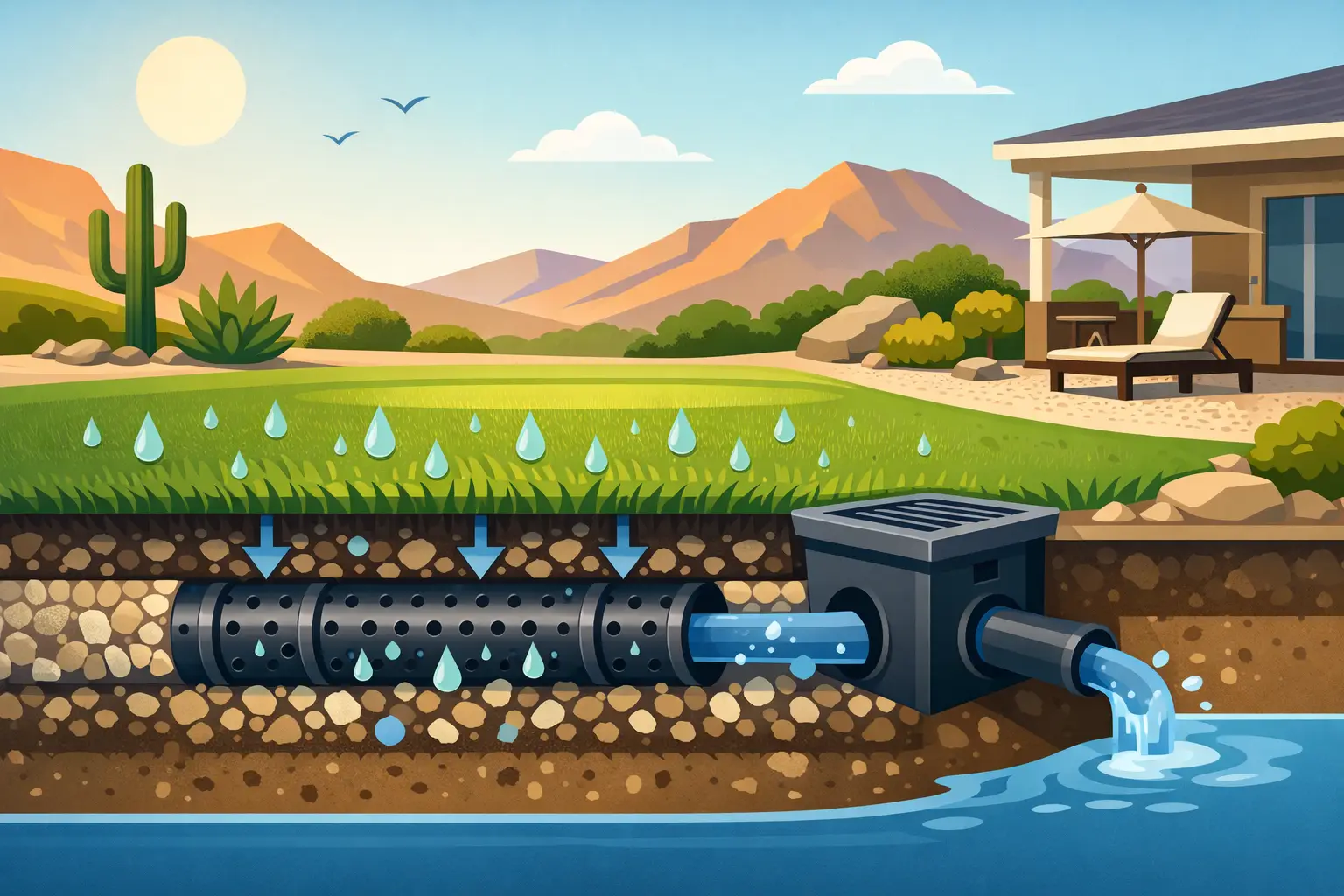
Artificial grass is designed to let water pass through its backing and into the base beneath it. A properly built system does not hold water at the surface, feel squishy underfoot, or send runoff toward your home. It drains liquid away while keeping the turf stable and level.
That matters even more in pet areas. Urine should move through the turf and base instead of collecting around the blades, trapped infill, or low spots. Good drainage reduces the conditions that allow odor-causing bacteria to build up. It does not eliminate the need for cleaning, but it gives professional sanitization and urine treatment a real chance to work.
If your turf was installed without the right base preparation, no amount of deodorizer can fix standing water. And if your drainage is fine but the turf still smells, the problem is often embedded waste, compacted infill, and bacteria that need deep extraction.
Signs Your Artificial Turf Has a Drainage Problem
The clearest sign is standing water that remains long after rain or rinsing. But drainage problems are not always that obvious. Your yard may feel soft in one area, develop low spots, or release a strong urine smell whenever water hits the turf.
Watch for water running toward patios, walls, or your home’s foundation. Look for seams that are lifting, turf edges that curl, or areas where the grass feels matted and heavy. These can point to a saturated or shifting base.
A persistent pet odor can also be a clue. Urine odor is strongest when moisture reactivates old deposits. If the base is not draining well, those deposits stay trapped longer, making the smell harder to remove with casual hosing. A clean-looking lawn can still be holding a bacteria problem underneath.
The Best Turf Drainage Solutions for Common Yard Problems
The right fix depends on where the water is collecting, how the turf was installed, and whether you are dealing with rainwater, pet waste, or both. Here are the solutions that make the biggest difference.
Start With a Proper Compacted Base
The base below artificial grass does most of the drainage work. Quality installations typically use layers of crushed aggregate that are graded, compacted, and shaped to direct water away from structures. The material needs enough stability to support the turf while still allowing water to pass through.
When the base is too thin, poorly compacted, or made with the wrong material, it can shift and create dips. Those low spots become collection points for rainwater and urine. Repairing the area may require lifting the turf, rebuilding the base, and reinstalling the material correctly.
This is not a quick surface-level fix, but it is often the right one when the turf is constantly soft, uneven, or holding water across a large area.
Check the Turf Backing and Perforations
Most modern artificial turf has drainage holes or a fully permeable backing. If liquid cannot pass through the backing, it has nowhere to go except across the surface. That can happen with lower-quality turf, damaged backing, or a product that was not selected for a pet-heavy yard.
A few blocked perforations may be cleared during a deep cleaning or repair. A backing that drains poorly across the entire lawn is a bigger issue. In that situation, replacement may be more cost-effective than repeatedly fighting odors, puddles, and bacteria.
For dog runs and pet relief areas, choose turf designed for high drainage. More drainage capacity means less time for urine to sit in the system and create odor.
Add Drainage Channels Where Water Naturally Collects
Some yards have a natural low point that no amount of surface brushing will solve. French drains, channel drains, and catch basins can help collect excess water and direct it to a safe drainage area.
A French drain is usually installed below the surface using gravel and perforated pipe. It is useful along walls, patios, or the edge of a turf area where groundwater or runoff collects. Channel drains work well near hardscape, such as a pool deck or covered patio, where rainwater needs a clear path away.
These options require proper grading. Installing a drain without understanding where the water will discharge can simply move the problem somewhere else.
Correct the Grade Before Water Reaches the Turf
Artificial grass should not be the lowest point in your yard. Even a slight slope can make a major difference by guiding water away from the house and preventing it from collecting under the turf.
This is especially important during Arizona monsoon season, when a fast storm can expose every weak point in a landscape. If rain repeatedly flows from a roofline, planter, or higher section of yard directly onto the turf, redirect that runoff before it overwhelms the drainage system.
Gutters, downspout extensions, and properly planned landscape borders can reduce the amount of water entering the turf in the first place. Less water hitting the surface means less pressure on the base below.
Use the Right Infill for a Pet Yard
Infill helps turf blades stand up, adds weight, and supports the surface underfoot. But not every infill is right for every yard. Fine, compacted, or contaminated infill can slow drainage and hold odor-causing residue.
For pet areas, the goal is an infill system that supports drainage and works with odor-control treatment. This does not mean infill alone will neutralize urine. If pet waste has already soaked into the turf, you need extraction, rinsing, sanitation, and deodorization to remove the source of the smell.
Avoid adding random products to the surface in hopes of fixing odor. Too much material can clog the turf, flatten the fibers, and make deep cleaning harder.
Drainage Repair vs. Deep Turf Cleaning
This is where many homeowners waste money. They see an odor or wet spot and assume the turf needs to be replaced. Sometimes it does need drainage work. Often, the drainage is functional but the turf is loaded with pet hair, dust, organic debris, urine crystals, and bacteria.
A professional restoration service can power brush flattened fibers, remove embedded debris, rinse the turf deeply, extract pet urine, and apply sanitizer and deodorizer. That process brings neglected turf back to life when the underlying system is still sound.
But cleaning cannot repair a collapsed base, a torn backing, or a yard that slopes toward the house. If puddles remain after a thorough rinse or storm, bring in a qualified turf installer or drainage contractor to evaluate the base and grading. Once the structural problem is corrected, regular restoration helps keep the surface fresh, safe, and presentable.
Keep a Draining Turf System From Becoming a Smelly One
Drainage works best when the turf is maintained. Pick up solid pet waste promptly. Rinse pet areas lightly when needed, but do not rely on water alone to remove urine buildup. Too much casual rinsing in a poorly draining area can make odor and bacteria problems worse.
Brush high-traffic areas to keep blades upright and prevent debris from packing into the surface. Clear leaves, dirt, pet hair, and landscaping material before they work their way into the infill. After heavy rain, inspect low spots and edges so you can catch a drainage issue before it damages the base.
For homes with dogs, scheduled professional cleaning is a smart part of turf care, not an emergency response. Elite Turf Cleaning focuses on the deep grime and urine buildup that basic maintenance leaves behind, helping Arizona yards stay clean without replacing turf that can still be restored.
Your artificial grass should drain fast, feel firm, and smell clean when the hose turns on. If it does not, start by identifying whether you need a drainage repair, a deep sanitation service, or both. Fixing the real source of the problem is how you get back to a yard your family and pets can actually enjoy.