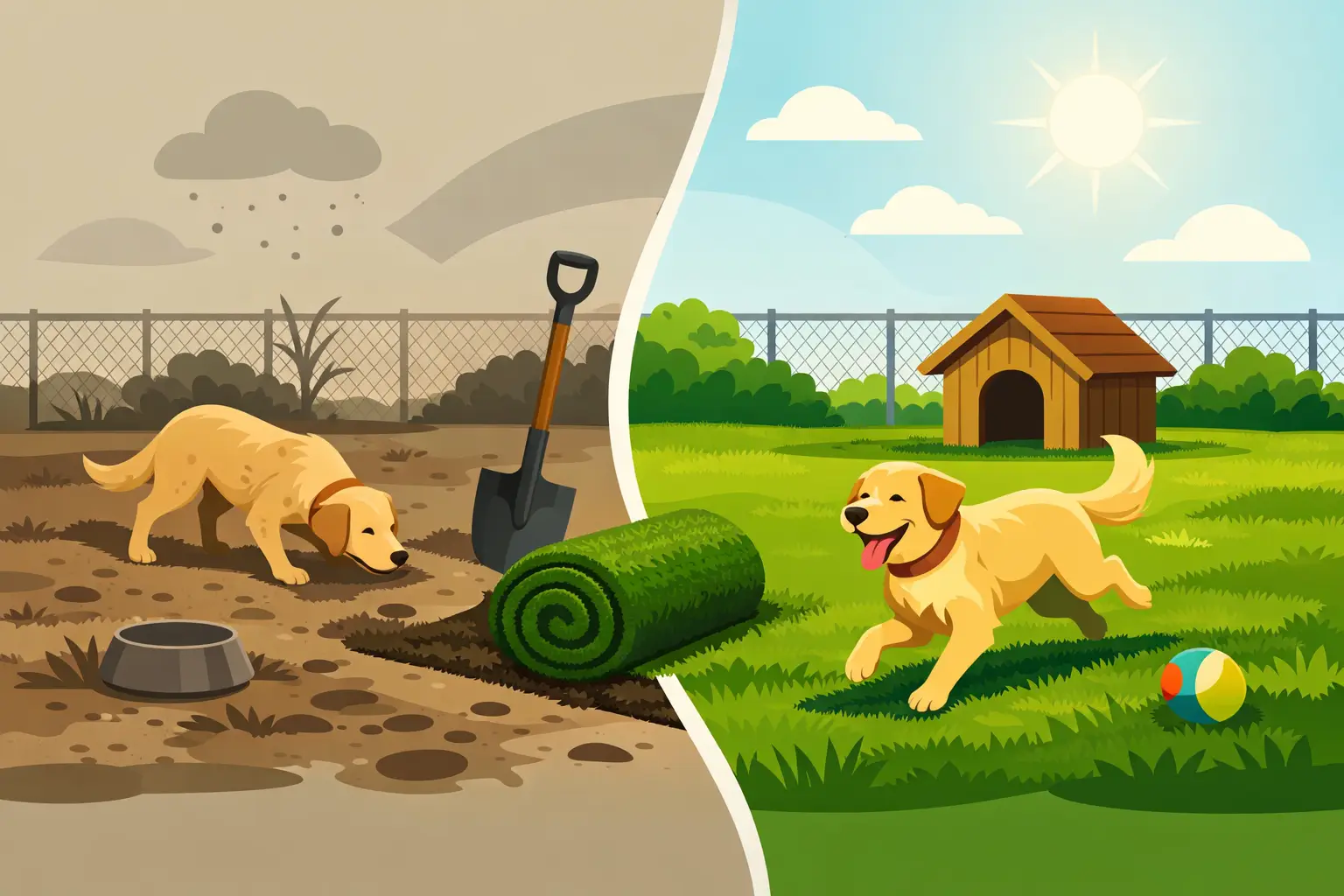
That sharp urine smell hits the moment you step outside. The turf looks crushed, pet hair is woven into the blades, and hosing it down has done nothing. Dog run restoration is the answer when artificial grass has moved beyond a quick rinse and needs a real reset.
For Arizona pet owners, a dog run works hard year-round. Heat bakes urine into the turf system, daily paw traffic flattens the fibers, and dust, dander, and organic debris settle deep below the surface. The good news: dirty, smelly artificial grass does not automatically need to be replaced. In many cases, professional restoration can bring it back to a fresher, cleaner, like-new condition.
What Dog Run Restoration Actually Fixes
A proper restoration service is not just spraying the turf with a scented product. That may cover an odor for a day or two, but it does not remove what is causing the problem. The goal is to pull out embedded waste, break down urine contamination, revive flattened turf fibers, and sanitize the area your dogs use every day.
The most common issues show up together. A yard may have a few visible yellowing spots, but the larger concern is usually what has collected beneath the blades: pet hair, dust, loose infill, bacteria, and urine residue trapped around the backing and drainage base. This buildup can keep odors hanging around even after several hose-downs.
Restoration also improves appearance. Artificial turf is designed to stand upright and look full, but repeated running, lounging, and bathroom use can mat the fibers down. Power brushing lifts the blades, redistributes infill where needed, and helps the turf regain that clean, groomed look homeowners expected when it was first installed.
Why a Hose Is Not Enough for Pet Turf
Water is useful for basic upkeep. It can wash away fresh surface messes and cool the turf on a hot afternoon. But water alone does not extract the urine salts and organic material that settle into a heavily used dog run. In fact, frequent rinsing without proper treatment can sometimes move contaminants deeper into the system.
Urine odor gets worse when heat and humidity activate the residue left behind. Arizona sun makes this especially frustrating. A backyard might seem fine early in the morning, then smell overwhelming by midday. If the odor returns every time temperatures climb, the source is still in the turf or beneath it.
Store-bought deodorizers can help with small, isolated problems. They are not a reliable fix for a full dog run with multiple dogs, years of use, or an odor that has spread beyond one obvious spot. When the issue is deeply embedded, the turf needs extraction, targeted odor treatment, and sanitization, not another layer of fragrance.
The Professional Dog Run Restoration Process
Every yard has different conditions. A small run used by one dog needs a different level of service than a large backyard shared by two dogs and a family. Still, the process should address the whole turf system instead of treating only the surface.
Start with debris, hair, and surface buildup
The first step is removing what should not be trapped in the grass. Leaves, dirt, pet hair, food bits, and other debris block airflow and make the area look neglected. Professional power sweeping and debris removal clear the turf before deeper treatment begins.
This is more than a cosmetic step. Hair and debris hold moisture and odors close to the turf. Removing them gives treatments a better chance to reach the areas where bacteria and urine residue are hiding.
Lift crushed fibers with power brushing
A high-quality power brush works through the turf blades to lift matting and restore a more natural appearance. This is the step homeowners notice immediately. Traffic patterns start to fade, the turf looks fuller, and the surface feels less packed down.
Brushing also exposes debris that has worked its way below the visible blade tips. A light hand rake may improve a small area, but heavily used dog runs need equipment strong enough to agitate the fibers without damaging the turf backing.
Rinse and extract the contamination
Deep rinsing flushes loose grime from the turf, while urine extraction targets the material contributing to persistent odor. The right approach depends on the condition of the turf, the drainage system, the amount of pet use, and whether odors are concentrated or widespread.
This is where experience matters. Too little water leaves contamination behind. Too much water, applied carelessly, can create drainage problems or push dirty runoff where it does not belong. A turf-specific service knows how to treat the surface thoroughly while respecting the system beneath it.
Treat odors and stains at the source
Professional pet odor treatments are designed to neutralize urine odor, not disguise it. They target the bacteria and residue that create that familiar ammonia-like smell. If stains or heavily used potty spots are present, those areas need focused attention rather than a one-size-fits-all spray.
The strongest results come from treating the whole problem area. Spot treatment has a place for a new accident, but when a dog has used the same run for months or years, the entire space may need restoration.
Sanitize for a cleaner play space
Dogs lie down, roll around, eat treats, and track whatever is in the run back inside. That is why sanitation matters just as much as odor control. After debris removal and deep treatment, a professional sanitizer and deodorizer application helps eliminate lingering bacteria and leaves the area fresh for pets, kids, and guests.
Elite Turf Cleaning focuses on this full restoration approach because clean-looking turf is not enough. A dog run should smell clean, feel clean, and be a space you are comfortable using again.
Signs Your Turf Needs More Than Routine Cleaning
If your artificial grass has one small odor spot after a recent accident, basic cleanup may be all you need. But the following signs point to deeper buildup and a need for professional help:
- Urine odor returns after rinsing, especially when the sun heats the turf.
- The turf feels stiff, looks flat, or has obvious worn paths where dogs run.
- Pet hair, dirt, and debris are packed down between the blades.
- Stains, dark patches, flies, or lingering smells make the dog run unpleasant to use.
- Your dogs use the same bathroom areas repeatedly and the odor has spread.
Do not wait until the turf looks completely worn out. Restoration is usually more effective and more affordable before contaminants build up for another season.
Restoration or Replacement: Which One Makes Sense?
Most odor and appearance issues can be addressed with dog run restoration, particularly when the turf backing and drainage are still in good condition. Flattened blades, pet hair, dust, bacteria, and urine odors are maintenance problems, not automatic proof that the turf has failed.
Replacement may be the better option if the backing is badly torn, the drainage base is damaged, seams are separating, or the turf has reached the end of its usable life. Severe drainage failure can also require more than surface cleaning. A qualified turf professional should be honest about that distinction.
For many homeowners, though, restoration offers the smarter first move. It helps protect the investment already in the yard, avoids the cost and disruption of replacement, and gives you a clear picture of the turf’s true condition after the grime and odor are removed.
Keep a Restored Dog Run Fresh Longer
Once the deep cleaning is done, simple habits make a real difference. Pick up solid waste promptly, remove leaves before they break down, and rinse fresh urine areas as part of regular maintenance. If your dog has a favorite potty zone, give that spot extra attention before odors have time to settle in.
The right cleaning schedule depends on the number of dogs, the size of the run, how often it is used, and Arizona’s weather. A single dog with a large backyard may need occasional professional service. A compact dog run used daily by several pets will need more frequent restoration to stay sanitary and odor-free.
A clean dog run changes how your whole backyard feels. Instead of avoiding the smell or worrying about what is buried in the turf, you can let your dogs out and enjoy the space again. When regular rinsing stops working, bring in a team that can remove the mess at its source and give your turf the reset it deserves.