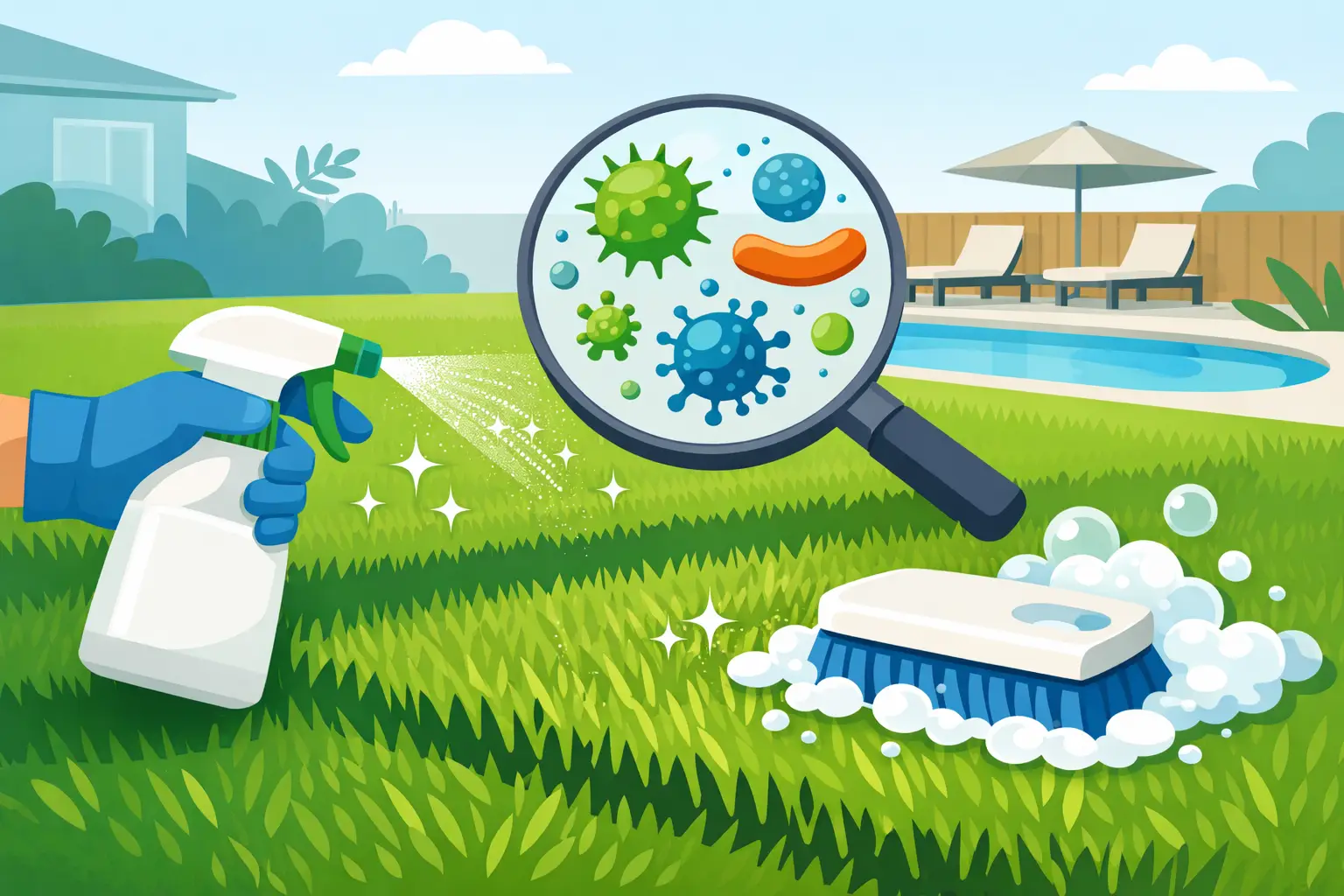
A quick hose-down can make artificial grass look better for an afternoon. It does not always make it clean. When dogs use the same spots every day, kids play outside, and Arizona heat bakes everything into the fibers and infill, bacteria and odor can settle below the surface. Knowing how to sanitize artificial grass safely means treating the whole turf system – not just spraying perfume over the problem.
The goal is simple: remove the mess, treat bacteria and urine where they live, and leave the yard safe for the people and pets who use it. No harsh chemical shortcuts. No sticky residue. No more stepping outside and getting hit with that unmistakable pet-yard smell.
Start by Knowing What You Are Treating
Not every dirty turf problem needs the same fix. Loose leaves, dust, and pet hair are surface-level issues. A blower, rake made for synthetic grass, or power brush can handle much of that.
Odor is different. Dog urine travels through the turf backing and into the infill beneath it. As it dries, urine leaves behind crystals that reactivate when humidity, water, or heat returns. That is why a yard can smell fine in the morning, then gross by midafternoon after the sun has been on it for a few hours.
Bacteria can also build up in high-traffic areas, around pet potty zones, and where organic debris stays trapped in the fibers. Sanitizing works best after physical debris has been removed. If pet hair, dirt, and compacted infill are still sitting in the turf, a sanitizer cannot reach the areas that need it most.
How to Sanitize Artificial Grass Safely, Step by Step
A safe cleaning routine starts with a clear surface and uses products designed for synthetic turf. Go slowly enough to let the treatment work. Rushing through with strong household chemicals can damage fibers, leave residues, or create a bigger pet-safety issue than the one you started with.
Clear Debris and Lift the Turf Fibers
Remove leaves, sticks, food scraps, pet waste, and loose pet hair first. Organic debris holds moisture and feeds odor-causing bacteria. Then brush the turf against the grain with a turf-safe broom or power brush to lift flattened fibers and loosen embedded grime.
This step matters more than most homeowners realize. Turf that looks matted down is often holding hair, dust, and waste below the visible surface. Lifting the fibers gives your rinse water and cleaning treatment a path to get deeper into the turf.
Rinse Away Surface Grime
Use a garden hose with normal water pressure to rinse the area. Start at the highest point of the yard and work toward drainage areas so dirty water moves out instead of pooling under the grass.
Do not blast artificial grass with a pressure washer unless the turf manufacturer specifically approves it and you know how to use low pressure correctly. High pressure can disturb infill, pull at seams, and damage backing. A thorough rinse is helpful, but it will not neutralize urine crystals or solve embedded odor by itself.
Apply a Turf-Safe Enzyme Cleaner for Pet Areas
For dog urine, use an enzyme-based cleaner labeled for artificial grass and pet areas. Enzymes are designed to break down the organic material causing the odor instead of simply covering it with fragrance.
Follow the product directions exactly, especially dilution and dwell time. Saturate the affected area enough for the solution to move through the turf fibers and reach the infill, where urine usually collects. A light mist on top may smell fresh for a day, but it will not reach the source.
If you have multiple dogs or a favorite potty corner, expect to treat that area more heavily and more often. The right amount depends on how frequently the turf is used, the type and depth of infill, drainage, shade, and how long the odor has been building up.
Use a Pet- and Turf-Safe Sanitizer
After cleaning the odor source, apply a sanitizer specifically approved for synthetic turf and outdoor pet areas. Read the label before you spray. It should clearly explain where it can be used, whether it needs to be rinsed, and how long children and pets should stay off the area.
Keep people and pets away until the product has fully dried or until the label says the area is safe to use. More product is not better. Overapplying can leave residue in the fibers and infill, especially in spots with poor drainage.
A true sanitizer reduces bacteria on treated surfaces. A deodorizer makes the area smell better. The best turf care plan addresses both, but neither should be used as a substitute for removing pet waste and treating urine buildup.
Rinse Only If the Product Calls for It
Some treatments need a final rinse. Others need time to stay on the turf so they can work. Do not guess. Rinsing too soon can dilute the treatment before it reaches the infill. Skipping a required rinse can leave unnecessary residue behind.
When the process is complete, allow the turf to dry completely before normal backyard use. In Arizona, that may happen quickly in direct sun, but shaded areas and heavily saturated pet zones can take longer.
What Not to Use on Artificial Turf
The fastest way to turn a turf-cleaning project into a replacement bill is using a harsh chemical because it was already sitting under the kitchen sink. Artificial grass is durable, but it is not indestructible.
Avoid bleach, ammonia, gasoline, strong solvents, and highly caustic cleaners. Bleach can discolor fibers and kill surrounding landscaping. Ammonia is especially counterproductive in pet areas because urine already contains ammonia-like compounds, and the smell can encourage dogs to return to the same spot. Solvents can harm backing, adhesives, and nearby materials.
Do not mix cleaning products. Combining chemicals can create dangerous fumes or leave behind residues that are unsafe for paws and bare feet. Vinegar is sometimes used as a light household cleaner, but it is not a complete answer for heavy urine odor or deep sanitization. It may help with a minor surface smell, yet it cannot reliably extract buildup trapped in compacted infill.
When DIY Cleaning Is Not Enough
If you clean the turf, let it dry, and the odor returns as soon as the yard heats up, the problem is likely below the surface. The same is true when turf looks flattened, feels gritty, has dark pet stains, or smells strongest in one or two specific areas.
That is when deep restoration makes the difference. Professional turf cleaning combines power brushing, debris and pet hair removal, deep rinsing, urine extraction, targeted odor treatment, and sanitizer application. The purpose is not to make the surface smell nice for a weekend. It is to pull out the embedded contamination that casual hosing leaves behind.
For homes with several pets, a professional treatment can also reset the yard so routine maintenance actually works again. Elite Turf Cleaning focuses on that deeper process: restoring the look, feel, and freshness of artificial grass without asking homeowners to replace expensive turf before it is truly necessary.
Keep Your Turf Fresher Between Deep Cleans
The best defense against odor is not waiting until the entire backyard smells bad. Pick up solid pet waste promptly, rinse frequent potty areas several times a week, and brush high-traffic zones when fibers begin to flatten. During intense heat, give pet areas extra attention because heat makes trapped odors far more noticeable.
If your dog uses one repeat spot, treat it early with a turf-safe enzyme product instead of waiting for the smell to spread. For larger yards or households with multiple dogs, rotating potty areas can reduce how quickly urine loads up one section of infill.
A clean artificial lawn should look inviting, feel comfortable underfoot, and smell like a backyard – not a kennel. When the odor keeps coming back, do not keep covering it up. Treat the source, protect the people and pets who use the space, and give the turf the deep reset it has been asking for.