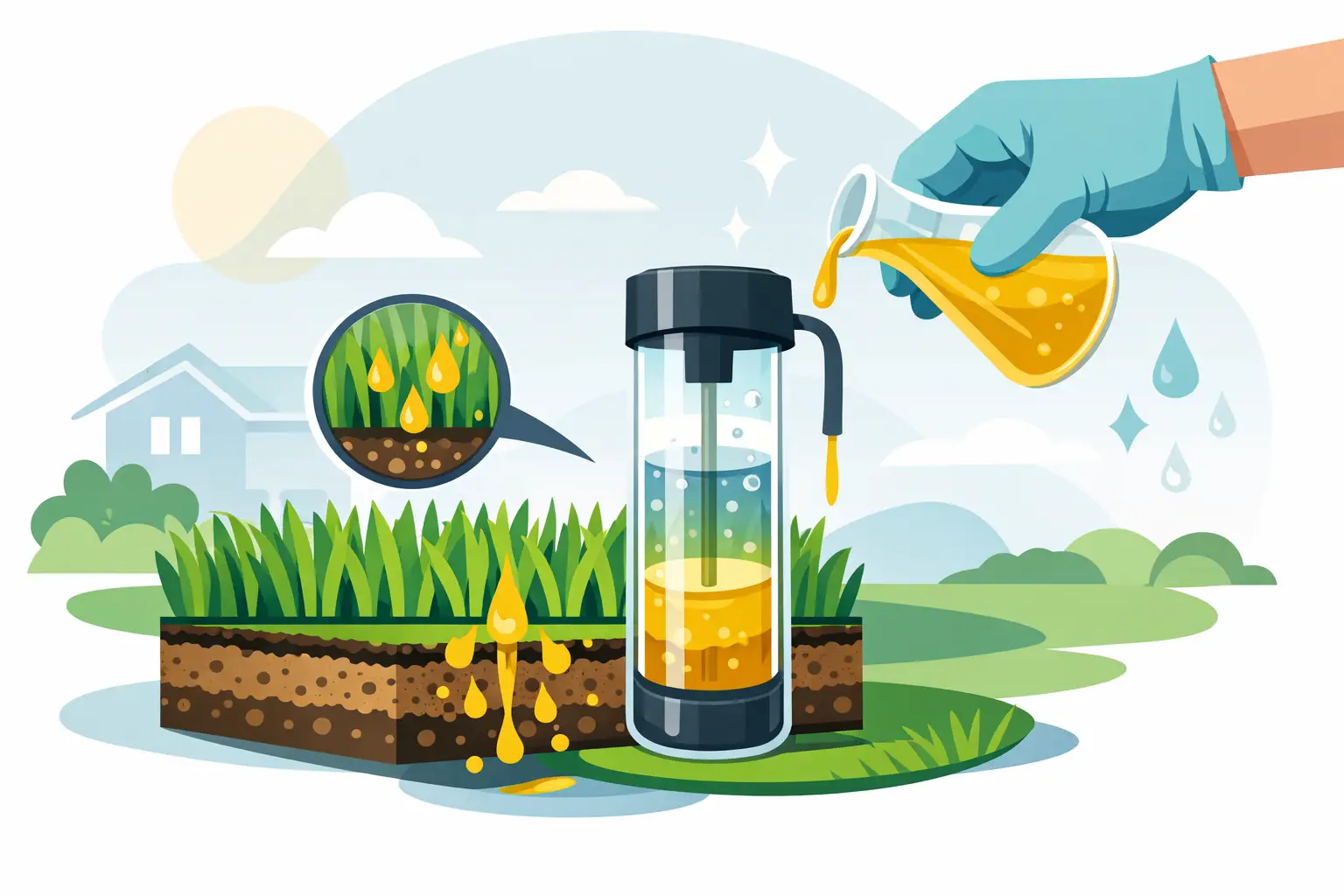
If your backyard smells fine right after a rinse but starts stinking again by the afternoon, the problem is not on the surface. Urine extraction from artificial grass targets what is trapped below the blades – deep in the infill, backing, and base where pet urine keeps building up. That is why a quick hose-down can make turf look cleaner for a few hours, yet the odor comes right back.
For Arizona homeowners with dogs, this is one of the most common turf problems out there. The grass still looks usable from a distance, but up close it smells sour, feels matted, and starts to seem less like a low-maintenance yard and more like a dirty pet zone. No one installs artificial turf to end up avoiding their own backyard.
Why artificial turf holds urine odor so badly
Artificial grass is designed to drain, but drainage is not the same thing as full removal. Liquids pass through, but urine leaves behind salts, uric acid, bacteria, and organic residue. Over time, those materials settle into the infill and backing. In hot weather, especially in Arizona, that buildup gets activated fast and the smell becomes stronger.
This is where many homeowners get frustrated. They have already tried water, store-bought deodorizers, or even soap. The yard may smell better for a day or two, but those surface treatments rarely pull out what has soaked into the turf system. If the source stays in place, the odor keeps returning.
There is also a hygiene issue that goes beyond smell. When urine sits in turf, it can feed bacteria growth and create an unsanitary surface for pets and kids. A yard that looks green can still be carrying a lot of hidden grime underneath.
What urine extraction from artificial grass actually means
Urine extraction from artificial grass is not just spraying fragrance over a problem. It is a deep-cleaning process built to flush out embedded urine contamination, break down odor-causing residue, and restore the turf to a fresher, safer condition.
A proper service usually starts with an inspection of the turf condition. Some lawns mainly have odor buildup in high-use pet spots. Others have widespread contamination caused by months or years of repeated use, weak maintenance, or poor drainage. That difference matters because not every yard needs the same level of treatment.
From there, the real work begins. Power brushing lifts matted blades and opens up compacted areas. Debris and pet hair are removed so treatment can reach the infill. Deep rinsing and extraction work through the turf layers to move urine residue out instead of pushing it around. Then odor treatment and sanitizing products are applied to attack what water alone cannot handle.
When done correctly, the goal is simple – no more odors, no more nasty buildup, and no more backyard embarrassment.
Why hosing it down is not enough
A garden hose helps with fresh urine. It can dilute residue before it settles too deep, and that is worth doing as part of regular upkeep. But once odor is established, basic rinsing is usually too weak and too shallow.
Think about what happens in a pet area used every day. Urine does not land in one perfect spot and disappear. It hits the blades, sinks into the infill, reaches the backing, and can affect the surface beneath. Add Arizona heat, dust, and time, and the yard starts holding onto that contamination.
Home remedies also have limits. Some products mask odor. Some can leave behind sticky residue that attracts more dirt. Some are not made for synthetic turf at all and can create their own problems. The biggest issue is that many DIY fixes treat the symptom while leaving the source untouched.
That is why professional extraction matters. It is designed to remove, sanitize, and reset the turf rather than just making it smell different for a short time.
Signs your turf needs professional urine extraction
Sometimes the warning signs are obvious. Sometimes they build slowly and homeowners get used to them. If you notice a strong smell after the yard heats up, that is a major red flag. The same goes for odor that gets worse after light watering, because moisture can reactivate dried urine deposits.
Flattened turf is another clue. Heavy pet traffic and residue buildup can leave the surface looking tired and compacted. You may also notice stained areas, lingering damp smells, or a general dirty feel even after you clean the surface yourself.
If guests can smell the yard before they sit down, the issue is already beyond basic maintenance. At that point, extraction and restoration make far more sense than repeated DIY attempts.
The difference between cleaning and restoration
This is where homeowners often waste time and money. Basic cleaning removes loose debris and improves appearance. Turf restoration goes deeper. It addresses the trapped contaminants, the matted fibers, the odor source, and the bacteria load that regular rinsing leaves behind.
That distinction matters because turf can look green and still be in rough shape. A restored lawn feels better underfoot, smells clean, drains better, and looks more upright and even. It becomes a yard you want to use again, not one you tolerate.
At Elite Turf Cleaning, that restoration mindset is the whole point. The goal is not to make the turf temporarily less offensive. The goal is to bring it back to life.
How professional urine extraction works
The exact process depends on turf age, pet use, and how severe the odor has become, but strong results usually come from a layered approach. First, the turf is opened up with power brushing or power sweeping so compacted fibers and infill can be treated properly. Hair, leaves, and debris are removed because they trap moisture and block treatment.
Next comes deep rinsing and urine-focused extraction. This step is built to penetrate below the visible surface and flush out embedded contamination. If there are specific pet zones with heavy saturation, those areas may need extra attention.
After extraction, sanitizing and deodorizing treatments are applied. This is what helps eliminate odor-causing bacteria and neutralize the remaining smell at the source. A final grooming step helps the turf recover its look and texture.
The result should not be a perfumed cover-up. It should smell clean because the problem was actually removed.
What results can you realistically expect?
In many cases, the improvement is dramatic. Odor drops fast, the turf feels fresher, and the overall yard looks more alive. That is especially true when the contamination is limited to typical household pet use and the drainage system is still functioning well.
But there are trade-offs, and being honest about them matters. If turf has years of heavy urine saturation, severe drainage issues, or low-quality installation underneath, one treatment may not solve every problem permanently. Some yards need repeat service or an ongoing maintenance plan to stay fresh.
That does not mean the treatment failed. It means the turf has been carrying a deeper problem for longer. A good service should tell you what condition the yard is really in and what level of maintenance makes sense going forward.
How to keep odors from coming back
Professional extraction gives you the reset. Smart upkeep helps protect it. Rinsing high-use pet areas regularly can reduce fresh buildup. Picking up solid waste quickly matters more than many people realize. So does staying ahead of hair, leaves, and compacted debris.
The bigger issue is timing. Many homeowners wait until the yard is already gross. A better move is routine maintenance before odor becomes overwhelming. That is especially true in hot climates where smells intensify quickly.
If your artificial grass is used by dogs every day, periodic deep cleaning is not overkill. It is basic protection for a surface your family uses all the time.
Urine extraction from artificial grass is about more than odor
Yes, smell is usually what gets people to act. But urine extraction from artificial grass is also about sanitation, comfort, and getting value out of the turf you already paid for. Replacing synthetic grass is expensive. Restoring it makes a lot more sense when the base system is still salvageable.
A clean turf yard changes how the whole space feels. Kids can play out there. Pets can use it without the same lingering mess. You are not making excuses when friends come over. That is the real win.
If your turf smells worse every week, looks flattened, or never feels fully clean, trust what your yard is telling you. Surface cleaning has done all it can do. The next step is getting the contamination out so your backyard can feel fresh again.