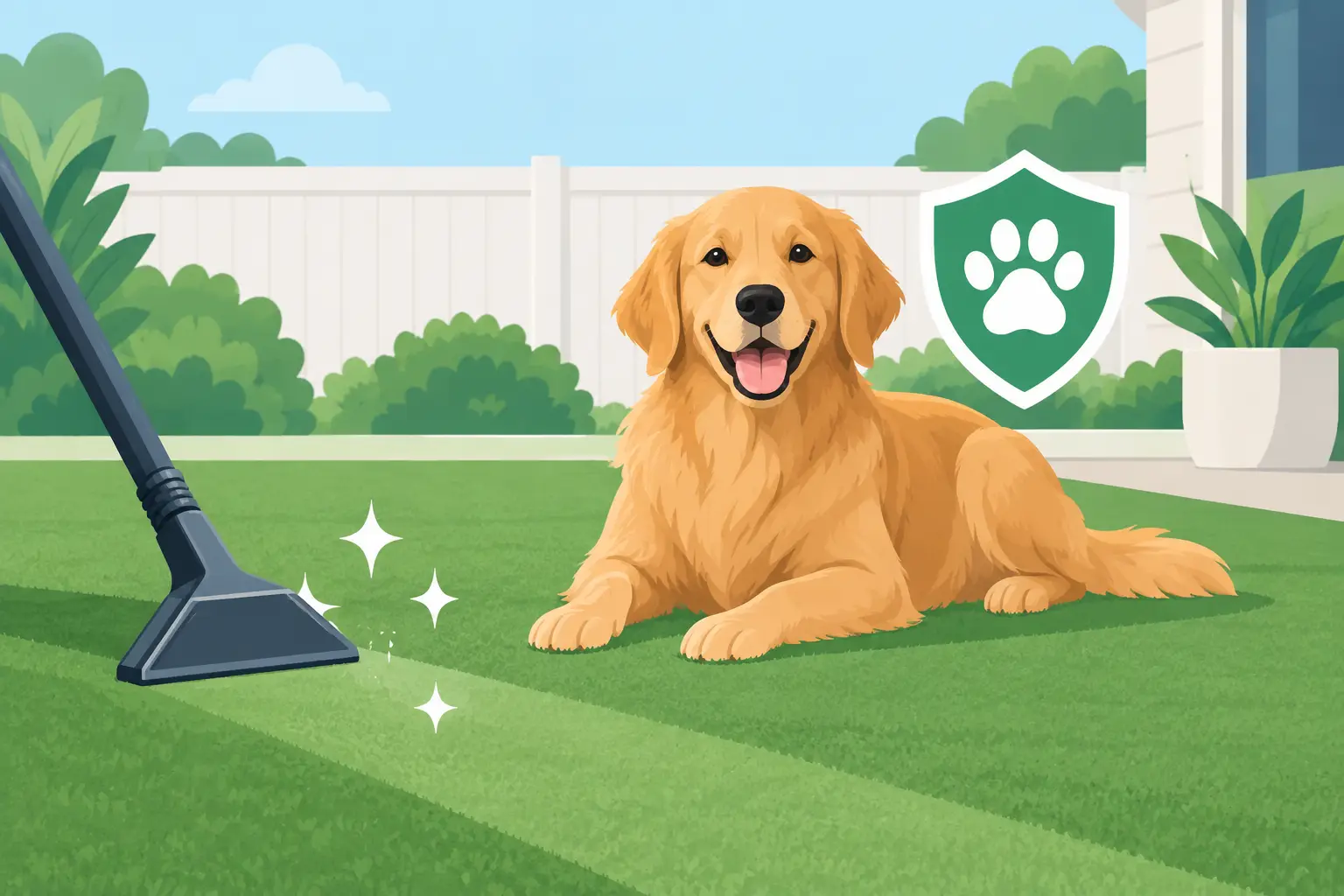
Your dog uses the turf as a bathroom, play space, nap spot, and racetrack. So when the urine smell starts rising with the Arizona heat, one question comes first: is turf cleaning safe for dogs? Yes – when the turf is cleaned with pet-conscious products, properly rinsed, and given the recommended time to dry before your dog returns.
The bigger risk is not professional turf cleaning. It is leaving urine, bacteria, pet hair, and grime buried deep in the turf fibers and infill. A quick hose-down may make the surface look better for a day, but it does not pull out what has soaked below. That is where stubborn odor starts, bacteria builds, and your once-clean backyard begins to look and smell gross.
What Makes Turf Cleaning Safe for Dogs?
Safe turf cleaning is about the full process, not just the bottle of cleaner. The right treatment should be selected for artificial grass, used at the correct dilution, and applied in a way that addresses contamination without leaving heavy chemical residue behind.
For pet households, a professional cleaning process should focus on lifting out debris, flushing the turf, treating urine-affected areas, and sanitizing the surface with products intended for areas pets use. After treatment, the turf needs time to dry fully. Once it is dry and the service provider’s re-entry guidance has been followed, dogs can get back to doing what they do best – turning the backyard into their personal playground.
Not every cleaner belongs on artificial turf. Harsh bleach solutions, overly perfumed chemicals, and DIY mixes with unknown concentrations can create problems for both turf and paws. They may leave irritating residue, damage backing or fibers, or simply mask the smell without removing the source.
Why Dirty Artificial Turf Can Be the Bigger Problem
Artificial grass does not grow, but it still gets dirty. Pet urine moves through the turf and settles into the infill and base layers. Hair, dander, dust, food crumbs, leaves, and debris pack down between fibers. Over time, that buildup holds moisture and creates the kind of odor that hits you the moment you open the back door.
In Arizona, heat makes the problem louder. Warm temperatures can intensify lingering urine odor, especially after the yard has been used heavily or lightly sprayed with water. If your turf smells fine in the morning but awful by afternoon, there is a good chance the contamination is below the surface.
That buildup also affects how the turf looks and feels. Fibers flatten. Dark spots appear. The area around your dog’s favorite bathroom spot can feel matted or sticky. Regular deep cleaning restores more than freshness – it helps bring the turf back to life.
A Safe Professional Turf Cleaning Process
A proper turf cleaning is not a quick spray-and-go service. It is a restoration process designed to remove what routine rinsing leaves behind.
First, the turf should be power brushed or power swept to lift flattened fibers and loosen trapped hair, dust, and debris. This step matters because compacted turf blocks water and treatment products from reaching the places that need attention most.
Next comes debris removal and deep rinsing. The goal is to flush out loose contamination while preparing urine-heavy areas for targeted treatment. For pet owners, this is where surface-level cleaning separates from real odor removal.
Urine extraction and odor treatment should target the source of the smell, not cover it with fragrance. A quality pet-safe deodorizing and sanitizing treatment is then applied according to product instructions. Finally, the turf is rinsed or allowed to dry as needed, leaving the yard fresh, cleaner, and ready for normal use after the recommended drying period.
Elite Turf Cleaning uses a turf-specific approach because every backyard has a different level of buildup. A home with one small dog has different needs than a backyard used daily by three large dogs. The right process matches the condition of the turf instead of treating every yard like a light surface cleanup.
When Can Dogs Go Back on the Turf?
This is the question every pet owner should ask before a cleaning begins. The answer depends on the products used, the amount of treatment applied, weather conditions, and how quickly the turf dries.
In many cases, dogs can return once the treated area is completely dry. Arizona sun can speed that up, but shade, dense turf, cooler weather, and heavily treated urine zones may take longer. Do not let a dog run through wet treatment just because the turf feels mostly dry on top. The fibers, infill, and backing may still be damp underneath.
A professional should give you clear re-entry instructions for your specific service. If a company cannot tell you what was used or when it is safe for pets to return, that is a red flag. Pet safety should never be vague.
Signs Your Turf Needs More Than a Hose
Hosing down your turf is useful for light dust and a quick refresh. But it cannot remove embedded pet hair, compacted infill, or years of urine residue. If you recognize several of these problems, it is time for a deeper clean:
- A urine smell returns soon after you rinse the yard.
- The turf smells worse when the sun heats it up.
- Fibers are flattened, matted, or packed with pet hair.
- Your dog’s favorite potty area has dark spots or a lingering odor.
- The yard looks clean from a distance but feels dirty underfoot.
These are not signs that your artificial grass has failed. They are signs that it needs maintenance designed for how it is actually used.
What Pet Owners Should Avoid
The urge to fix a bad smell fast is understandable. But random household products can turn a turf problem into a bigger one. Avoid pouring concentrated bleach, ammonia-based cleaners, or heavily scented cleaners directly onto artificial grass. Ammonia can make urine odors seem worse, while bleach and other aggressive chemicals may be tough on turf materials and are not a smart choice for spaces where pets roll, sniff, and walk barefoot.
Also be careful with DIY enzyme products. Some can help with light odor issues, but they are not all formulated for synthetic turf, and they may not reach contamination deep in the infill. If urine has been building up for months or years, a surface spray will not solve the full problem.
Overwatering is another common mistake. Flooding the turf can push contaminated water deeper or create drainage issues if the yard already has compacted infill. More water is not always more clean.
How Often Should Pet Turf Be Cleaned?
There is no one schedule that fits every yard. A household with one dog that uses a separate potty area may only need professional restoration occasionally. A backyard with multiple dogs, daily use, and summer heat will usually need more frequent attention.
Watch the turf, not just the calendar. If odors are returning, the fibers are staying flat, or the yard no longer feels fresh after normal rinsing, it is time to schedule service. Routine power brushing and deep sanitation can help prevent odor buildup from becoming a major restoration job later.
For day-to-day care, pick up solid waste promptly, remove leaves and loose debris, and lightly rinse areas your dog uses often. Those simple habits help. They just do not replace extraction, deep rinsing, and targeted odor treatment when urine has settled into the turf system.
A Cleaner Yard Starts Below the Surface
Your dog should be able to enjoy the backyard without you worrying about harsh residue or holding your breath every time the heat kicks up. The right turf cleaning service protects that space by using pet-conscious methods, treating the real source of odor, and allowing proper dry time before paws return.
A fresh yard is not created by covering up a smell. It comes from removing the mess that has been hiding below the fibers – so your turf can look better, smell better, and feel like a backyard again.