
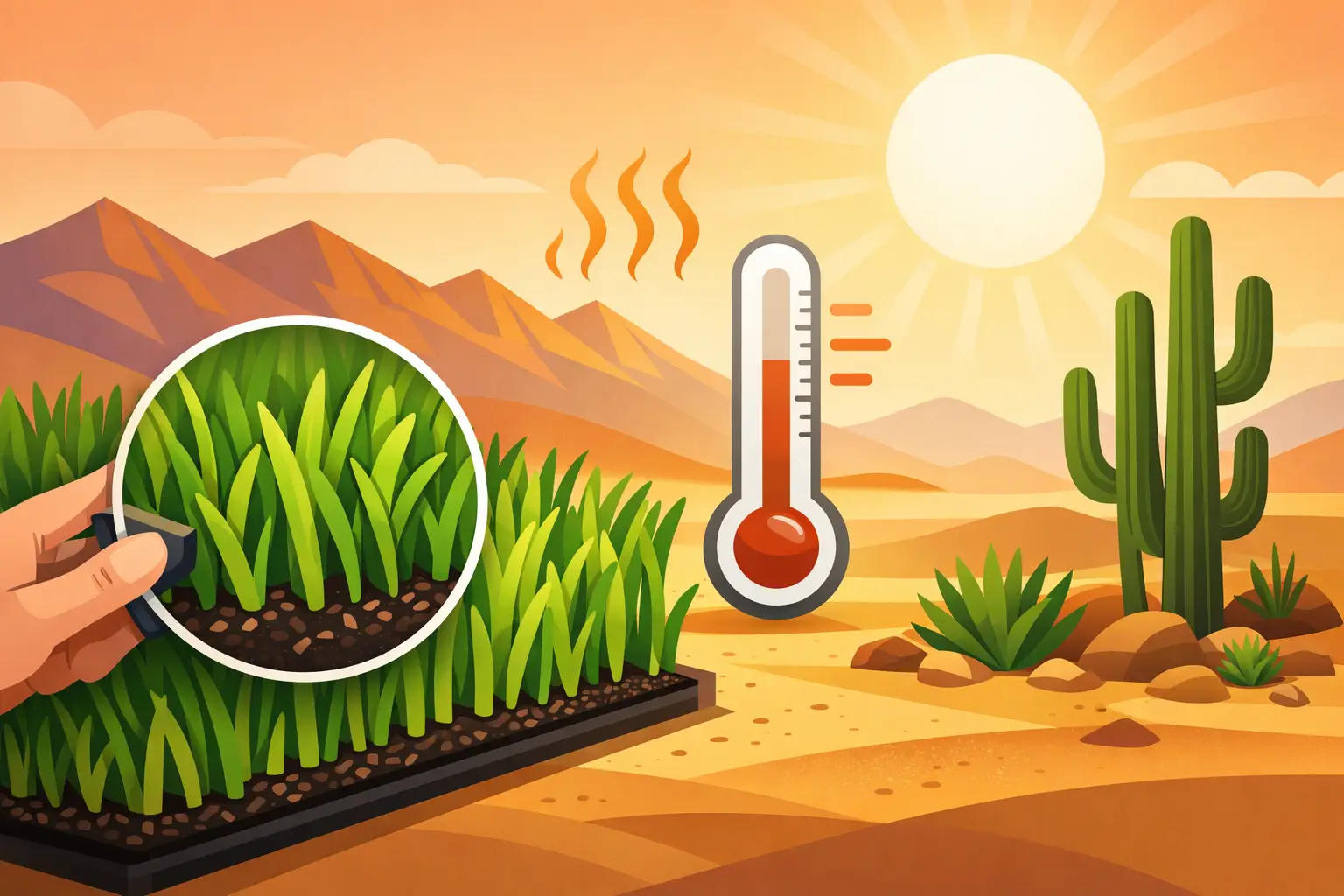
A backyard can look perfect at noon and still be too hot for bare feet or paws. So, is artificial grass heat safe in Arizona? It can be used safely, but artificial turf is not automatically cool or comfortable in extreme sun. On a clear summer day, the surface can become hot enough to cause burns fast – especially for pets, toddlers, and anyone stepping outside without shoes.
The honest answer is that safety depends on the turf’s surface temperature, not just the air temperature. If your grass feels blazing hot, smells stronger than usual, or has become packed down and dirty, it needs attention before the whole family heads outside.
Is Artificial Grass Heat Safe for Pets and Kids?
Artificial grass can be a safe, durable yard surface for pets and kids when it is properly installed, maintained, and used with common sense during Arizona heat. But synthetic fibers absorb and hold heat differently than living grass. Natural grass cools itself through moisture. Turf does not.
That means a 105-degree day can create a much hotter surface under direct sunlight. Depending on the turf color, infill, amount of shade, and airflow, artificial grass can climb well above the air temperature. Darker materials and exposed, tightly packed turf often get hotter than newer turf with reflective technology or shaded areas.
For kids, the biggest concern is skin contact. Kneeling, sitting, crawling, or falling onto overheated turf can be painful. For dogs, paw pads are the concern. Pets do not always recognize the risk right away, particularly when they are excited to run outside.
Heat also makes a neglected turf problem feel worse. When urine, pet hair, debris, and bacteria are trapped below the fibers, hot weather can amplify odors. Hosing the surface may provide a few minutes of cooling, but it does not remove the grime and urine buildup sitting deep in the turf.
How Hot Does Artificial Turf Get?
There is no single temperature that applies to every yard. A shaded turf area may be manageable while the center of a full-sun backyard is painfully hot. Still, homeowners should expect artificial grass to run significantly hotter than natural grass during the hottest parts of an Arizona day.
Several factors affect the temperature:
- Direct sun exposure: A turf area with no trees, patio cover, or shade sail will heat up quickly.
- Turf color and fiber type: Darker turf and older materials generally absorb more heat.
- Infill material: Some infills retain heat more than others. The wrong infill can make a hot yard even less comfortable.
- Turf condition: Flattened fibers, compacted infill, pet waste residue, and trapped debris reduce airflow and leave the yard looking and feeling neglected.
- Surrounding hardscape: Concrete, block walls, rocks, and pool decking can radiate additional heat into the turf area.
A turf yard does not need to be unsafe all day to create a real issue. The risk is usually highest from late morning through late afternoon, when surfaces have had hours to absorb sun.
Use the Touch Test – But Do Not Rely on It Alone
A quick back-of-the-hand test is useful: place your hand on the turf for several seconds. If it is too hot to hold comfortably, it is too hot for bare feet and paws. But this is only a fast screening tool, not a precise measurement.
An infrared surface thermometer gives you a clearer answer. Check several spots, including the sunniest section, areas near concrete, and your pet’s usual bathroom zone. Temperatures can vary dramatically across one backyard.
If the turf is hot enough to cause discomfort, move playtime, potty breaks, and exercise to a shaded area. Walk dogs early in the morning or after the surface has cooled in the evening. Shoes, sandals, and paw protection can help, but they do not make an overheated surface ideal for extended use.
How to Keep Artificial Grass Cooler
You cannot make full-sun turf behave exactly like natural grass in an Arizona summer. You can, however, reduce heat exposure and make the yard more usable.
The fastest short-term solution is a light rinse. Watering the surface can cool turf temporarily, which is helpful before supervised outdoor play or a quick pet break. Do not mistake a rinse for deep cleaning, though. Water may cool the fibers, but it can also carry urine residue farther into the base if there is existing pet buildup.
Shade is the strongest long-term improvement. A patio cover, shade sail, umbrella, mature landscaping, or designated covered pet zone gives your family a place to use the yard without standing on the hottest turf. Even partial shade can make a major difference during peak heat.
If you are planning a new installation or replacement, ask about heat-conscious turf products and infill options. Lighter blade colors, cooling infill, better drainage, and quality installation can all improve comfort. No product eliminates Arizona sun, so be wary of any promise that turf will stay cool at 110 degrees in full exposure.
Regular power brushing also helps the turf perform better. Restoring upright fibers and redistributing compacted infill improves the look of the lawn and helps keep the surface from becoming a dense, dirty mat.
Heat, Odor, and Bacteria: The Problem Hiding Under the Blades
Hot turf often reveals a problem that was already there. When temperatures rise, trapped pet urine and bacteria can release stronger odors. You may notice it near the dog run, along the fence line, or in the places where your pet returns again and again.
That smell is not simply a cosmetic issue. It is a sign that the turf needs more than a garden hose. Urine can sink below the blades, through the infill, and into the backing and base. Surface sprays may cover the odor briefly, but they do not extract what is embedded underneath.
A professional turf restoration service addresses the full problem: pet hair and debris removal, power sweeping, deep rinsing, urine extraction, odor treatment, and sanitizer application. The goal is not to perfume a dirty yard. The goal is to remove the source, restore the fibers, and leave the turf fresh enough for the people and pets who actually use it.
This matters even more during summer. A cleaner turf system does not change the sun’s intensity, but it helps prevent heat from turning your backyard into an odor problem every time the temperature spikes.
Signs Your Turf Needs Attention Before Summer Gets Worse
Look closely at the high-use areas of your yard. Turf that needs restoration often feels stiff or matted, looks flat in pet zones, drains slowly, or gives off a urine smell once the sun hits it. You may also see pale residue, scattered pet hair, compacted infill, or debris trapped below the grass blades.
Do not wait until the smell is overwhelming or your turf looks beyond saving. Routine care keeps synthetic grass cleaner, more attractive, and more comfortable to use. For households with multiple dogs, frequent outdoor play, or a small turf area that gets constant use, occasional deep cleaning is far more effective than repeated rinsing.
Elite Turf Cleaning restores artificial grass from the ground up with turf-specific cleaning, sanitizing, and pet odor treatment. No more flattened fibers. No more urine smell taking over the backyard. No more guessing whether a quick hose-down actually fixed the problem.
Before kids kick off their shoes or your dog races outside on a hot afternoon, check the turf surface first. A cooler schedule, a little shade, and clean, properly maintained turf can keep your backyard feeling like the place it is supposed to be – a space your family can enjoy.