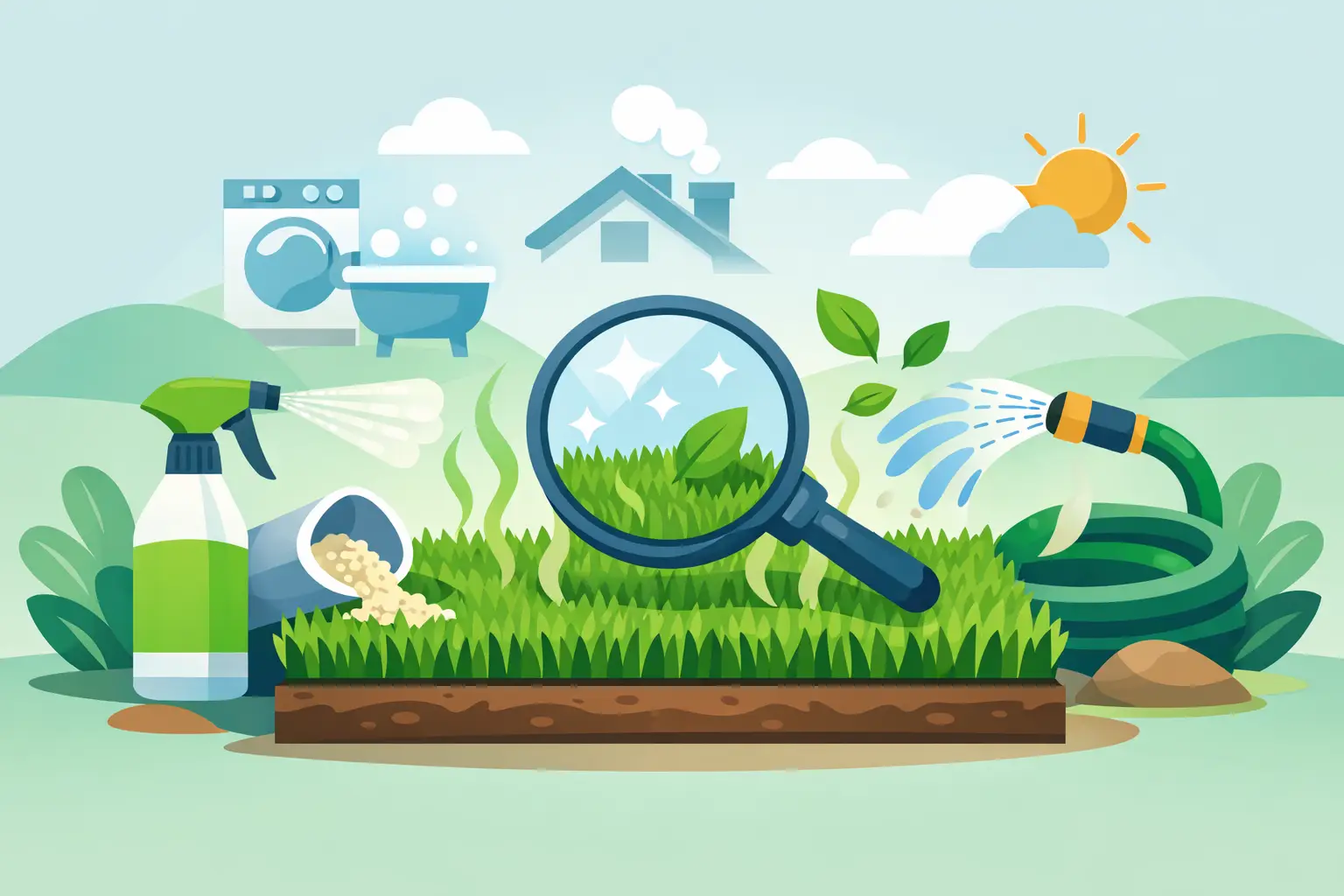
That sharp urine smell that hits when you step into the backyard is not a minor turf issue. It is a sign that urine, bacteria, pet hair, and debris have worked their way below the grass blades and into the infill. The best ways to remove turf odor go beyond spraying fragrance on the surface. To get real results, you have to remove the source, treat the affected areas, and restore the turf so your yard smells fresh again.
For Arizona pet owners, heat makes the problem worse. Warm temperatures can intensify old urine odors and bring them right back after a light rinse. If your artificial grass looks flat, feels dirty, or smells worse after the sun comes up, it is time for more than a hose.
Why Artificial Turf Starts to Smell
Artificial turf does not create odors on its own. The problem starts when pet urine drains through the turf but leaves behind salts, uric acid, and bacteria in the blades, infill, backing, and base layer. Over time, those materials build up, especially in the favorite potty spots.
Dog hair, dust, leaves, food crumbs, and general outdoor grime add to the mess. They trap moisture and give bacteria more material to feed on. A quick rinse may dampen the odor for a day, but it usually cannot flush out compacted debris or break down the urine residue buried beneath the surface.
This is why a yard can look mostly clean while still smelling terrible. The odor is not always sitting on top. It is often locked into the areas you cannot reach with casual maintenance.
The Best Ways to Remove Turf Odor at the Source
The right approach depends on how long the odor has been there, how many pets use the yard, and whether the turf has been professionally cleaned before. Fresh, isolated spots can often be managed at home. Strong odor across the whole yard usually calls for a deeper restoration process.
1. Remove solid waste and surface debris every day
Start with the obvious, but do not underestimate it. Pick up pet waste promptly and clear leaves, sticks, hair, and other debris from the turf regularly. Organic debris holds moisture and bacteria against the grass, making odor problems tougher to control.
Use a leaf blower, plastic rake, or turf-safe broom rather than a metal garden rake that can damage fibers. Focus on corners, fence lines, patio edges, and the areas where your dog spends the most time. A cleaner surface gives odor treatments a chance to reach where they need to go.
2. Rinse turf correctly, not endlessly
A controlled rinse can help move fresh urine through the turf, particularly in a small pet area. Use a garden hose to rinse the affected zone and allow the water to drain naturally. Do not flood the yard every day in the hope that more water will solve a deep odor issue.
Too much water can create its own problems if drainage is poor. It may spread urine residue into nearby areas, leave the infill wet, and create a stale smell. If odor returns quickly after rinsing, that is your cue that surface water is no longer enough.
3. Use a turf-safe urine treatment that targets odor
For a recent accident or a defined potty zone, apply a pet-safe turf odor treatment designed to break down urine compounds. Follow the product instructions closely, including dwell time and dilution. The treatment needs enough time to work before it is rinsed away.
Avoid covering the smell with heavily perfumed sprays. Fragrance can make the yard smell better for an afternoon, but it does not remove uric acid or bacteria. Also skip harsh household chemicals, bleach, and products not labeled for synthetic grass. They can damage turf fibers, affect backing materials, or create an unsafe space for pets and kids.
4. Brush up flattened turf and loosen trapped grime
When turf blades stay matted down, they trap hair, dust, and residue close to the surface. Brushing helps lift the blades, release debris, and improve the appearance of worn pet paths. It also helps odor treatments reach more of the turf instead of sitting on a flattened layer of grime.
A stiff, non-metal turf broom works for light maintenance. For heavily used lawns, power brushing and power sweeping provide a much stronger result. This is one of the biggest differences between basic upkeep and a true turf refresh. The yard does not just smell better. It starts to look alive again.
5. Treat the infill, not only the grass blades
The infill is where stubborn odors often live. Pet urine drains down through the artificial grass and can settle into the material between the fibers. If the infill is packed with dust, hair, salts, and bacteria, spraying the top of the turf will not fix the full problem.
Deep treatment should reach the infill and flush out the contamination without damaging the installation. That process may include concentrated urine extraction, controlled rinsing, odor treatment, and sanitizing. It takes more work than a quick spray, but it is the step that matters when the whole yard has a lingering smell.
6. Sanitize after odor treatment
Odor and sanitation are connected, but they are not the same job. Once urine residue and grime have been addressed, a turf-safe sanitizer helps reduce bacteria left behind from pets, spills, and everyday use. This is especially valuable for yards where children play, multiple dogs use the same area, or the turf has gone months without a deep cleaning.
The goal is not to leave behind a fake perfume smell. The goal is a genuinely cleaner yard that feels comfortable to use. A quality deodorizer can leave a fresh finish, but it should come after the source of the odor has been treated.
7. Call for professional restoration when the smell keeps coming back
If you have tried rinsing, spot treatments, and brushing but the odor returns with heat or humidity, the issue is likely deeper than routine maintenance can reach. Persistent urine odor, dark staining, compacted infill, flattened grass, and heavy pet hair are all signs your turf needs professional attention.
A full restoration service addresses the entire system: debris removal, power brushing, deep rinsing, urine extraction, pet odor and stain treatment, sanitizer application, and post-treatment deodorizing. That combination is built for turf that has become gross, not just mildly dusty.
Elite Turf Cleaning focuses on this deeper process because artificial grass deserves more than a surface rinse. The right cleaning can bring your turf back to life without the cost and disruption of replacement.
How to Keep Turf Odor From Returning
After a deep clean, maintenance becomes much easier. Pick up solid waste daily, rinse your pet’s preferred potty area as needed, and remove hair and debris before it gets worked into the turf. If you have multiple dogs, rotate potty zones when possible. Concentrating every bathroom break in one small area will create faster buildup, no matter how good the turf installation is.
It also helps to pay attention to drainage. Water should move through the turf instead of pooling around low spots, edges, or seams. If you notice standing water, recurring odors in the same location, or a sour smell even when the grass is dry, get the area inspected. Cleaning solves contamination, but drainage concerns may need a separate fix.
For most pet-owning households, a professional deep clean on a regular schedule is the simplest way to stay ahead of odors. The right frequency depends on yard size, number of pets, and how often the space is used. A single small dog may need occasional service. A busy backyard with several dogs may need more frequent restoration.
A backyard should be the place where your family relaxes, your kids play, and your dogs run around – not the place everyone avoids because of the smell. When turf odor is handled at the source, you get back a cleaner, safer, fresher yard that looks as good as it should.