That sour smell hits first. Then you notice the grass looks matted, dusty, and somehow still dirty even after you hosed it off. At that point, a lot of homeowners ask the same question: can you steam clean artificial turf? The short answer is yes, sometimes – but that does not mean it is the best or safest way to restore your turf.
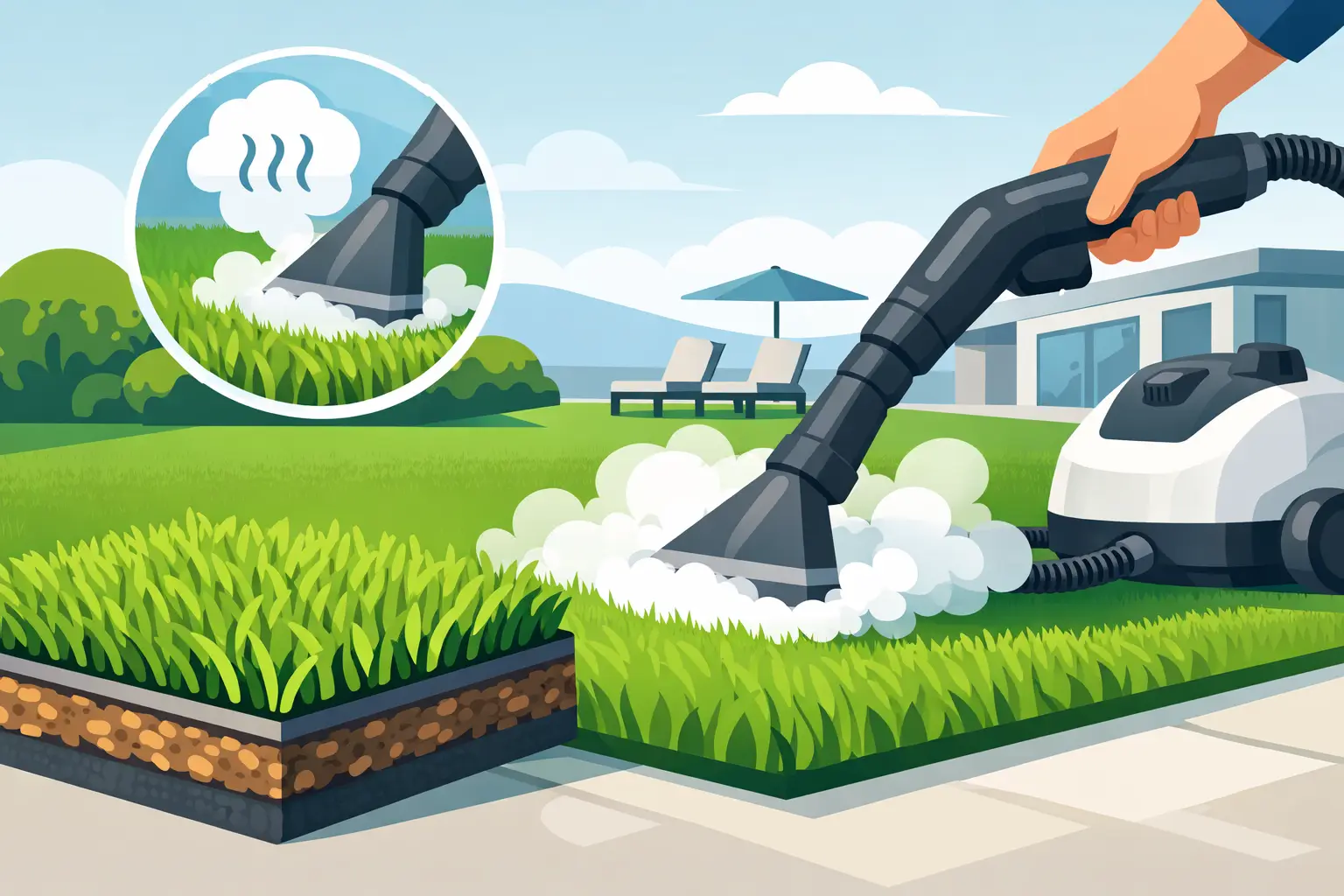
Steam sounds like a smart fix because heat feels powerful. It suggests deep cleaning, sanitizing, and fast results. But artificial turf is not tile, concrete, or upholstery. It is a layered system made of synthetic blades, infill, backing, and a base underneath. Clean it the wrong way, and you can trade one problem for another.
Can You Steam Clean Artificial Turf Safely?
You can steam clean artificial turf in some situations, but it depends on the turf type, the temperature, the equipment, and what problem you are trying to solve. That last part matters most.
If your turf has light surface grime in a small spot, controlled low-moisture steam may help loosen residue. But if your real problem is pet urine soaked into the infill, bacteria buildup, compacted debris, or flattened turf fibers, steam alone usually misses the mark. It may clean the top while leaving the source of the odor and contamination below the surface.
There is also risk. Artificial grass is made from plastic-based materials. Too much heat can warp blades, weaken backing, or affect adhesives and seams. In Arizona heat, turf already takes a beating. Adding more high temperature treatment without a turf-specific plan can do more harm than good.
Why Steam Cleaning Sounds Better Than It Often Performs
Steam has a great reputation because it can sanitize hard surfaces without harsh chemicals. That is true in the right setting. Turf is different because dirt and odor do not just sit on top.
Pet urine is the biggest example. Once urine moves into the infill and below, the smell sticks around because the bacteria and residue are trapped deep in the system. Steam may hit the upper layer, but it does not reliably flush out what has soaked down. If anything, heat can temporarily intensify the odor as it agitates the contaminated area.
The same goes for dust, pet hair, leaves, and organic debris. These materials work their way down into the turf and compact over time. Steam does not lift and remove that buildup on its own. You still need agitation, extraction, rinsing, and deodorizing if you want a real reset.
Where Steam Cleaning Can Go Wrong
The biggest issue is heat control. Turf fibers are engineered to handle outdoor temperatures, but direct steam is different from ambient sun exposure. A steam unit that is too hot or held too close can cause blades to curl, shrink, or lose their shape.
The second issue is false confidence. Homeowners often use steam because they want to sanitize turf after pets. The problem is that visible cleanliness and actual sanitation are not the same thing. If contaminated infill stays in place, the yard may smell better for a day or two, then go right back to normal.
Moisture management matters too. Steam introduces heat and moisture, and if the turf is not properly rinsed, dried, and ventilated, you can end up with lingering dampness, trapped residue, or more odor activation. That is especially frustrating when the whole goal was a fresher yard.
What Actually Works Better Than Steam for Dirty Turf
For most residential artificial grass, deep mechanical cleaning and targeted treatment work better than steam. That means starting with debris removal, then power brushing or power sweeping to lift the blades and break up compacted material. Once the turf opens up, rinsing can move contaminants out instead of just pushing them around.
If pet odor is involved, the key is not just cleaning the surface. It is treating urine deposits inside the infill and extracting as much contamination as possible. That usually requires a turf-safe odor treatment, a deep rinse, and a sanitizing deodorizer designed for synthetic grass systems. No more surface-only fixes. No more masking the smell.
This is where a turf-specific service makes the biggest difference. A real restoration approach focuses on the whole system – appearance, hygiene, odor, and drainage performance. That is very different from running a steam head across the top and hoping the smell disappears.
Can You Steam Clean Artificial Turf for Pet Odor?
If pet odor is the reason you are asking, steam is rarely the answer by itself. It may help with a small accident on the surface if you catch it early. But long-term dog urine smell is usually a below-surface problem.
Once urine crystals, bacteria, and organic residue settle into the infill, they need to be broken down and flushed out. Heat alone does not do that well enough. You need extraction and treatment. Otherwise, every hot afternoon or light rain can bring the smell right back.
That is why pet owners often feel stuck. They rinse the yard. They use a store-bought spray. They may even try steam. The turf looks a little cleaner, but the odor keeps winning because the source is still there.
When DIY Steam Cleaning Might Be Reasonable
There are a few limited cases where cautious steam cleaning may be reasonable. If you are dealing with a small sticky spill on top of the turf and you use a low-heat setting with minimal moisture, you may be able to loosen the residue without damage. Even then, it is smart to test a hidden area first.
It may also be useful for a very light touch-up on a non-pet area where there is no concern about deep contamination. But this is spot work, not full cleaning. It is not a substitute for maintenance, odor removal, or turf restoration.
If you are tempted to rent a commercial steam machine, slow down. Those units are often too aggressive for synthetic turf unless the operator knows exactly how to control heat, distance, and exposure time.
Signs Your Turf Needs More Than Steam
If your turf smells bad after rinsing, feels sticky or grimy, looks flat, or has dark traffic areas, steam is probably not enough. The same is true if pets use the yard daily or if the turf has not had a serious cleaning in a long time.
Those are signs of embedded buildup. The fibers may need lifting. The infill may need flushing and treatment. Bacteria and odor may need targeted sanitizing, not just heat. When turf reaches that point, restoration is the better move.
A proper service can remove pet hair, clean out debris, rinse deeply, treat urine-heavy areas, and restore the turf’s upright look. The result is not just cleaner grass. It is a yard that feels fresh again and safe to use.
The Smarter Question to Ask
Instead of asking only whether you can steam clean artificial turf, ask what problem you are trying to solve.
If the issue is a small surface mess, steam might help in a limited way. If the issue is odor, bacteria, dingy appearance, or years of buildup, you need a method built for synthetic grass. That usually means brushing, deep rinsing, urine extraction, stain and odor treatment, and sanitizing that reaches beyond the top layer.
That is the difference between making turf warm and making turf clean.
Homeowners in Arizona deal with enough already – heat, dust, pets, and heavy yard use. Artificial grass should make life easier, not leave you fighting odors and grime every weekend. If your turf is starting to look gross, smell worse, or feel beyond a quick rinse, skip the guesswork. Get it cleaned the way turf actually needs to be cleaned, and let your yard feel fresh again.