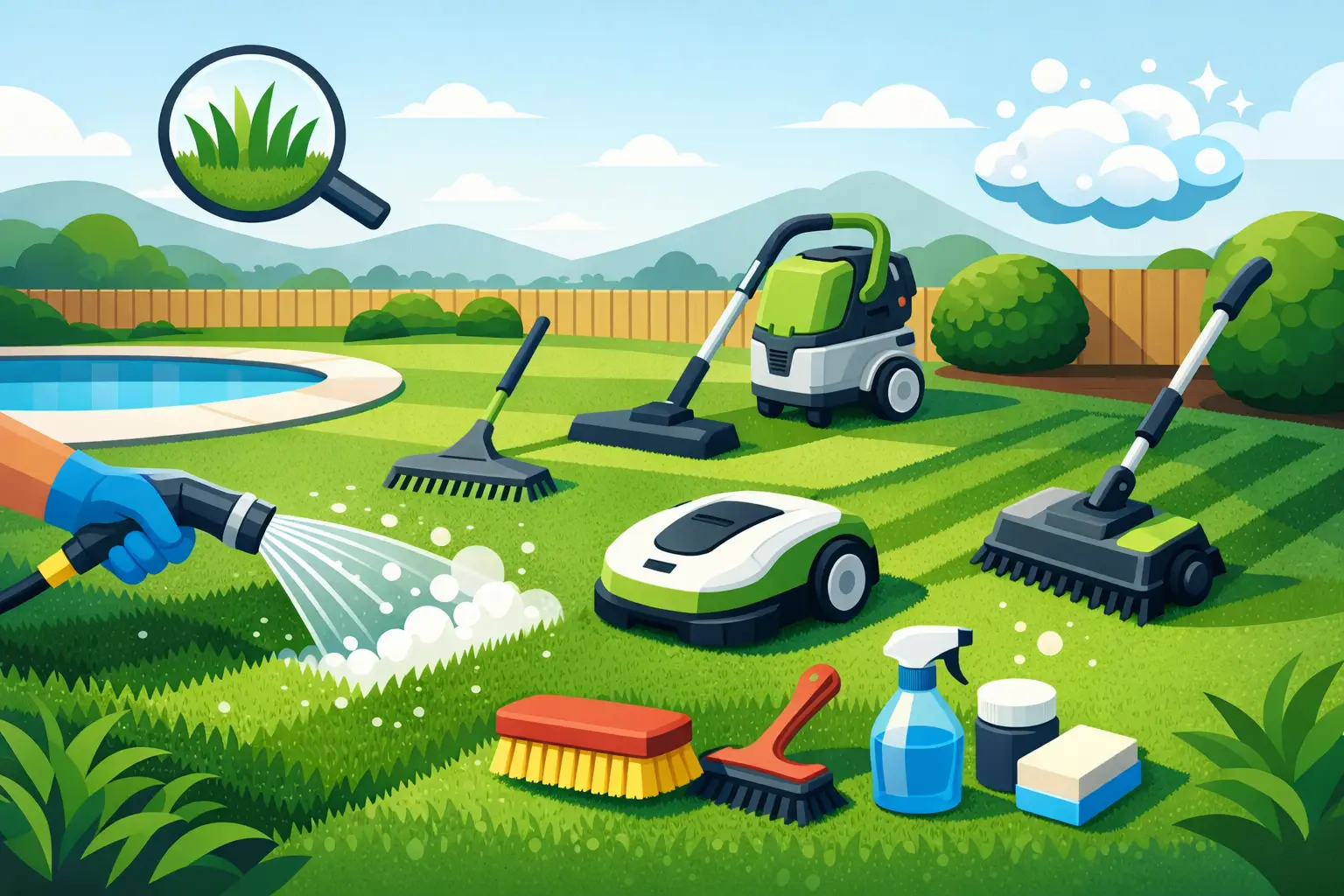
A quick hose-down can make artificial grass look better for an afternoon. It will not remove compacted dust, pet hair, dried urine, bacteria, or the grime packed deep between the blades. The best artificial turf cleaning methods work in layers: clear the surface, lift the turf, rinse away buildup, and treat the source of odors before they take over your yard.
For Arizona homeowners, that difference matters. Dry heat, dust, heavy backyard use, and pets can turn a clean-looking lawn into a flat, smelly, unsanitary mess faster than expected. Here is what actually works – and when it is time to bring in a turf cleaning specialist.
1. Remove Leaves, Debris, and Pet Hair First
Start with the material sitting on top of the turf. Leaves, twigs, seed pods, food crumbs, and pet hair trap moisture and hold onto odor. They also get pushed down into the fibers as people and pets walk across the yard.
A leaf blower on a low setting is usually the fastest option for dry debris. For pet hair, use a turf-safe rake, stiff bristle broom, or power sweeper. Work in multiple directions instead of making one pass. Hair clings to synthetic blades and can form dense mats around high-use areas, especially near gates, patio doors, and dog runs.
Avoid aggressive metal rakes. They can pull at seams, damage turf backing, and disturb infill. The goal is to lift debris out, not tear the lawn apart.
2. Power Brush Flattened Turf Back Up
Flat, matted turf is not just a cosmetic problem. When blades stay pressed down, they trap dust, hair, and organic buildup closer to the backing. That makes the entire yard harder to rinse and easier for odors to linger.
Power brushing is one of the best artificial turf cleaning methods because it restores the upright look of the fibers while loosening hidden debris. A professional power brush uses controlled bristles and the right direction of movement to lift turf without damaging it. The result is a fuller, cleaner appearance that makes worn areas look alive again.
Homeowners can use a non-metal turf broom for light touch-ups. But if the lawn is badly flattened, packed with hair, or overdue for cleaning, manual brushing is rarely enough. This is where professional equipment makes a visible difference.
3. Rinse Dust and Surface Grime Thoroughly
Arizona dust does not stay on the surface. It settles into turf fibers, infill, and the spaces where pets spend the most time. Regular rinsing helps prevent that buildup from becoming a larger cleaning job.
Use a garden hose with moderate water pressure. Rinse gradually, section by section, allowing water to move through the turf rather than blasting one spot. Focus on pet areas, walkways, outdoor eating spaces, and the perimeter where wind deposits debris.
A pressure washer is usually the wrong tool. High pressure can displace infill, damage backing, lift edges, and push grime deeper into seams. Artificial turf needs a deep rinse, not a harsh attack.
Rinsing is excellent maintenance, but it has limits. Water can carry away loose dirt and dilute fresh pet urine. It does not neutralize urine crystals or eliminate bacteria already embedded below the blades.
4. Treat Pet Urine at the Source
If your turf smells fine until the afternoon sun hits it, pet urine is likely the reason. Heat reactivates odor molecules trapped in the turf and infill. Air fresheners, perfume sprays, and a little extra water may cover the smell briefly, but they do not solve the source.
The right treatment is an enzyme-based or turf-specific odor neutralizer designed to break down urine residue. Apply it directly to the affected areas and give it enough contact time to work. Broad, light spraying is often not enough for a yard used daily by one or more dogs.
For stubborn odors, urine extraction is the real fix. This process targets the contaminated material deeper in the turf system, where casual surface cleaning cannot reach. It is especially valuable for dog runs, shaded corners, and turf near doors where pets repeatedly relieve themselves.
Skip bleach, harsh disinfectants, and household cleaners that are not made for artificial grass. They can harm pets, leave residue, affect turf color, or create a stronger chemical smell than the original problem.
5. Sanitize After Cleaning, Not Instead of Cleaning
Sanitizer matters, particularly in yards where dogs play, kids sit on the turf, or guests walk barefoot. But sanitizer works best after debris, hair, and grime have been removed. Spraying sanitizer over a dirty surface is like spraying a counter cleaner over a pile of crumbs. It does not create a truly clean result.
After brushing, sweeping, and rinsing, apply a pet-safe turf sanitizer and deodorizer. This helps reduce bacteria buildup and leaves the yard fresh without coating it in an overpowering fragrance. The best products are made for synthetic grass and used according to their label directions.
For a lightly used yard, sanitizing every few months may be enough. Homes with multiple pets, a busy dog area, or recurring odor issues will need more frequent treatment. It depends on use, drainage, shade, and how consistently the turf is maintained.
6. Clean Stains Before They Set
Most spills on artificial grass are manageable if you act quickly. Pick up solids first, blot liquids with a clean cloth, then rinse the area with water. For food, grease, or sticky residue, use a small amount of mild soap mixed with water and rinse thoroughly afterward.
Do not scrub aggressively with wire brushes or use solvents unless they are specifically approved for synthetic turf. Strong chemicals can damage fibers, affect the backing, and create an unsafe space for pets and children.
Pet waste should be removed as soon as possible. Even when solids are picked up, residue can remain on the blades and infill. A quick rinse helps, but recurring spots need deeper treatment to prevent bacteria and odor from building up over time.
7. Schedule a Professional Deep Clean When Routine Care Stops Working
There is a point where DIY maintenance stops delivering results. If your turf stays flat after brushing, smells worse in the heat, feels gritty, has visible hair buildup, or looks dirty again right after rinsing, it is time for a full restoration service.
A professional artificial turf cleaning goes beyond surface appearance. The process should include power sweeping or brushing, embedded debris and pet hair removal, deep rinsing, targeted pet odor and stain treatment, sanitization, deodorizing, and odor elimination after treatment. For serious pet odor, urine extraction should be part of the plan.
That combination is what brings tired turf back to life. Elite Turf Cleaning focuses on this deeper level of care because homeowners do not need another temporary cover-up. They need the grime, bacteria, flattened fibers, and urine odor handled where they actually live.
How Often Should Artificial Turf Be Cleaned?
A light debris cleanup once a week keeps most yards under control. Rinse pet areas weekly or more often during heavy use. Brush high-traffic spots monthly to prevent matting, and schedule a professional deep clean every six to 12 months.
For homes with multiple dogs, that schedule may need to be tighter. If odor is already noticeable, do not wait for the next seasonal cleanup. The longer urine residue sits in the turf, the more difficult it becomes to remove completely.
A Cleaner Yard Starts Below the Blades
Artificial grass is low maintenance, not no maintenance. The cleanest, freshest yards get regular attention before dirt and odors have time to settle in. Keep up with the basics, act fast on pet messes, and call for deep cleaning when your turf starts looking or smelling gross. Your backyard should feel like a place your family wants to use – not a problem you keep trying to rinse away.