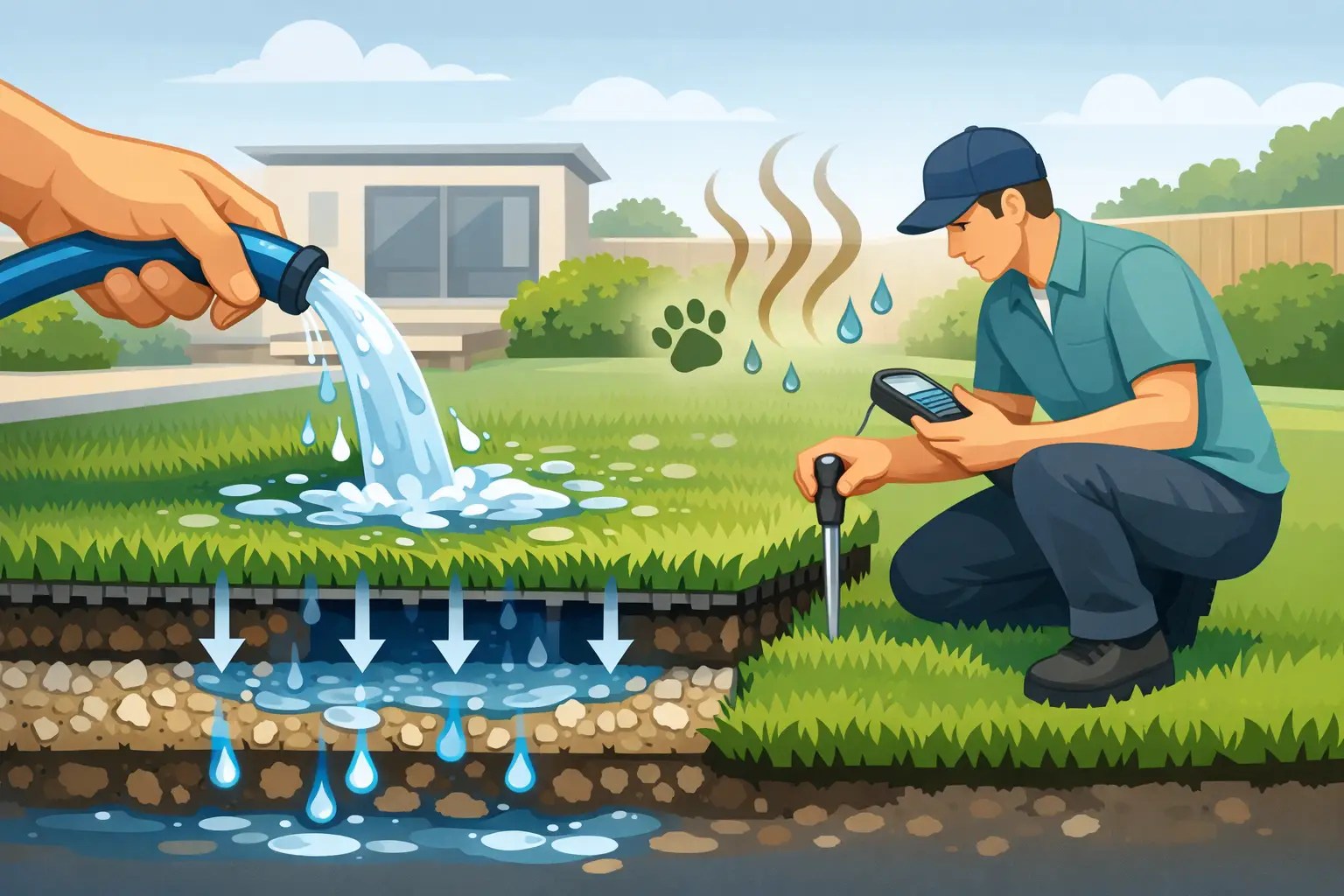
A clean-looking artificial lawn can still have a drainage problem hiding underneath. If pet urine odors get stronger after a hose-down, water pools near one edge, or the turf stays damp long after the rest of the yard dries, it is time to learn how to test turf drainage. The goal is simple: find out whether water is moving through the turf and base as it should, or sitting where bacteria, odors, and grime can build up.
For Arizona homeowners, this matters even more in high-use pet areas. Heat can bake urine salts into the turf, while compacted base material can trap moisture below the surface. No more guessing. A quick, methodical test can tell you where the problem starts.
Start With a Dry-Turf Inspection
Test drainage when the turf has been dry for at least several hours, ideally after a day without watering or rain. Starting dry makes it easier to see where water first gathers and how quickly it disappears.
Walk the lawn slowly and look for areas that appear darker, matted down, or unusually dirty. Pay close attention to the spots where dogs repeatedly relieve themselves, along edges near pavers or concrete, below downspouts, and at the lowest point of the yard. Those are the places most likely to reveal trouble.
Then press down with your foot. Healthy artificial turf should feel supported and mostly dry under normal conditions. If an area feels squishy, soft, or spongy before you add water, there may already be moisture trapped in the infill or base. A sour or ammonia-like odor is another warning sign. It does not automatically mean the drainage system has failed, but it does mean urine and bacteria are not being flushed away effectively.
How to Test Turf Drainage With Water
The easiest at-home method is a controlled water test. You do not need special equipment. A garden hose, a five-gallon bucket, a timer, and a few dry towels or paper towels are enough.
Choose three to five locations across the lawn: one that seems normal, one pet-heavy area, one low spot, and one area near the turf edge. Testing more than one section matters because artificial turf can drain well in one place and poorly just a few feet away.
Pour Water in a Small, Controlled Area
Slowly pour about one to two gallons of water onto a two-foot-by-two-foot section of turf. Avoid dumping the full bucket all at once. A sudden flood can create runoff even on a properly installed lawn, so it will not give you a reliable result.
Watch the surface closely. The water should move through the turf rather than remaining on top. You may see a brief sheen as it spreads across the blades, but standing water should begin disappearing quickly. If puddles remain for several minutes after a modest pour, write down the location and how long the water sits.
Repeat the same test in each chosen zone. Keep the water amount and test area consistent so the results are easier to compare.
Use a Hose Test to Check Larger Areas
After the bucket test, use a gentle shower setting on the hose to wet a larger section for two to three minutes. Do not blast the turf with a hard stream. Heavy pressure can push debris deeper into the infill and create misleading surface flow.
As you spray, look for water traveling toward a seam, edge, wall, patio, or gate instead of draining down. Water that consistently runs sideways may point to an uneven base, blocked drainage path, compacted infill, or an edge that is holding water in place.
Turn off the hose and set a timer. A properly draining area should not remain visibly pooled. The exact drying time depends on shade, turf type, infill, soil conditions, and how much water you used, but obvious standing water after 10 to 15 minutes deserves attention. If it remains wet for hours, the issue is more than surface-level.
Check the Backing and Infill
After the water test, separate the turf blades in the problem area and feel near the base. You are looking for wet, packed material that feels muddy, crusted, or foul-smelling. Artificial turf does not use soil at the surface, but its infill can become compacted with dust, pet hair, organic debris, urine residue, and fine particles over time.
If the backing seems to drain but the top layer stays wet and smells bad, the issue may be clogged infill rather than a failed installation. Power brushing, debris removal, deep rinsing, urine extraction, and sanitizing can restore airflow and help water move through the surface layer again.
If the entire section feels saturated underneath, the problem may be lower down in the base or subgrade. In Arizona, hard-packed caliche and poor grading can slow water movement dramatically. Cleaning can improve the condition of the turf, but it cannot correct a base that was installed without proper drainage or slope.
What Your Turf Drainage Test Is Telling You
A drainage test is not just about whether you see a puddle. The pattern matters.
Water pooling only along one border often points to a low edge, blocked drainage exit, or hardscape directing water back toward the turf. Pooling in the center can suggest a depressed base or an area compacted by frequent foot traffic. A pet run that drains slowly and smells strong may have a buildup problem in the infill, especially if the rest of the yard performs well.
Here are four signs that your turf needs more than a routine hose rinse:
- Water remains on the surface for 10 to 15 minutes after a light, controlled test.
- The same area stays damp, soft, or dark long after surrounding turf has dried.
- Urine odor gets worse when the turf is wet or when temperatures rise.
- Water runs across the turf and collects at edges, seams, patios, or doors.
Do not ignore these signs because the turf still looks green. Trapped moisture creates the conditions bacteria love. Add pet waste, shed hair, dust, and flattened fibers, and the result is turf that looks tired, smells worse, and feels less inviting for kids and pets.
Common Reasons Artificial Turf Stops Draining Well
Artificial grass is designed with drainage holes in its backing, but those holes are only one part of the system. Water also needs a clean infill layer, a permeable base, and a route away from the yard. A failure at any level can cause trouble.
Compacted infill is common in busy pet areas. Fine dust, decomposing leaves, pet hair, and urine residue work down between the blades, packing the surface and reducing water flow. This is often fixable with professional power sweeping, power brushing, deep rinsing, and odor treatment.
The base can also become compacted or uneven. This is more likely when the turf was installed over poorly prepared ground, when heavy use creates low spots, or when settling occurs over time. Drainage issues caused by grading, damaged backing, or a blocked drain may require an installer or landscape professional to assess the structure below the turf.
There is also a simple possibility: too much water at once. A monsoon downpour can overwhelm even a well-installed turf system temporarily. Judge the lawn by what happens after ordinary irrigation, a light hose test, or a normal rain, not just during an extreme storm.
Do Not Confuse Odor With a Drainage-Only Problem
Poor drainage can make pet odor worse, but not every odor problem means water is trapped below the turf. Urine crystals, bacteria, and residue can remain in the infill even when water drains reasonably well. Casual hosing may dilute the smell for a day, then leave the deeper contamination behind.
That is why a strong odor after your turf dries is a useful clue. If your water test shows fast drainage but the smell keeps returning, the turf may need deep urine extraction and sanitization rather than drainage repair. If it drains slowly and smells bad, both issues may need attention.
Elite Turf Cleaning focuses on the restoration side of that equation: lifting embedded debris, breaking up compacted material, treating pet urine contamination, and leaving turf fresher and safer for the people and pets who use it every day.
When to Call for Help
Call a turf cleaning professional when your test shows odor, debris buildup, flattened fibers, or slow surface drainage in pet zones. A deep clean can help determine whether the blockage is in the infill and restore the turf’s appearance at the same time.
Call a turf installer, drainage contractor, or landscape professional when water repeatedly pools for hours, flows toward the home, appears to come up from below the turf, or affects large sections of the yard. Those symptoms may involve grading, base material, drainage channels, or the turf installation itself.
One simple water test can save you from treating the wrong problem. Test the spots your pets use most, pay attention to where the water goes, and act before a small damp patch turns into a permanent odor zone. Fresh, clean turf starts with knowing what is happening below the blades.