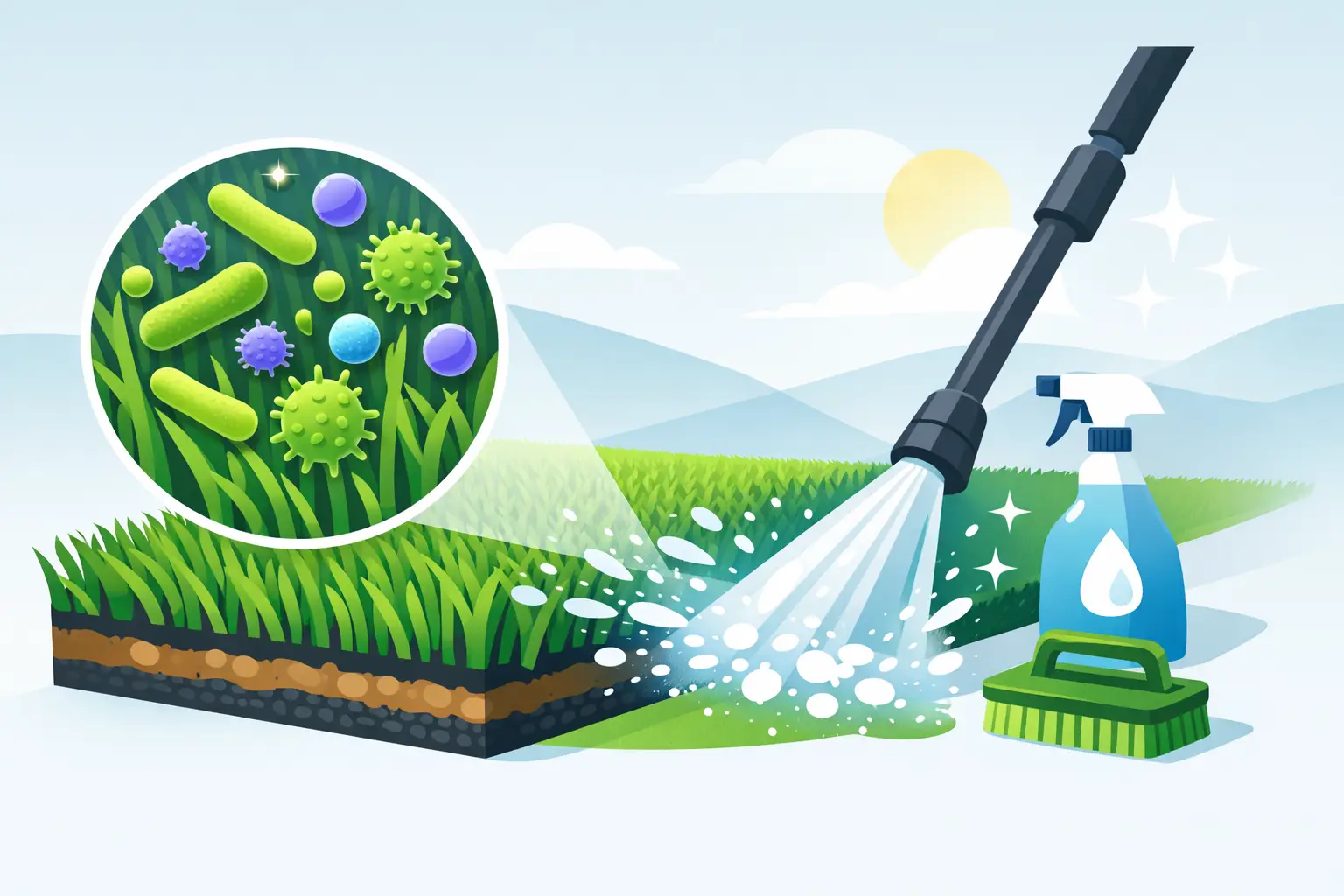
If your artificial grass smells fine right after a rinse but turns sour again by the next day, you are not dealing with a simple surface mess. You are dealing with buildup below the blades. That is why bacteria removal from synthetic turf is not just about spraying cleaner on top. It is about pulling out what is trapped in the turf system so your yard looks clean, smells fresh, and feels safe again.
For Arizona homeowners, this problem shows up fast. Heat bakes in pet waste, dust settles deep into the fibers, and regular foot traffic presses everything down. Add kids, dogs, backyard parties, and daily use, and turf that once looked sharp can start to feel dirty even when it does not look terrible at first glance. The issue is rarely just appearance. It is odor, hygiene, and the fact that routine hosing only reaches so far.
Why bacteria builds up in artificial grass
Synthetic turf does not grow mold or bacteria the way natural grass and soil can, but it absolutely can hold onto the conditions that let bacteria thrive. Pet urine, droppings, organic debris, spilled drinks, food residue, and moisture all work their way into the turf. Once that material settles into the infill and backing, the surface becomes harder to truly clean.
Pet areas are the biggest trouble spots. Urine does not just sit on top and evaporate cleanly. It seeps down, mixes with dust and debris, and creates concentrated areas of odor and contamination. On hot days, that smell gets stronger. That is usually the moment homeowners realize the hose is no longer doing the job.
Heavy traffic makes it worse. Flattened turf traps more debris, limits airflow, and leaves less space for proper rinsing. The result is a yard that can look dull, smell unpleasant, and carry bacteria long after a quick spray-down.
Bacteria removal from synthetic turf is not the same as basic cleaning
A lot of homeowners assume cleaning and sanitizing are the same thing. They are not. Basic cleaning removes visible dirt, loose debris, and some surface residue. That matters, but it is only part of the job.
Real bacteria removal from synthetic turf means dealing with the source, not just masking the symptoms. If pet hair, leaves, dust, and waste particles are still buried in the turf, spraying a sanitizer over the top has limited value. The product may help for a while, but the trapped material underneath continues to create odor and bacteria issues.
That is why deeper restoration matters. The turf needs to be opened up, debris needs to be lifted out, and contaminated areas need to be treated thoroughly. Without that step, you are freshening the surface while the real problem stays put.
Signs your turf needs more than a rinse
Sometimes the warning signs are obvious. Sometimes they creep up slowly. If your yard has a persistent urine smell, especially in the afternoon heat, that is one of the clearest signs. If the turf feels matted, looks dingy, or seems to stay musty no matter how often you hose it off, there is usually buildup below the surface.
You may also notice certain spots are worse than others. Dog run areas, corners near fences, and places where pets repeatedly urinate tend to hold the most contamination. Families with small children often start paying closer attention when they realize the yard is getting regular hands-on use but no real sanitizing.
Another common sign is that deodorizer sprays stop working quickly. If the fresh smell disappears fast, the odor source was never fully removed.
What actually works for bacteria removal
The most effective approach is a combination of mechanical cleaning, deep rinsing, targeted treatment, and sanitizing. It is not one magic product. It is the process.
Power brushing and debris removal
Before sanitizing can work well, the turf needs to be opened up. Power brushing helps lift matted grass fibers and loosen material trapped below. That makes a big difference because compacted turf hides contamination deep in the infill.
Debris and pet hair removal are just as important. Hair, dust, leaves, and fine organic matter create a layer that holds odor and bacteria. If that layer stays in place, treatment is less effective.
Deep rinsing and urine extraction
This is the step many DIY cleanings miss. Surface spraying is not enough in pet-heavy yards. Deep rinsing helps flush out contaminants that have settled below the visible layer. In severe odor areas, urine extraction becomes critical because the problem is concentrated underneath, not on top.
When urine stays trapped in the turf system, the smell keeps coming back. That is why some homeowners feel like they are wasting time and money on store-bought cleaners. They are treating the symptom, not the buildup.
Sanitizer and deodorizer application
Once the turf has been properly cleaned and flushed, sanitizer can do its job. At this stage, it is not fighting through layers of grime. It can actually reach the areas that matter. A good deodorizer then helps neutralize any remaining odor, rather than simply covering it up with fragrance.
That order matters. Clean first, sanitize second, deodorize third. Flip the order, and results usually do not last.
DIY vs professional turf sanitation
There is nothing wrong with basic home maintenance. Hosing down the turf, picking up pet waste quickly, and removing loose debris are all smart habits. They help slow down buildup and keep the yard in better shape between deeper cleanings.
But there is a limit to what DIY care can fix. If you have recurring odors, flattened turf, or contamination that has built up over months or years, home tools usually fall short. Consumer cleaners can help lightly used turf, but they often do not have the strength or process needed to restore heavily used pet areas.
Professional service makes the biggest difference when the turf has reached the point where it feels gross, smells off, or no longer looks fresh even after cleaning. That is where specialized equipment, stronger extraction methods, and turf-specific sanitation steps change the outcome.
It also saves time. Busy homeowners usually do not want to spend a weekend testing products, scrubbing problem spots, and still ending up with lingering odor. They want the yard fixed.
Why Arizona yards need a stronger plan
Heat changes everything. In Arizona, high temperatures intensify odors and speed up the cycle of buildup becoming noticeable. A pet area that seems manageable in cooler weather can become overwhelming in summer.
Dust is another major factor. Fine desert dust settles into synthetic turf constantly, and it mixes with urine residue, organic matter, and everyday debris. That combination creates a deeper cleaning challenge than many homeowners expect. It is not just about germs. It is also about accumulation.
That is why a stronger maintenance plan works better than occasional panic cleaning. Light upkeep helps, but periodic deep restoration keeps the turf from reaching that point where every hot afternoon brings the smell back.
How often should synthetic turf be sanitized?
It depends on how the yard is used. A backyard with no pets and light traffic may only need occasional deep cleaning. A household with multiple dogs using the same section every day is different. Those areas usually need more frequent service to stay fresh and sanitary.
The key is not chasing a rigid schedule. It is watching for early signs. If odors return quickly, if the turf is staying matted, or if the yard no longer feels clean underfoot, it is time. Waiting too long makes restoration harder and gives bacteria more time to build up in the infill.
For pet owners, the best results come from combining regular at-home upkeep with periodic professional treatment. That balance keeps your turf looking better, smelling better, and lasting longer.
What a restored yard should feel like
Clean turf is not just odor-free. It looks lifted, feels fresher, and becomes a space you actually want to use again. That matters when your backyard is part dog run, part play area, and part everyday living space.
When the turf is properly restored, the change is obvious. The blades stand up better. The smell is gone instead of hidden. The surface feels cleaner for pets and kids. Most of all, the yard stops being a problem you keep meaning to deal with.
That is the real value of doing this right. Not a temporary cover-up. Not a quick spray before guests come over. Real cleaning that gets below the surface and brings your turf back to life.
If your artificial grass has reached the point where rinsing is no longer enough, trust what your nose is telling you. The problem is deeper than the surface, and the fix should be too. A fresh, safe yard is absolutely possible when the cleaning goes beyond cosmetics and tackles the bacteria, odor, and buildup where they actually live.