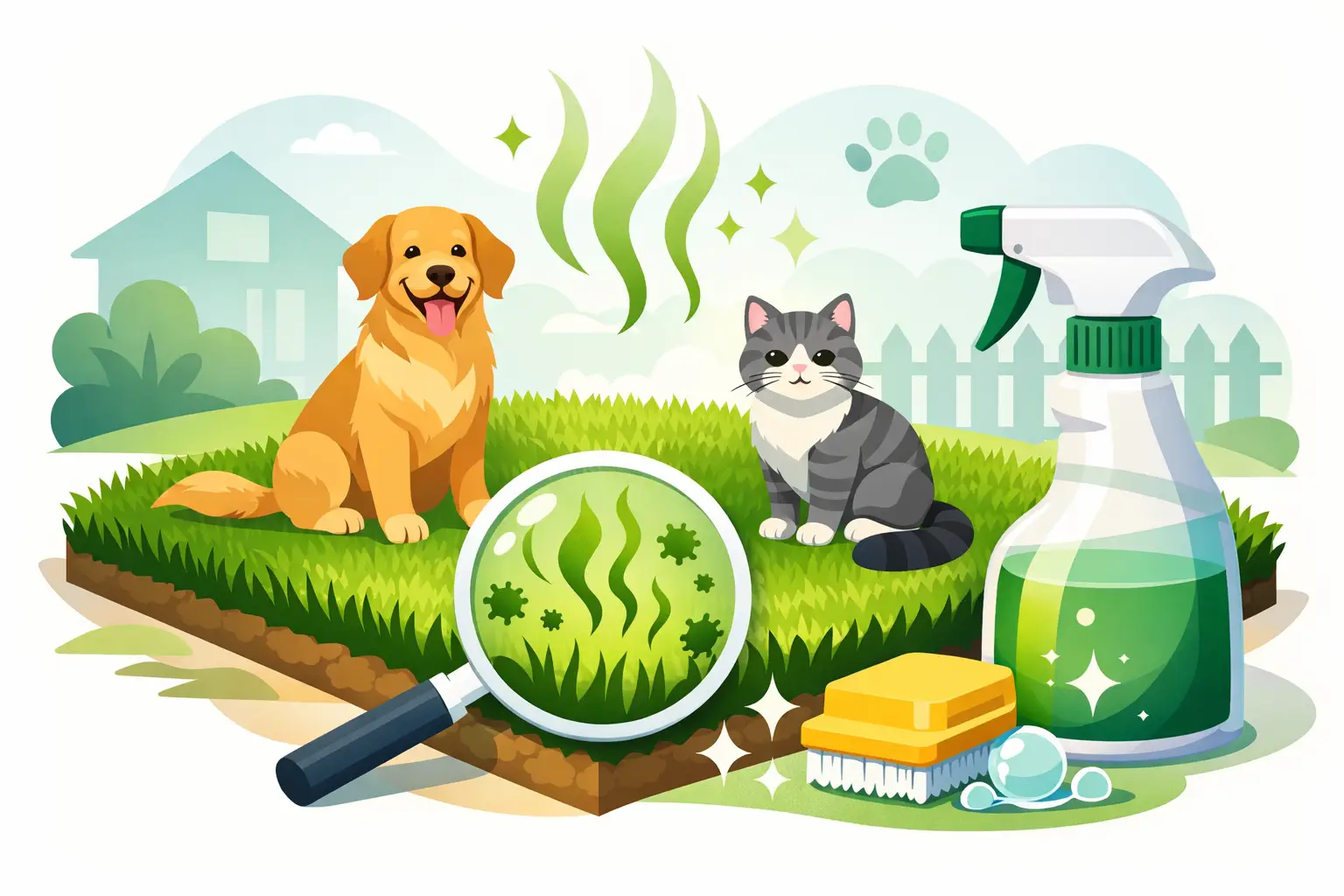
You notice it the second you step into the yard. The turf looks fine from a distance, but the smell says otherwise. If you are searching for the best pet odor remover for fake grass, you are probably already past the point of quick hose-downs and hoping the sun will fix it.
That sharp urine smell does not happen because artificial grass is bad. It happens because waste sinks below the surface, collects in the infill, and sticks around in the backing and base layer. Once that buildup starts, basic cleaning stops being enough. The real question is not just what product to spray. It is what will actually remove the source of the odor.
What makes fake grass smell so bad?
Pet odor on artificial turf is rarely a surface problem. Urine moves through the blades and into the infill, where it can leave behind salts, bacteria, and concentrated odor. In hot Arizona weather, that smell gets stronger fast.
A lot of homeowners assume fake grass should be easy to rinse clean. Sometimes it is, especially with one dog, light use, and regular maintenance. But heavy pet traffic changes the equation. If multiple dogs use the same area every day, the turf can start holding odor deep below the visible surface.
That is why some odor removers seem to work for a day or two, then the smell comes right back. They are covering the symptom, not removing the contamination.
What a pet odor remover for fake grass needs to do
A good pet odor remover for fake grass should do more than add fragrance. It needs to neutralize urine compounds, break down odor-causing bacteria, and rinse through the turf instead of sitting on top.
That sounds simple, but performance depends on how bad the problem is. Mild odor from recent pet use is one thing. Turf that has gone months or years without deep cleaning is another. In those cases, even a solid product may struggle because the issue is packed into the infill and underlayer.
The best results usually come from matching the solution to the severity of the odor. For light maintenance, a quality enzyme or turf-safe deodorizing treatment can help. For strong, persistent smell, the turf often needs extraction, deep rinsing, and sanitizing.
The types of odor removers that actually help
Not every cleaner marketed for pet turf is worth your money. Some are little more than scented water. Others are too harsh and can leave residue or create new issues.
Enzyme-based treatments
Enzyme cleaners are popular because they target organic waste. They can be effective when the urine is fresh or the odor is still mild. The enzymes help break down the material causing the smell instead of just masking it.
The catch is coverage and depth. If the turf has heavy buildup, the product may not reach everything that is trapped below the blades. That is why homeowners often get mixed results.
Turf deodorizers and sanitizers
These products are made to freshen synthetic grass and reduce bacteria. A turf-safe deodorizer can be useful as part of regular upkeep, especially in pet areas that get daily use. It can help maintain freshness between deeper cleanings.
Still, deodorizing is not the same as full odor removal. If the base layer is saturated with old urine, a surface treatment will not fully solve it.
Household cleaners
This is where many people make the problem worse. Bleach, vinegar, dish soap, or heavily perfumed cleaners may seem like easy fixes, but they are usually not the right move for artificial turf. Some can leave residue, some can damage the backing over time, and some simply mix with the odor and create a worse smell.
If a product is not designed for synthetic grass and pet waste, it is a gamble.
When DIY works and when it does not
There is a place for DIY turf care. If your artificial grass is relatively new, the odor is light, and you stay consistent with rinsing and cleanup, a turf-safe pet odor remover may be enough to keep things under control.
But there is a big difference between maintenance and restoration.
If your yard smells strongest in the heat, if guests notice it right away, or if the same pet area always seems bad no matter how much you spray, the turf likely needs more than a store-bought solution. That is especially true when urine has built up over time and settled into the infill and drainage layer.
This is where many homeowners waste money. They keep buying new products, trying stronger scents, and repeating the same routine. Meanwhile, the contamination stays in place.
Signs you need more than a pet odor remover for fake grass
A few warning signs usually mean the problem has moved beyond basic treatment. One is odor that returns within a day or two of cleaning. Another is smell that gets much stronger after watering or rain. That often means old urine deposits are being reactivated.
You may also notice the turf looks matted down, dusty, or dingy around the pet zone. That is a sign of deeper buildup, not just odor. In many yards, the same area has pet hair, waste particles, compacted infill, and bacteria all working together to make the turf look and smell bad.
At that point, the goal should not be covering it up. It should be bringing the turf back to life.
What professional turf odor removal does differently
Professional cleaning is different because it treats the whole system, not just the top layer. That starts with removing debris, pet hair, and embedded grime. Then the turf can be power brushed or power swept to lift the fibers and open up compacted areas.
From there, deep rinsing and urine extraction matter. If odor-causing waste is trapped below the surface, it needs to be flushed out, not just sprayed over. A proper treatment also includes sanitizer and deodorizer application to target bacteria and leave the yard cleaner, safer, and fresher.
This is why professional service can solve odor problems that keep beating DIY products. It is not about one magic spray. It is about getting to the source.
For homeowners dealing with serious pet odor, that difference is huge. No more stepping outside and getting hit with that smell. No more wondering if guests notice it. No more avoiding a yard you paid good money to install.
How to choose the best solution for your yard
If you are deciding between buying a cleaner and booking service, be honest about the condition of the turf.
If the smell is occasional and mild, a turf-safe enzyme or deodorizing product may help you maintain the area. Use it alongside routine rinsing, waste pickup, and regular brushing so the infill does not stay compacted.
If the odor is strong, stubborn, or built up from long-term pet use, the better investment is usually a deep professional treatment. That is not overkill. It is often the fastest way to stop wasting time on products that only deliver short-term relief.
A lot depends on how many pets use the space, how often the turf is rinsed, how well it drains, and how long the problem has been there. One dog on a large yard is different from three dogs using the same side patch every day. The right answer depends on the load your turf is taking.
Keeping fake grass fresh after odor treatment
Once the smell is under control, maintenance matters. Pick up solid waste quickly. Rinse pet areas consistently, especially during hot stretches. Brush the turf now and then so fibers stay upright and debris does not settle in. And if your yard gets heavy use, do not wait until it smells terrible again before getting it cleaned.
That is the smarter way to handle artificial turf. Small upkeep prevents bigger restoration work later.
For homeowners who want real results, the best pet odor remover for fake grass is not always a bottle. Sometimes it is a full cleaning process that removes the grime, bacteria, and urine buildup regular rinsing leaves behind. That is where a specialized service like Elite Turf Cleaning can make the difference between turf that smells better for a day and turf that actually feels clean again.
Your yard should smell fresh when the kids and dogs run out the back door. If it does not, the problem is telling you something – and the right fix is the one that removes it at the source.